


When conflicts break out, most people around the world rely on international media to understand what is happening. These reports do more than inform. They shape how crises are interpreted, which actors are seen as responsible and where global attention is directed.
In complex situations, what is left out can matter as much as what is included.
Ethiopia is a clear example of this problem. Since 2020, the country has experienced multiple, overlapping conflicts.
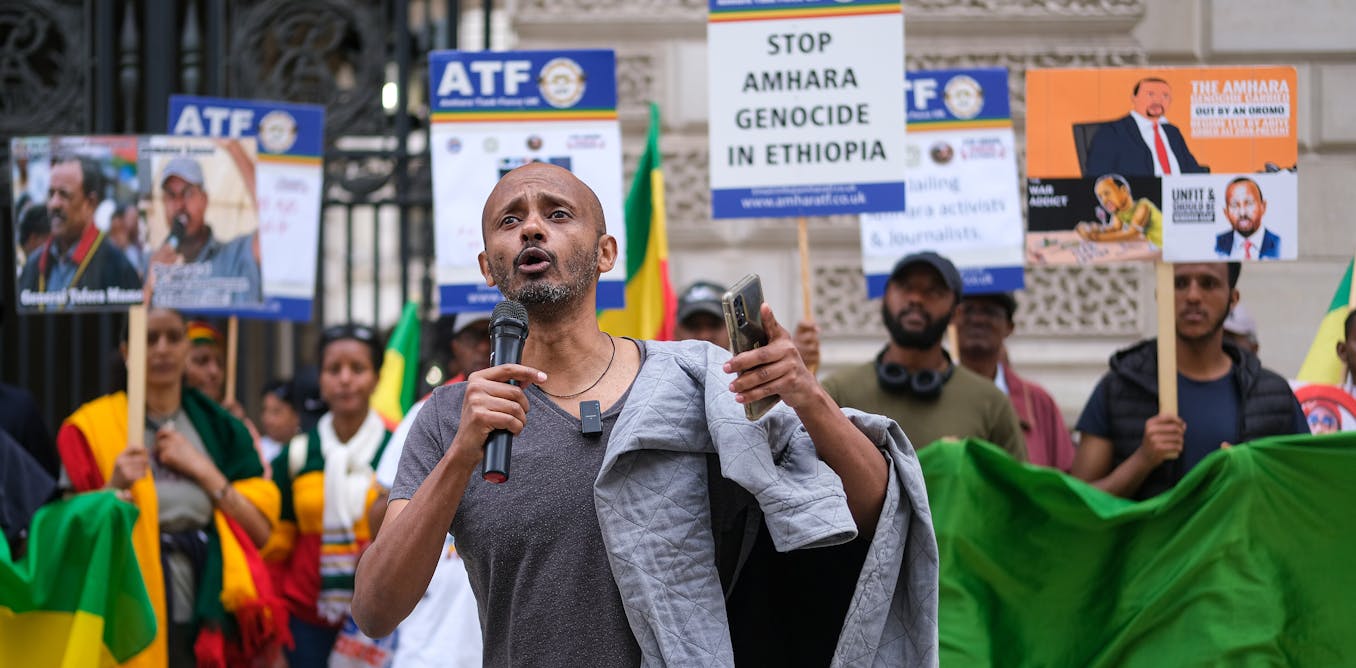
The war in Tigray (2020-2022) has been one of the most widely reported, drawing sustained global attention because of its scale and humanitarian impact. But at the same time, violence has broken out and continues in Ethiopia’s Amhara and Oromia regions, causing severe consequences for civilians and deepening regional instability.
Our research set out to understand how these conflicts, which targeted ethnic groups, have been reported by the international media, and how the media understand the country’s current complex crises. As a team of media scholars, we analysed news coverage from four major global outlets – BBC from Britain, CNN from the US, Al-Jazeera from Qatar, and CGTN from China – over a five-year period from January 2020 to March 2025. We collected 1,412 stories from the four outlets on Ethiopia’s complex conflict.
To further assess how they frame the conflict and the nature of their reporting, 60 stories were systematically selected from each media outlet, yielding a total sample of 240 conflict-related articles. This allowed us to track patterns in attention, framing and sourcing.
We found that the coverage tended to present Ethiopia’s crisis through a narrow lens, centred largely on one conflict: the Tigray war.
More than three-quarters (77.2%) of all the stories we analysed focused on the conflict between the Ethiopian government and the Tigray People’s Liberation Front. Conflicts in Amhara (at 2.7%) and Oromia (at 0.4%) appeared only marginally in coverage.
This risks producing a partial understanding of a much more complex reality.
Ethiopia’s conflicts are not easily reduced to a single narrative. They involve multiple actors, regions and historical trajectories. Capturing this complexity is challenging, but it is essential. When global media coverage is too narrow, it risks shaping responses that address only part of the problem.
Based on our findings, we recommend that there needs to be a more balanced approach to reporting. Secondly, a greater emphasis must be placed on context, which would include explanations of the historical and political background of conflicts.
A more comprehensive approach would not only improve understanding. It would also contribute to more informed and balanced international engagement with one of the most important and complex regions in Africa today. This matters because Ethiopia is a key player in the Horn of Africa. Instability here has implications for regional security and international diplomacy.
Our findings
Our analysis revealed three major trends in the media coverage of conflict in Ethiopia.
The first was that the Tigray conflict received significantly more media attention than other conflicts in the country.