

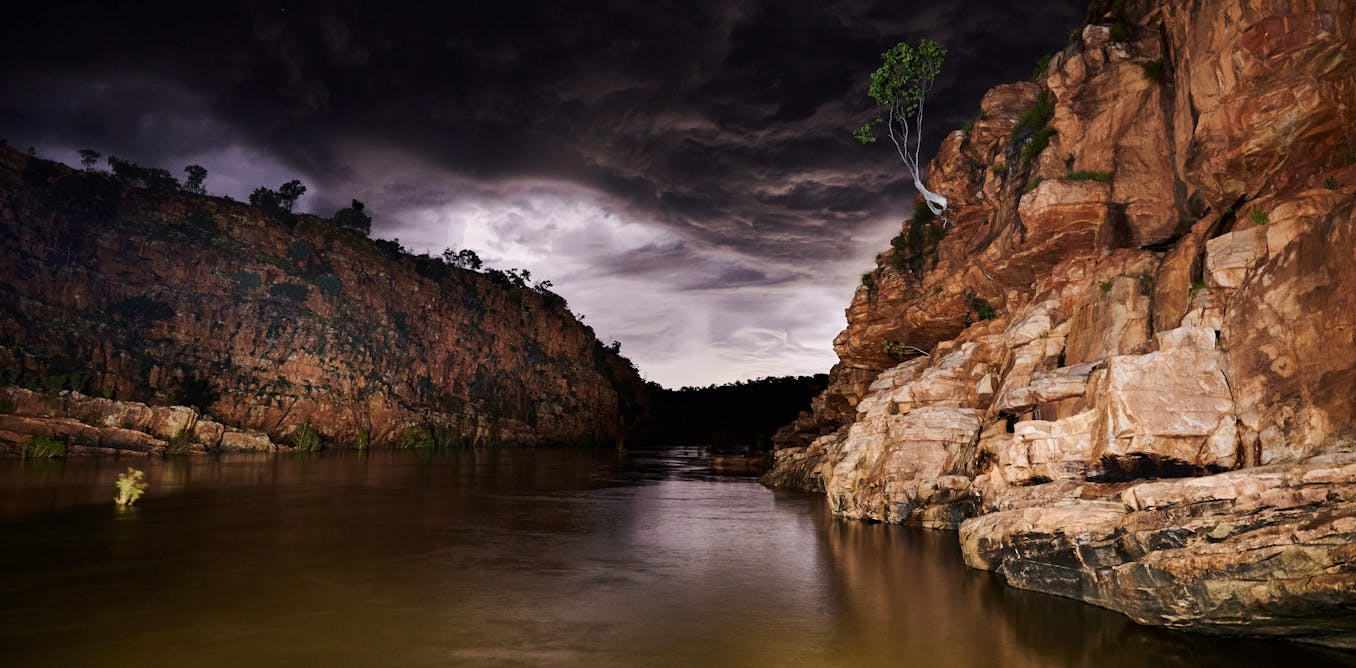

Under the soils of the Kimberley lies one of the world’s last undeveloped large-scale reservoirs of onshore gas, according to the gas company hoping to extract it.
Last month, the Western Australian Environmental Protection Agency (EPA) recommended approval for Bennett Resources, a subsidiary of Black Mountain Energy, to begin exploration by drilling 20 wells across ten sites near the Kimberley’s Martuwarra Fitzroy River and applying hydraulic fracturing (fracking).
If officially approved and results are favourable, exploration is likely just the start. The company – majority-owned by US oil and gas company Black Mountain – wants to begin full-scale production to extract an estimated 420 billion cubic metres of gas. Doing so would require hundreds or thousands of wells drilled into many aquifers, with connecting roads, gas processing plants, wastewater ponds, water treatment plants, compressor stations and new pipelines.
For the mining-friendly WA government, the economic benefits would appeal. But the EPA’s recommendation has triggered an immediate backlash from Aboriginal and environmental groups. The Office of Appeals Commissioner reports an unprecedented number of appeals have been lodged before the February 10 deadline.
As health and Indigenous knowledge experts, we have real concern about these plans. We now know much more about the harms fracking can do to the health of humans, wildlife, groundwater and rivers.
What is this project?
Black Mountain Energy has exploration rights over a 3,700 square kilometre area in the Canning Basin between Fitzroy Crossing and Derby. The exploration wells would be drilled west of Fitzroy Crossing.
Major oil and gas companies interested in this basin’s gas reservoirs have progressively pulled out due to vast infrastructure costs.
But Black Mountain Energy appears determined. The company first announced its plans in 2020 but encountered difficulties raising funding. It’s not guaranteed to proceed even with state backing, as the federal government has to sign off too.
If these first wells go ahead, fracking rigs will drill down 2–5km into the rock, before shifting into horizontal mode. Then, the rigs force megalitres of fresh water, sand and chemicals under high pressure into the rock layers to fracture them. This allows methane gas contaminated with toxic gases, including benzene and toluene, to be collected at the surface. Millions of litres of contaminated salty wastewater are also produced and must be managed. The process is repeated up to 70 times per well.
Some of the wells will be drilled within 2km of important tributaries of the Martuwarra Fitzroy River system.
Most gas would be exported, which would likely require a new pipeline to Karratha, almost 1,000km away.
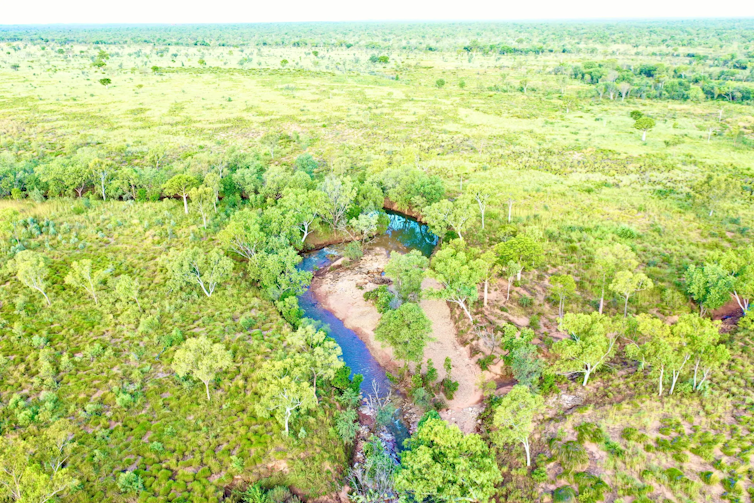
Proposed exploration wells would be within two kilometres of Mount Hardman Creek, a tributary of Martuwarra Fitzroy River.
Martin Pritchard/Environs Kimberley, CC BY-NC-ND
How was this assessed?
The moratorium on fracking in WA was only lifted in 2018, following a state Inquiry into Hydraulic Fracturing. The government stated 20 protections would be in place before fracking would be allowed,