


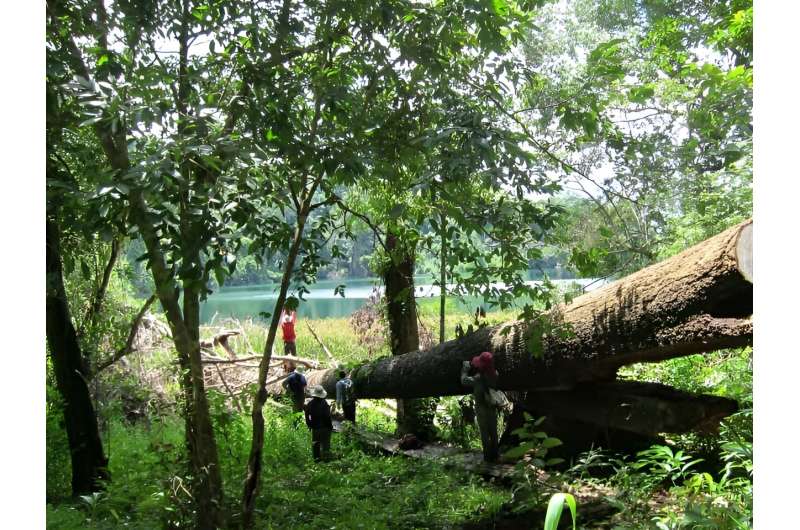
Credit: Dr Rebecca Hamilton/The University of Sydney
Check this out! An international team led by Dr. Rebecca Hamilton at the University of Sydney made a groundbreaking recent discovery that challenges previous scientific consensus. Rather than dry savannah in South East Asia dominating during the Last Glacial Maximum more than 19,000 years ago, they found a mosaic of diverse closed and open forest types.
This latest revelation implies that Asia’s tropical forests could be more resilient to climate change than previously thought, provided a diversity of landscape is maintained. The research suggests that prioritizing protection of forests above 1000 meters (‘montane forest’) alongside seasonally dry forest types could be important for preventing future ‘savannization’ of Asia’s rainforests.
The team’s research was published in the Proceedings of the National Academy of Sciences. Discover more about their findings here.
Dr. Hamilton emphasized the importance of maintaining forest types that facilitate resilience, especially with climate change accelerating, suggesting that it should be a conservation objective for the region.
In addition to challenging the savannah model, the researchers analyzed records from 59 paleoenvironmental sites across tropical SE Asia, offering innovative insights that could impact the science community’s understanding of past ecological change.
For more details about their recent discovery, read the full article here.
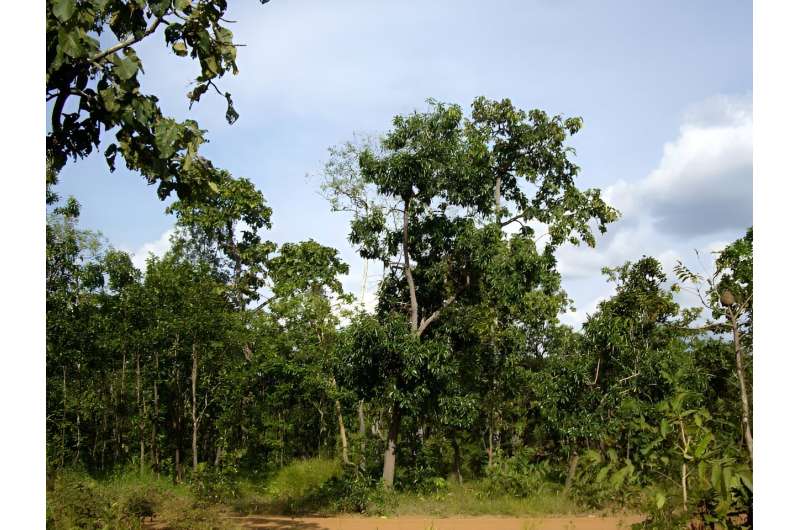
Credit: Dr Rebecca Hamilton/The University of Sydney
Dr. Hamilton shared her thoughts saying, “We put forward the idea that these seeming discrepancies can be reconciled, if during the cool and seasonal climate of the Last Glacial Maximum, montane forests (above 1000m) persisted and expanded in high-elevation regions, while lowlands experienced a shift to seasonally dry forests, which have a naturally grassy understory.”
The team’s work was done in collaboration with scientists from the Max Planck Institute of Geoanthropology in Jena, Germany; Flinders University; Purdue University in the U.S.; University of the Philippines; and the Australian National University.
For more information, you can view the study here or access it directly with the DOI: 10.1073/pnas.2311280120.
If you want to access the full article, click here.
Find the article cited here: ‘Maintain Asian forest diversity to avoid climate change impact,’ suggests new study retrieved 26 December 2023 from Phys.org. Please note that this document is subject to copyright laws. If you want to read more about it, follow this link to find out more.