


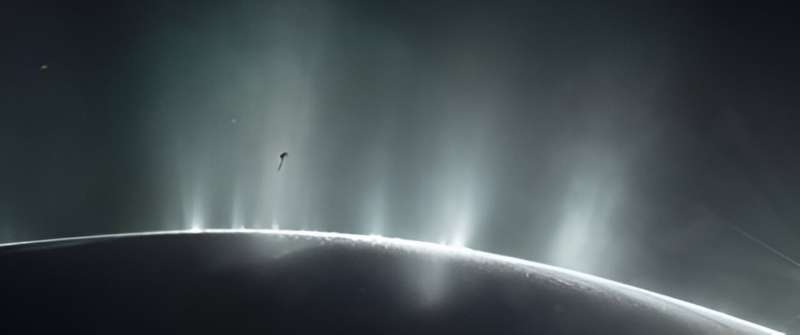
Dramatic plumes spray water ice and vapor from many locations along the famed “tiger stripes” near the south pole of Saturn’s moon Enceladus. The tiger stripes are four prominent, approximately 84-mile- (135-kilometer-) long fractures that cross the moon’s south polar terrain. Credit: NASA/JPL-Caltech/Space Science Institute
Stunning celestial phenomena have inspired countless works of science fiction. Now, the study of habitability—a crucial aspect of astrobiology—is delving into reality with groundbreaking research into the conditions necessary to support and sustain life in space.
For years, the focus has been on snapshots of other worlds or exoplanets, but scientists are now realizing that predicting the long-term potential for habitability requires a more in-depth approach, taking into account factors such as energy and nutrient flow throughout the planet.
“Time is essential. Sustained habitable conditions for millions or billions of years are a key part of our quest to understand a planet’s habitability,” says Mark Simons, John W. and Herberta M. Miles Professor of Geophysics at Caltech.
A new perspective paper, published in Nature Astronomy on December 29, outlines the importance of these geophysical factors in studying habitability, with a focus on icy moon Enceladus, but the implications apply to all planets and moons in the search for life.
Find out more about this groundbreaking research here.