

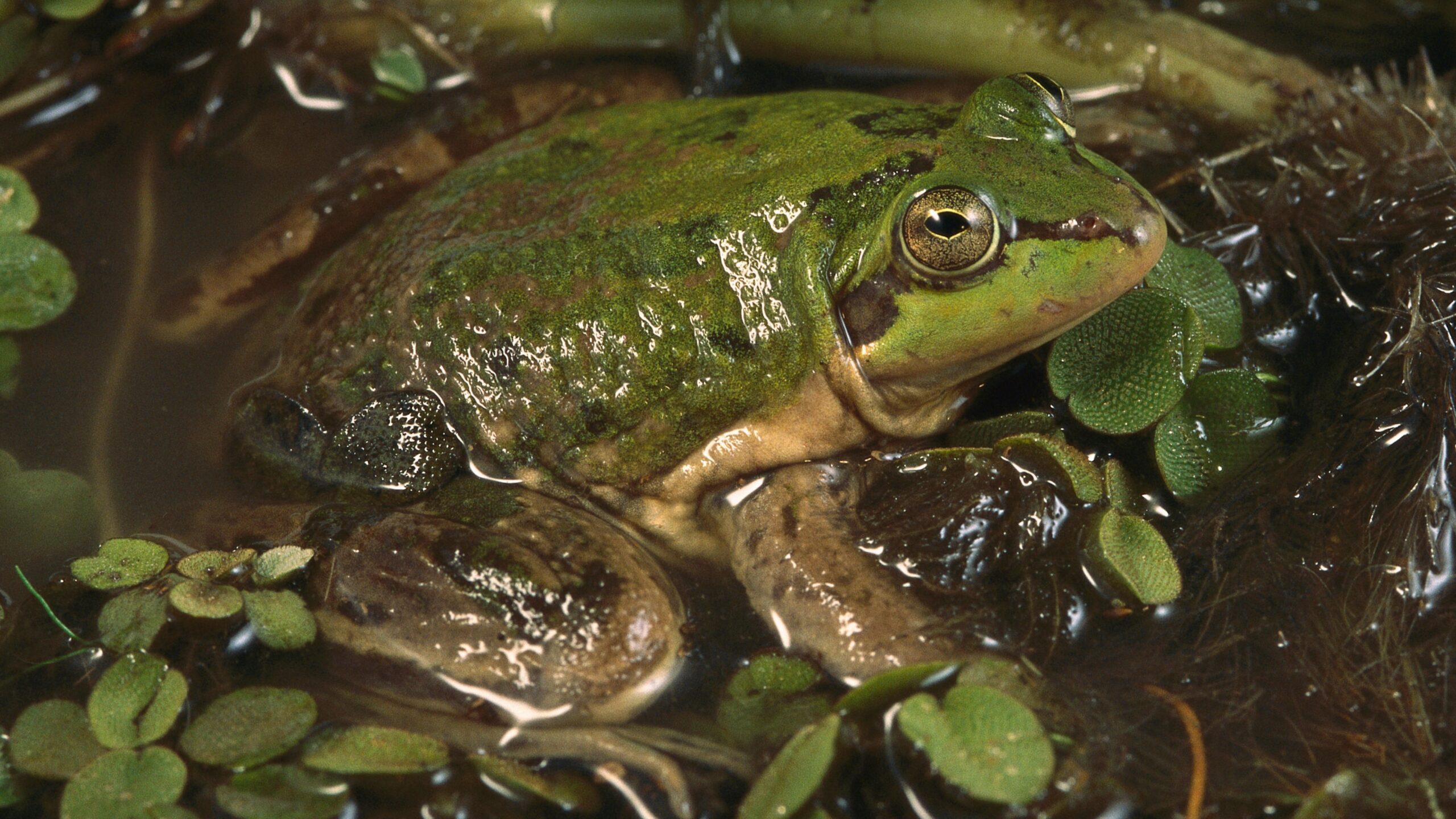

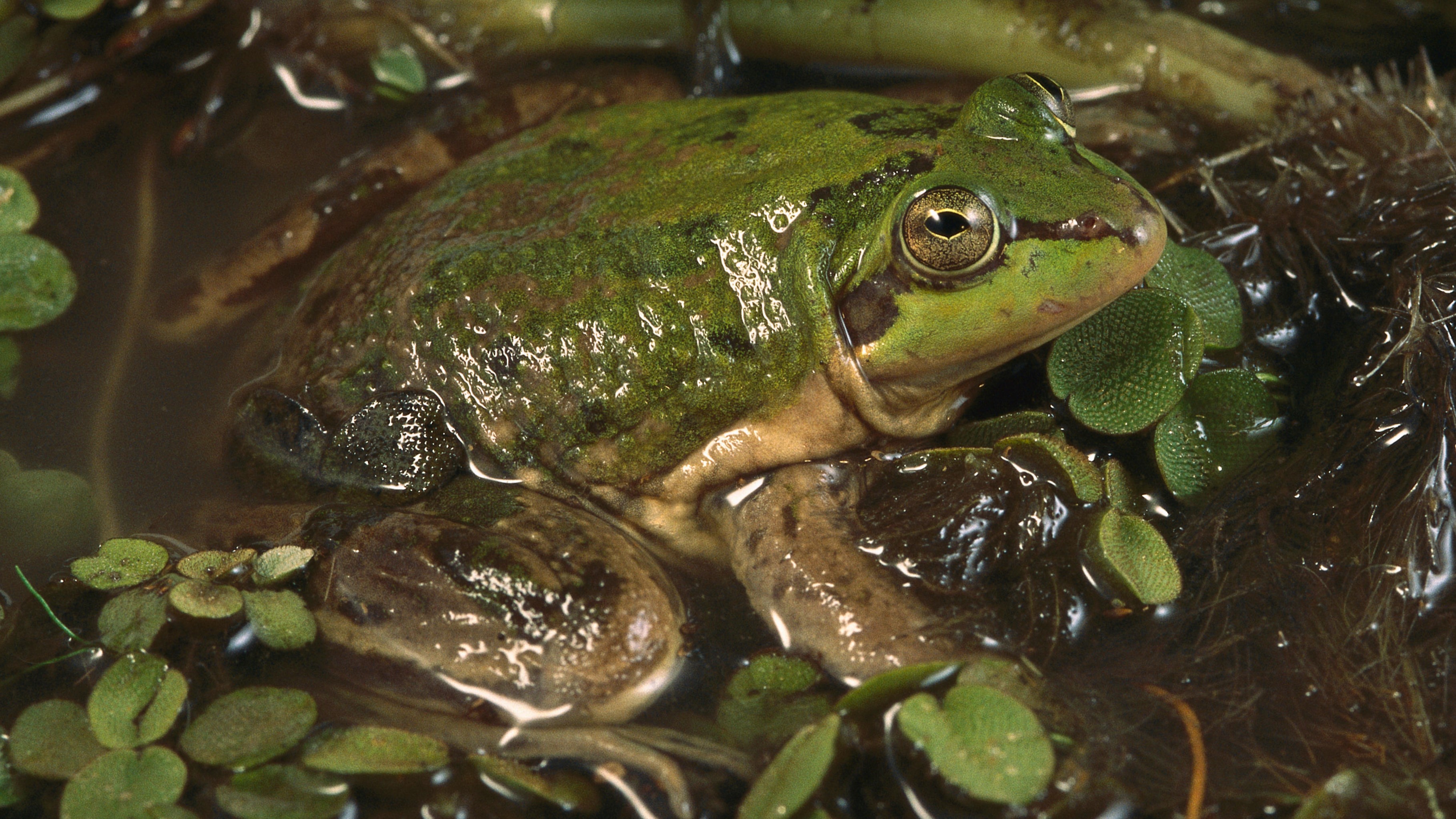
The paradoxical frog (Pseudis paradoxa) might just be the most unusual frog you’ve ever seen. (Image credit: Minden Pictures/Alamy)
Name: Paradoxical frog (Pseudis paradoxa), but you can also call it the shrinking frog.
Where it lives: Northern South America and Trinidad
What it eats: Invertebrates, mainly insects
Why it’s awesome: This rather odd species is unusual because it gets smaller as it grows up. The paradoxical frog’s size change is quite mind-boggling. As a tadpole, it’s three to four times larger than an adult and measures up to 9 inches (22 centimeters). In comparison, an adult measures up to 3 inches (8 cm) long.
Other species in the Pseudis genus also exhibit this unusual change in size, but the paradoxical frog holds the record for the longest tadpole.
So how do these tadpoles get so big? A study published in 2009 in The Herpetological Journal found that the growth rate of the tadpoles is similar to other species, but the paradoxical tadpoles just keep on growing and developing.
By the time the tadpoles undergo metamorphosis into adults, the males have already begun to produce sperm and are “essentially mature,” and the females have eggs in development — which normally happens in the juvenile frog stage of the life cycle.
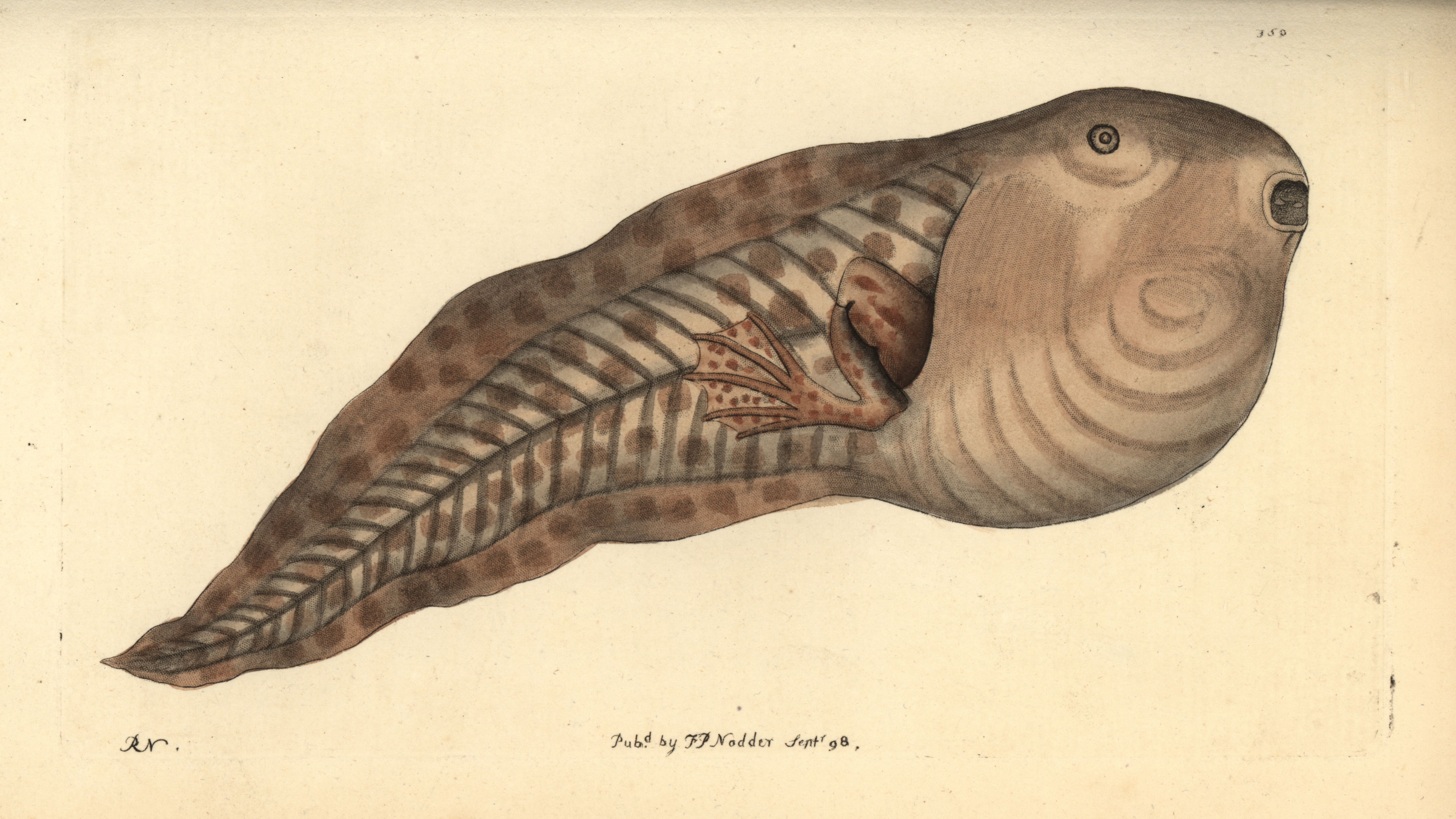
Do you want to go back to the 1700s and see an illustration of this incredible paradoxical frog? It’s all here for you to check out. (Image credit: Florilegius/Getty Images)
Another paper, which looked at a different Pseudis species, studied the skeletal development of that species’ tadpoles and found that it was well-advanced or complete by the end of metamorphosis.
Have you ever wondered why the tadpole of the paradoxical frog is so large? It’s all thanks to its long and deep tail. Prior to metamorphosing into an adult, the tadpole’s body length is comparable to the mature adult.
In most other frogs, a post-metamorphosis frog starts small and then grows larger. However, because this tadpole grows for longer than other species, and is well-developed when it undergoes metamorphosis, the adult exhibits little to no growth. The loss of the tail that causes the frog to “shrink.”
Get the world’s most fascinating discoveries delivered straight to your inbox.
Megan Shersby is a naturalist, wildlife writer and content creator. After graduating from Aberystwyth University with a BSc (Hons) degree in Animal Science, she has worked in nature communications and the conservation sector for a variety of organisations and charities, including BBC Wildlife magazine, the National Trust, two of the Wildlife Trusts and the Field Studies Council. She has bylines in the Seasons anthologies published by the Wildlife Trusts, Into The Red published by the BTO, and has written for the BBC Countryfile magazine and website,