


Columnist and
Technology
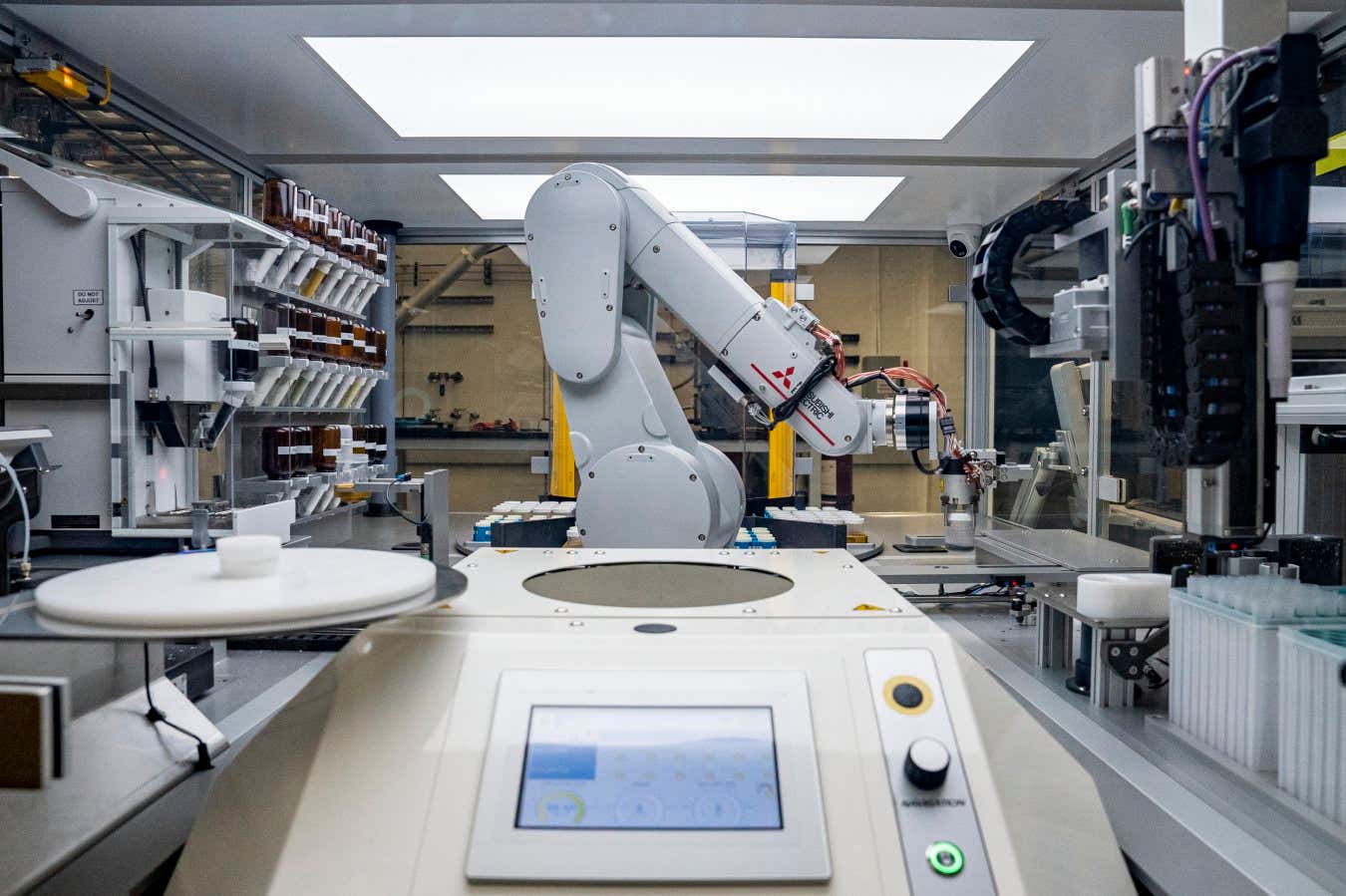
Self-driving labs can perform experiments thousands of times faster than a human and they don’t need to sleep. This means more science in less time, but many questions remain, says Alex Wilkins
By Alex Wilkins

Get a glimpse of A-Lab at Lawrence Berkeley National Laboratory in Berkeley, California
Marilyn Sargent/Berkeley Lab
Many PhD students working in labs – the glass beaker and fume cupboard kind – often feel like a glorified robot. Much of the science, especially when it comes to testing new materials, requires repetitive work that can seem like a waste of time and talent.
Using artificial intelligence and robots might alleviate some of this tedious work, and for a long time, the complexity of even simple tasks…
No commitment, cancel anytime*
Offer ends 28th October 2023.
*Cancel anytime within 14 days of payment to receive a refund on unserved issues.
Inclusive of applicable taxes (VAT)
or
Existing subscribers
Sign in to your account
More from New Scientist
Discover the latest news, articles, and features