




Image: Mark Hachman / IDG
When it comes to computing, everyone knows that once you start adding monitors to your workspace, it’s really hard to give them up. That’s why I was so thrilled to witness The Portable Monitor’s five-screen portable setup at CES 2024. Yes, you read that right - five! But although it wasn’t what I was expecting, I’m more than willing to give it a pass.
About a year ago, a contact convinced me to try FOPO’s triple-display monitor, one of the first on the market at the time. FOPO’s “triple” display, which in reality consists of two 1080p displays mounted on either side of your laptop, plugs into your laptop’s USB-C ports and gives you extra monitors for email, Slack/Teams, and so on. It’s evident that laptops don’t allow users to organize various windows all over their desktop like a large desktop monitor does.
Therefore, when I received an email from the Belgian tech company, I couldn’t help but feel intrigued. So, I immediately made my way over to a hotel near the convention center where I saw what The Portable Monitor had to offer.
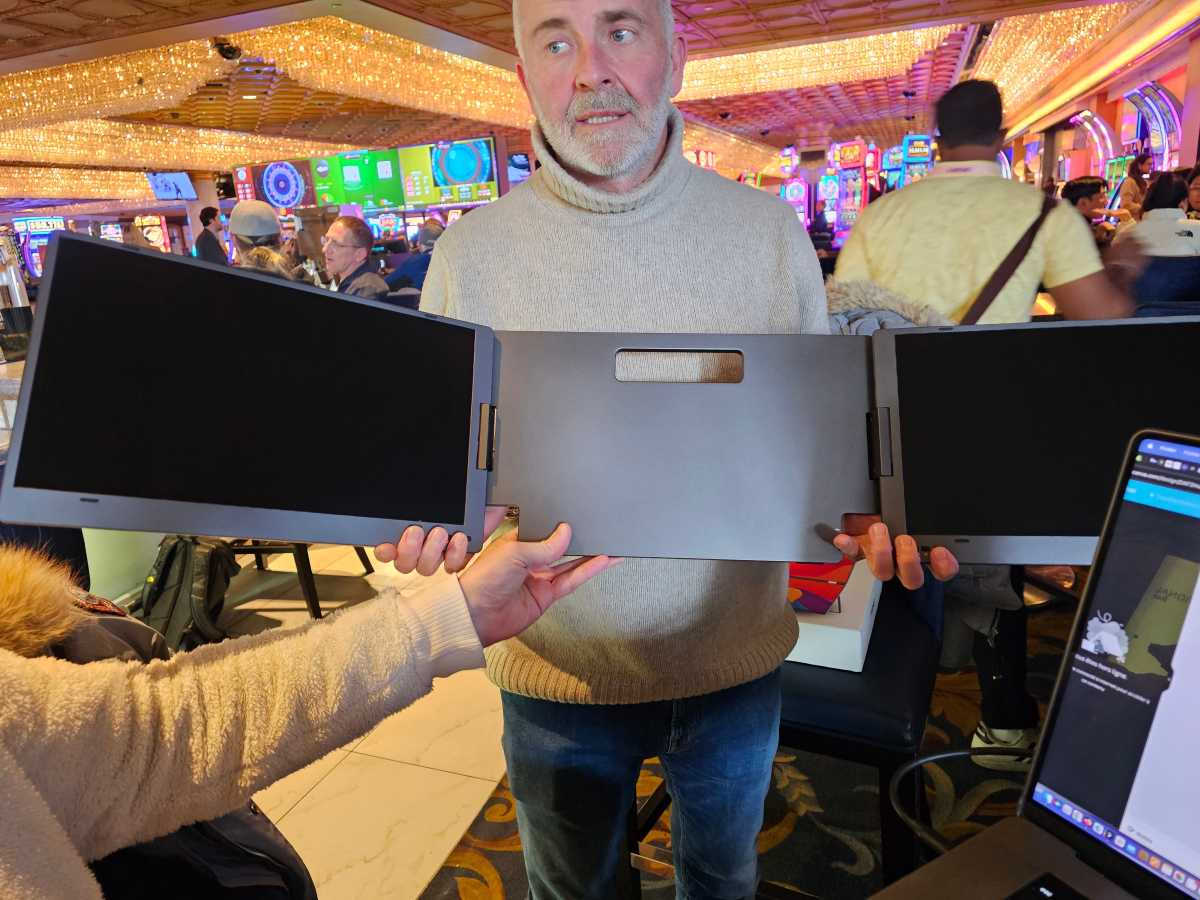 The Portable Monitor’s Flex displays.
Mark Hachman / IDG
The idea of a five-screen setup from TPM certainly excited me. However, as I discovered, what it actually does is create the four additional displays from two products: the Flex and the Twins.
The Flex, which is a pair of 14-inch, 1080p displays priced at $469, are available for purchase on the company’s website (also available on Amazon). For a 15.6-inch option, the price is raised to $569. There’s also a version made of plastic, rather than metal, which is priced at $369, cutting both the weight and the price.
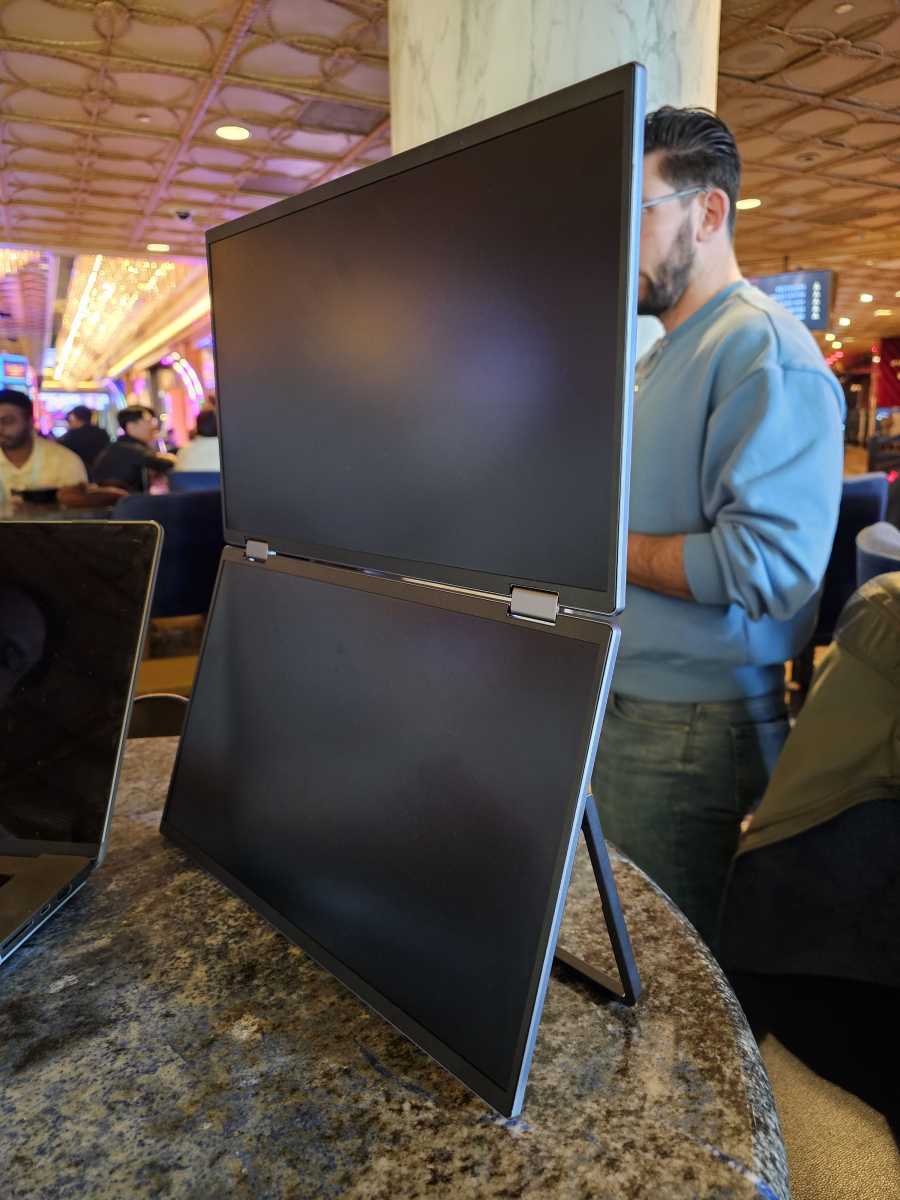 The Twins offer a vertical configuration to the portable-display offerings from The Portable Monitor.
Mark Hachman / IDG
The Flex displays were designed not to grab your monitor like FOPO, in part because owners of MacBook Airs, and other thin notebooks were worried about damaging the screen. They can stand by themselves, with both connected to your laptop via a USB-C cable.
The Twins, on the other hand, are a $499 dual-display version of the Flex, but with two screens that can flip vertically, back over themselves. This creates an array somewhat like the Asus ZenBook Duo, where the displays form something like a flat skyscraper of pixels. The best part about the Twins is that both displays fold down nearly flat, making them easy to travel with. On the other hand, the Flex still looks like it requires an inch or more of room, making travel less convenient.
Although the Flex and the Twins were not as straightforward as what I had envisioned, they are still an innovative and efficient solution. As of now, users will need to buy both a Twins and Flex setup, using one USB-C cable apiece to connect them to their laptop.