

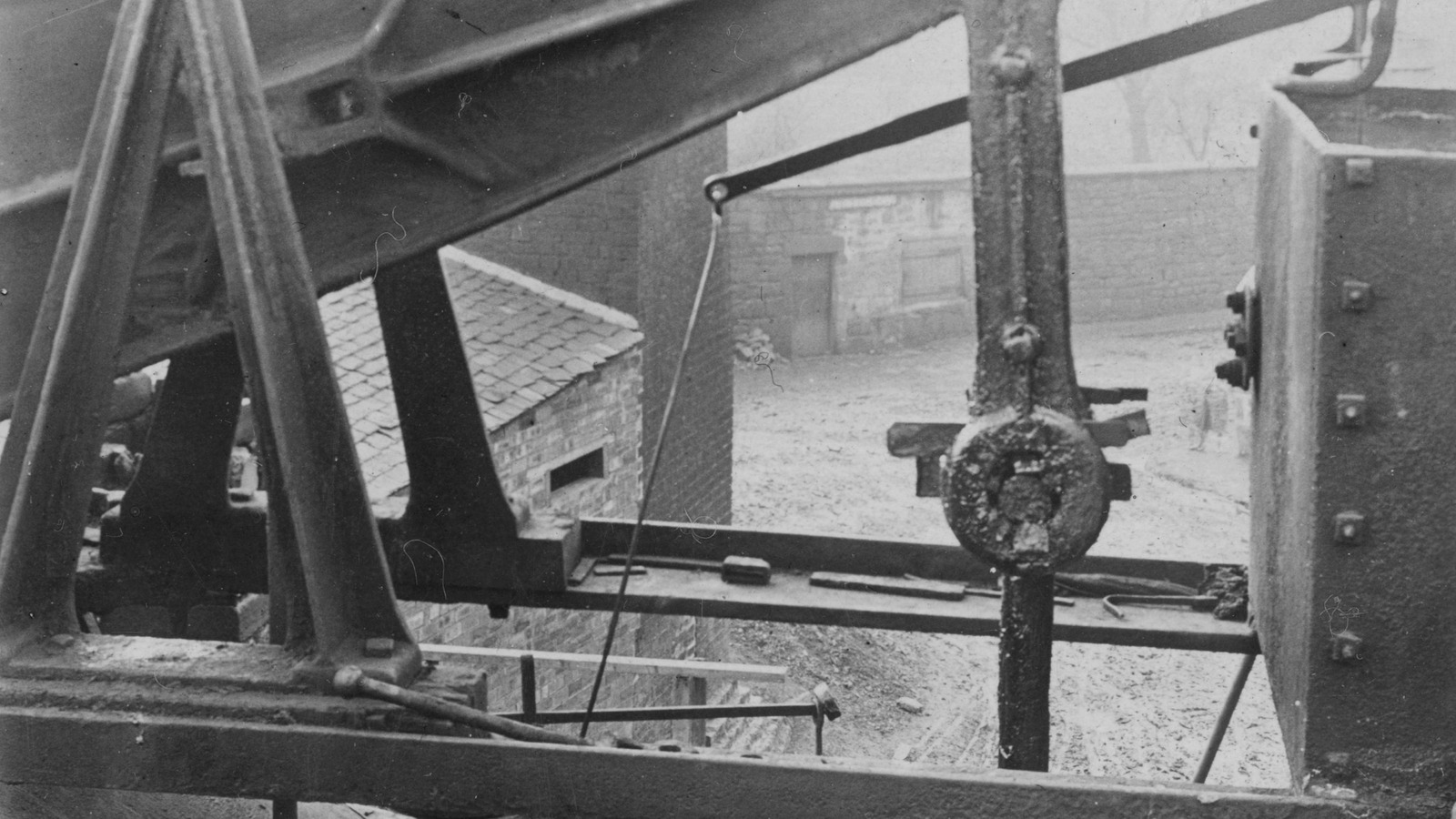

Exploring the Origins of Steam Engines
Advancements in technology often lead to the shrinking of devices. Modern microchips and lithium-ion batteries, which power many devices today, are compact and lightweight. In contrast, the early steam engines that paved the way for internal combustion engines and electric trains were massive and imposing.
The Electronic Numerical Integrator and Computer (ENIAC), the first computer of its kind, was a colossal machine occupying 1,800 square feet and weighing 30 tons. Similarly, the Newcomen engine, one of the earliest steam engines developed by Thomas Newcomen, stood at 9.5 meters tall and long.
In an era before electricity, the primary function of these machines, such as the Newcomen engine, was to pump water. Despite their seemingly straightforward task, these steam engines relied on intricate principles and components to operate. The innovative designs and concepts behind these early steam engines laid the foundation for the sophisticated engines of today.
The Pioneering Steam Engine Creators
The creation of the steam engine involved numerous brilliant minds working over centuries to refine and enhance the technology. Various inventors designed their own machines, contributing to the evolution of steam-powered technology. Identifying the exact inventor of the first steam engine as we recognize it today is a complex historical inquiry, highlighting the collaborative nature of technological progress.
The Revolutionary Invention of the Steam Engine
The concept of steam engines dates back to the 1st century with the creation of Hero of Alexandria’s aeolipile. This early steam-powered device, resembling a toy, comprised a cauldron filled with water and a sphere suspended above it by vertical pipes. Steam and flames from the cauldron would reach the sphere, causing it to rotate on its axis through small outlets.
Moving forward, the focus shifted towards harnessing the potential power of steam for industrial purposes. It was not until 1698 that inventor Thomas Savery patented what could be considered the first practical steam engine. Savery’s machine aimed to address the common issue of flooding in coal mines by removing excess groundwater, enabling mine owners to resume operations and increase profitability.
The Functionality of Savery’s Steam Engine
Contrary to Hero’s simplistic design, Savery’s steam engine featured a more intricate mechanism designed for practical use. Although the concept remained similar to its predecessor, the execution was on a larger scale. Savery documented the workings of his invention in a manuscript titled “The Miner’s Friend,” showcasing the evolution of steam-powered technology for industrial applications.
As seen in the image above, Savery’s steam engine laid the foundation for further advancements in the field, setting the stage for the Industrial Revolution and the widespread adoption of steam engines in various industries. The innovation and ingenuity behind Savery’s creation marked a significant milestone in the history of engineering and technology.
In conclusion, the development of steam engines from ancient Greek novelties to industrial powerhouses underscores the continuous quest for harnessing natural resources for human advancement. The legacy of inventors like Thomas Savery lives on in the modern marvels powered by steam engines, showcasing the enduring impact of innovation on society.