


The Fascination of Eating Live Food
In various cultures globally, the practice of consuming live animals as food has been a longstanding tradition. For instance, in Japan, the custom of “odorigui” involves eating creatures like squid, octopus, and ice gobies that are still alive. Diners partake in this experience, relishing the wriggling sensation as part of the dining adventure.
Studying the Psychological Aspect of Live Food Consumption
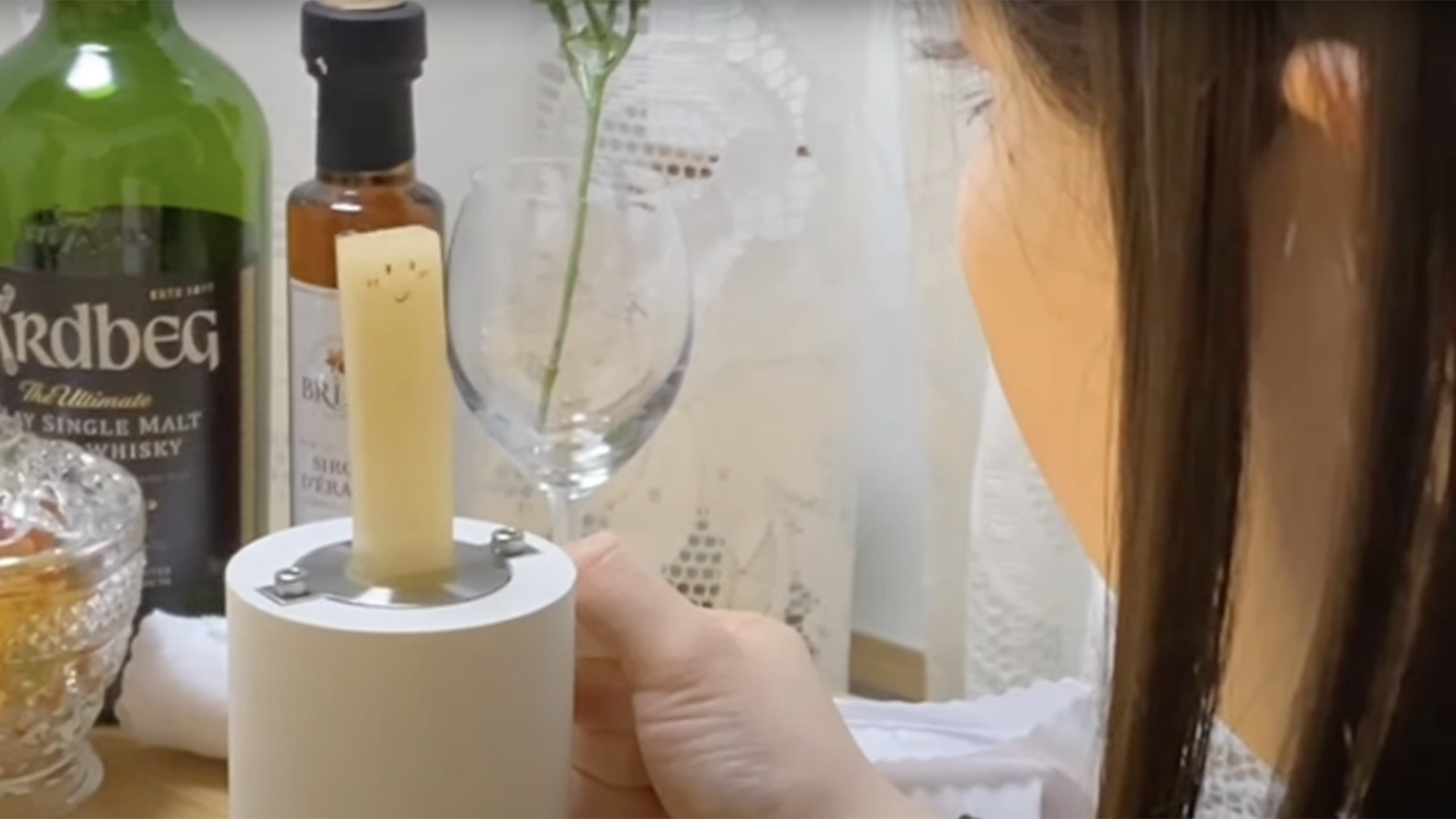
To gain insight into the emotional and psychological reactions associated with eating live food dishes like “odorigui,” researchers developed a moving gelatin robo-food using innovative technology such as 3D-printing, kitchen cooking methods, and air pumps. The outcomes of this experimentation not only prove to be more appealing than the traditional reality show shock snacks but also hint at potential creative applications in the culinary and medical fields.
A Novel Experiment in Human-Robot Interaction
Recently published in a study by Japan’s University of Electro-Communications and Osaka University, researchers created a handheld device powered by air pressure to explore human-edible robot interaction (HERI). They crafted an edible gummy-like substance utilizing additional sugar and apple juice for enhanced taste. This mixture was then solidified in molds with airways, allowing the snack to be attached to a holder resembling a coffee mug. By controlling the airflow in the gelatin, researchers could induce movements like side-to-side wags or pulsations.
Tasting the Moving Robot Treat
In the experiment, 16 students from Osaka University interacted with the moving soft robot morsel by placing it in their mouths, allowing it to move for a brief period, and then consuming it. Additional control students ate a stationary gelatin gummy for comparison. Post-meal surveys revealed that the experience of consuming a moving food item influenced the participants’ perceptions, making them feel emotions, ponder animateness and intelligence, and even experience guilt. Terms like “grappling” and “crisp” were used to describe the sensations felt in the mouth while eating the moving food.
Exploring the Intricacies of Eating Live Food
Although this study serves as an initial exploration into the dynamics of consuming live food like “odorigui,” it sheds light on the complexities involved in such culinary practices. By delving into the psychological and emotional responses evoked by eating moving food, researchers aim to unravel the underlying mechanisms that govern our perceptions of what we consume.