

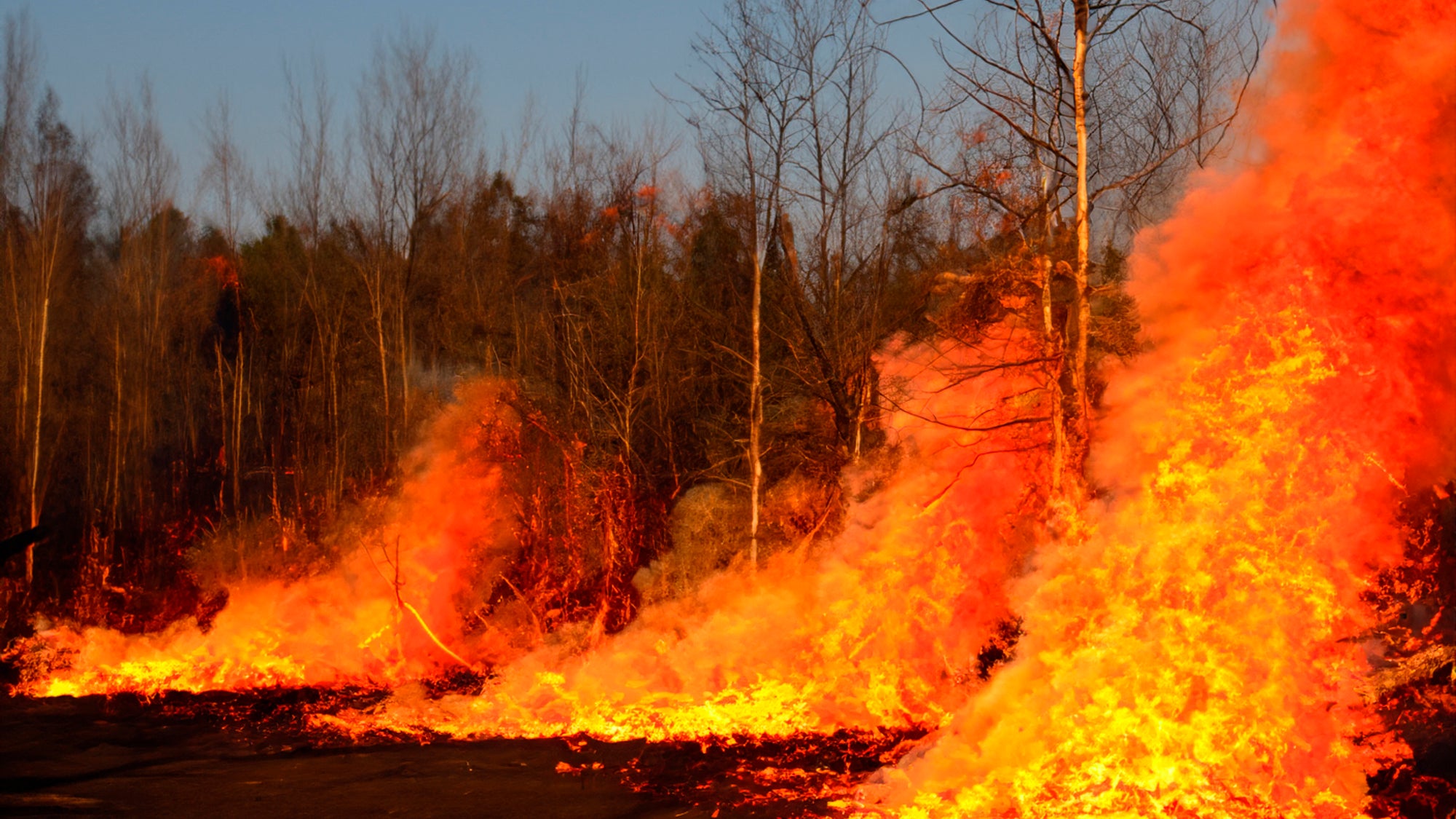

This article was originally featured on High Country News.
Increasing frequent and intense fires are shaping how species change, according to a paper published last year in the journal Trends in Ecology & Evolution. While previous research tended to focus on a blaze’s immediate impacts—Did population numbers go up or down?—scientists are starting to consider a longer timeline, said study co-author Gavin Jones, a Forest Service research ecologist at the Rocky Mountain Research Station.
Fire kills some animals but helps others survive, thereby determining which animal’s genes are passed on to future generations. The process of some individuals surviving better than others is natural selection, the driver of evolution. Sometimes, the survivors have traits that allow them to not only live through a fire but actually thrive in the burned ecosystem and later reproduce successfully.
Fire can also act as a connector, creating habitat that encourages members of a species to mingle over a larger range. Conversely, it can sometimes split populations into smaller, more isolated groups. That may result in inbreeding and eventual extinction—or the need for human intervention to keep an isolated population alive.
Can wildlife adapt to a fiery future quickly enough to thrive? Species with large populations and short generations, like insects, tend to evolve faster than those with longer generations, which might have a harder time. “A lot of species are not going to be able to adapt,” Jones said, and will likely go extinct. “But we’re not at a total loss. Some species will be able to adapt.”
Animals with fire-adapted traits have already been identified throughout the West. Here are five examples of what Jones calls “evolution in action.”
Black fire beetle
Black fire beetles love fire. In fact, they chase it—seeking out newly burned stumps to lay their eggs. Fires also drive off predators that might eat the beetles’ eggs before they hatch. So the bugs have developed sensory pit organs on their sides, tucked behind their legs, that can sense heat, letting them know where active blazes or smoldering, charred areas are, even from dozens of miles away. Highly sensitive infrared receptors within these organs contain small pockets of water that expand when they detect heat, which triggers the beetle to follow the heat to its source.
Black-backed woodpecker
Black-backed woodpeckers nest in charred snags and standing dead trees, where their plumage blends in with their sooty surroundings. But research on juveniles’ survival rates found that the closer nests are to unburned forest—where there’s more protective tree cover—the more likely they will survive to adulthood and pass on their genes. Offspring hatched in the middle of severely burned forests likely won’t survive, which selects for the genes of birds who nest closer to undisturbed forest. Additional research found that the woodpeckers flock to burned areas three to five years post-fire looking for beetles,