

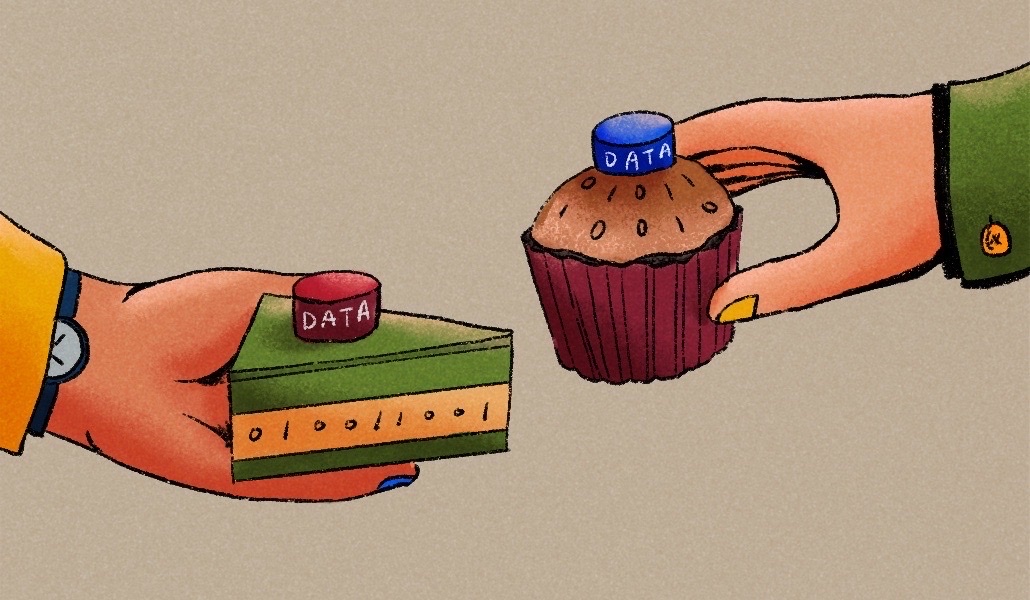

Exploring Differential Privacy in Data Collection
As the advertising industry grapples with issues of personal privacy, finding ways to gather data without infringing on individual rights has become a priority. One solution that has emerged is the concept of differential privacy, a statistical technique utilized by major tech companies like Apple, Google, and Microsoft to share aggregate user data while safeguarding personal information.
Understanding Differential Privacy
Differential privacy is a method for aggregating data that involves injecting random information into datasets to preserve anonymity. Before transmitting data to a server for anonymization, a differential privacy algorithm introduces random elements into the original dataset. This process ensures that the resulting data remains slightly obscured, providing a level of protection for individual privacy.
Protecting Privacy While Maintaining Utility
By employing differential privacy, advertisers can obtain valuable insights without compromising the personal information of users. For example, an advertiser analyzing differentially private data may learn that 150 out of 200 individuals interacted with a particular ad, without being able to identify the specific individuals involved. While this approach may sacrifice some accuracy in data analysis, it offers a valuable trade-off by safeguarding individual privacy.
Industry Implementation and Implications
The use of differential privacy has gained traction among industry stakeholders, with groups like the Truth in Measurement collective exploring its potential applications in cross-platform measurement. By embracing this statistical technique, advertisers, publishers, and tech platforms can uphold ethical standards while gathering meaningful data. For instance, differential privacy could play a role in validating data shared within data clean rooms, supporting more transparent and privacy-conscious data practices.
Looking Ahead: Cross-Platform Measurement and Data Clean Rooms
As discussions around data clean rooms and cross-party measurement continue to evolve,
Discover more about the impact of differential privacy on data collection and privacy practices here.