


Discover the Unique Mary River Turtle
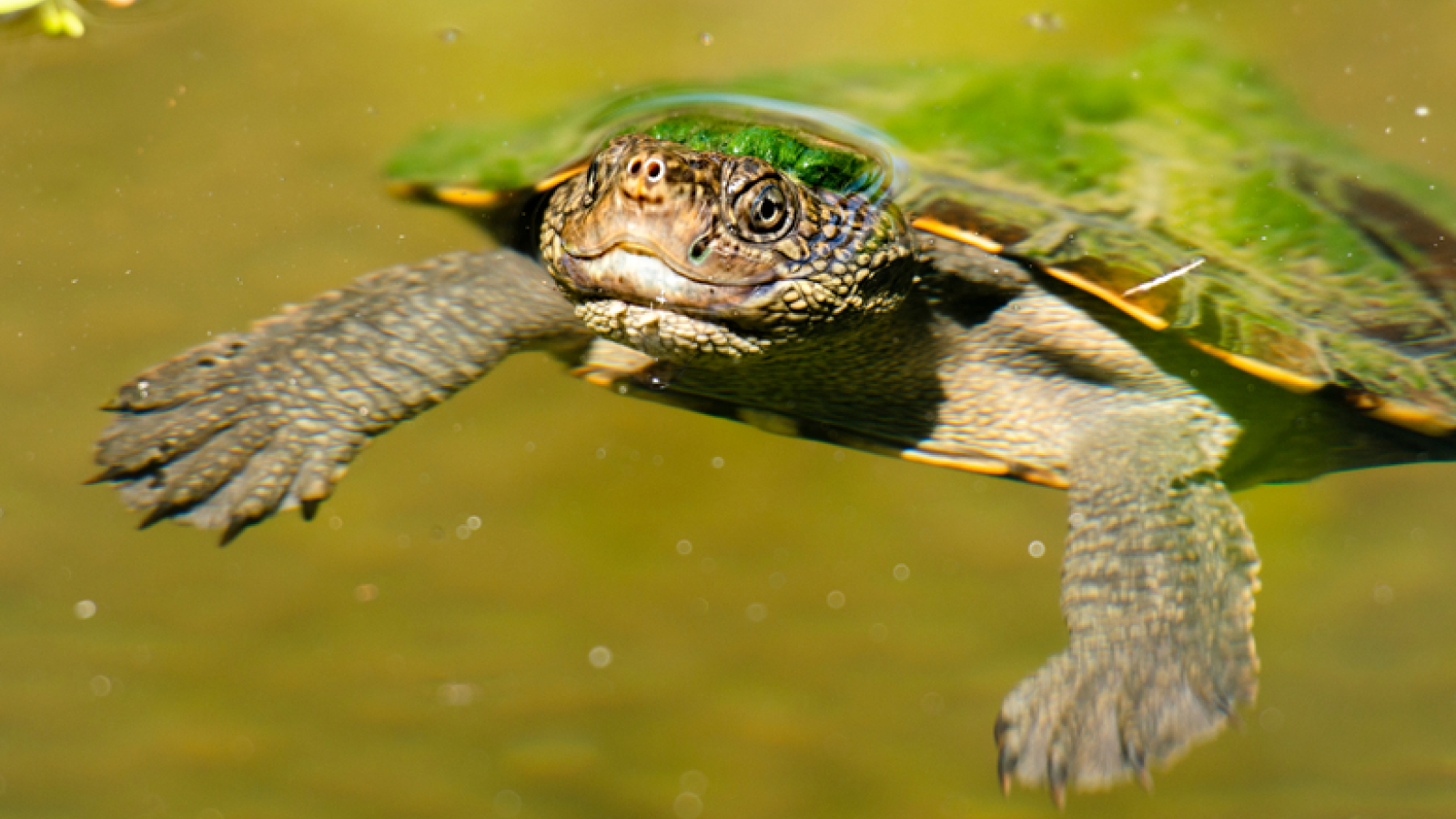
The Mary River turtle, scientifically known as Elusor macrurus, is a fascinating creature that inhabits the Mary/Moonaboola River in Queensland, Australia. This turtle primarily feeds on aquatic plants, although it occasionally consumes seeds, fruits, and insect larvae. What sets this turtle apart is its punk-like appearance, characterized by green algae growing from its head and body, aiding in camouflage from predators in its watery habitat. Additionally, it sports two long, fleshy protrusions called barbels on its chin, enhancing its ability to sense its surroundings.
Breathing Through the Bottom
One remarkable aspect of the Mary River turtle is its unique ability to breathe underwater through a specialized organ located inside its cloaca, an orifice responsible for intestinal, urinary, and genital tracts in non-mammalian vertebrates. This extraordinary adaptation allows the turtle to spend extended periods submerged, a feat achieved by very few reptiles. While some freshwater turtles rely on their skin for aquatic respiration, the Mary River turtle utilizes cloacal glands, enabling it to stay underwater for up to 72 hours. Oxygen from the water diffuses across small structures called papillae lining the cloacal bursae and enters the turtle’s bloodstream, facilitating its underwater respiration.
Evolutionary Significance
The Mary River turtle holds a distinct evolutionary position, as it is the sole surviving species in its genus with no closely related turtle species. Research suggests that the ancestors of this unique turtle diverged from all other living turtle lineages over 18 million years ago, predating the evolutionary split between human ancestors and those of the orangutan. Despite its historical presence in the pet trade during the 1960s and 1970s, the wild distribution of the Mary River turtle remained a mystery until its formal classification as a species in 1994.
In Conclusion
The Mary River turtle stands out as a remarkable example of evolutionary adaptation and survival. With its striking appearance, exceptional aquatic respiration ability, and unique evolutionary lineage, this turtle continues to captivate researchers and conservationists alike. Stay informed about the latest discoveries in the natural world by subscribing to our newsletter for intriguing insights.
By Megan Shersby, a dedicated naturalist, wildlife writer, and content creator. Graduating with a BSc (Hons) degree in Animal Science from Aberystwyth University, she is passionate about sharing knowledge and raising awareness about the wonders of the natural world. Uncover more fascinating facts about the Mary River turtle and its extraordinary capabilities by exploring our in-depth article.