


Innovative Use of Titanium Metamaterials in Engineering Applications
Metal alloy cellular structures have the potential to enhance various products, from bone implants to rocket components, if they can overcome the issue of cracking under pressure. Researchers have long grappled with the challenge of uneven weight distribution in these artificial “metamaterials,” with limited success. However, a recent breakthrough detailed in a study published in Advanced Materials by a team at Australia’s RMIT University offers a promising solution. Drawing inspiration from plants and coral, coupled with cutting-edge 3D-printing technology, the researchers have devised a method to address this longstanding problem.
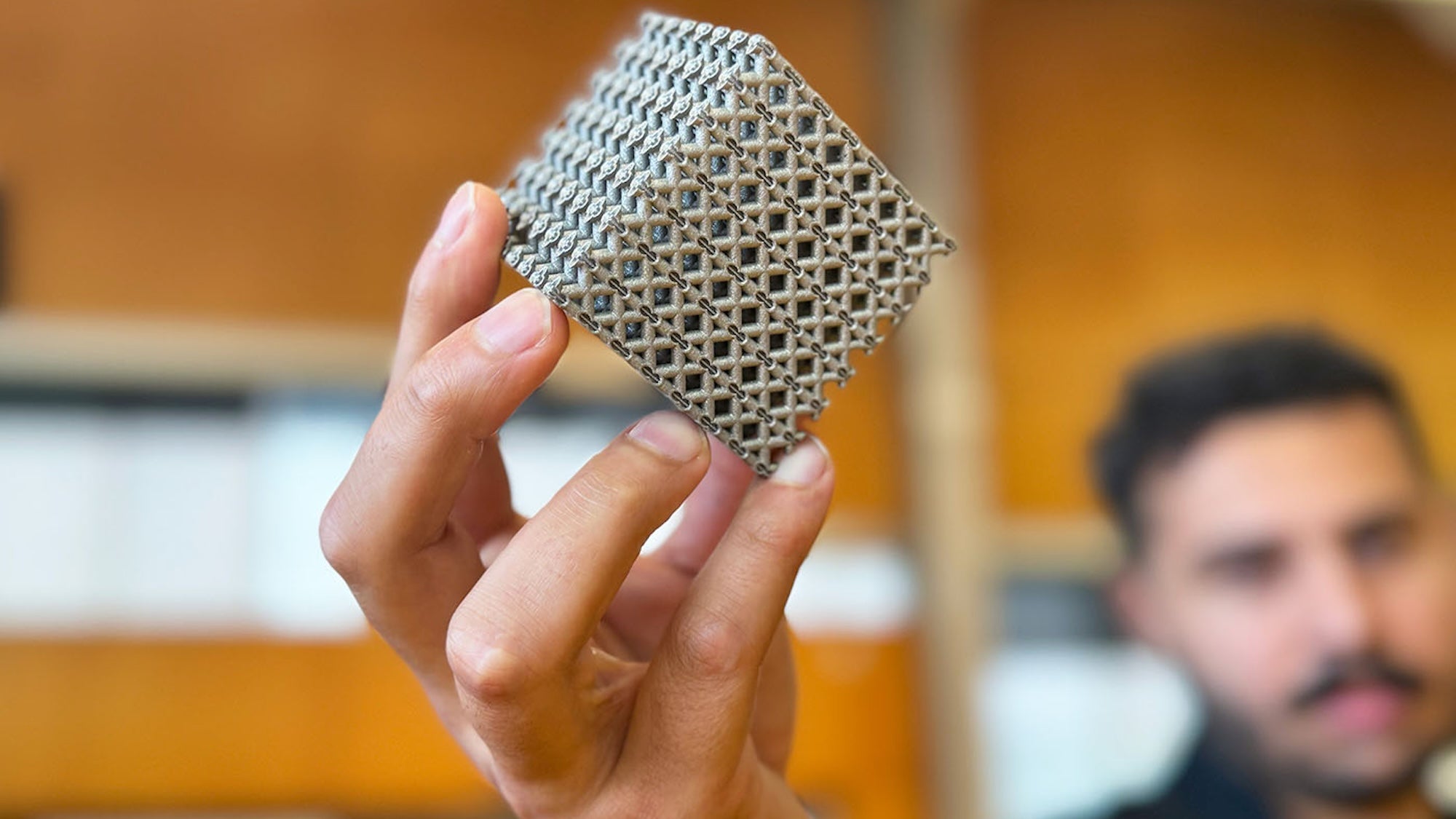
By employing a conventional titanium alloy, engineers have created lattice-like structures consisting of hollow struts, each reinforced with an additional thin band running through it. According to Ma Qian, an RMIT Distinguished Professor of advanced manufacturing and co-author of the study, the team combined two complementary lattice structures to distribute stress evenly, thus eliminating weak points where stress typically accumulates.
The innovative design showcases a remarkable combination of strength and lightness that has not been observed in nature before. To fabricate these lattice metamaterials, the researchers used laser powder bed fusion, a sophisticated manufacturing technique where a powerful laser beam melts titanium granules layer by layer. Subsequent compression tests demonstrated that a cube constructed from the new hollow lattice could withstand 50% more weight than an equivalent solid cast of the commonly utilized magnesium alloy, WE54, in aerospace engineering.
While the current metamaterial can resist temperatures up to 350 degrees Celsius (662 Fahrenheit), there is a possibility of enhancing its heat tolerance by incorporating more heat-resistant titanium alloys, potentially increasing the threshold to 600 degrees Celsius (1,112 Fahrenheit). This advancement could open doors for applications in rocket manufacturing and firefighting drones.
Additionally, the researchers predict that these lattice structures could be beneficial in human bone implants, as their hollow nature may facilitate bone cell regeneration during integration with the patient’s body. However, widespread adoption of the titanium metamaterial may take time, as not everyone has access to the specialized laser powder bed fusion machinery required for its production.
Nonetheless, the team remains optimistic that as technology advances and equipment becomes more accessible, the innovative metamaterial design will become more readily available for utilization by a broader audience.