

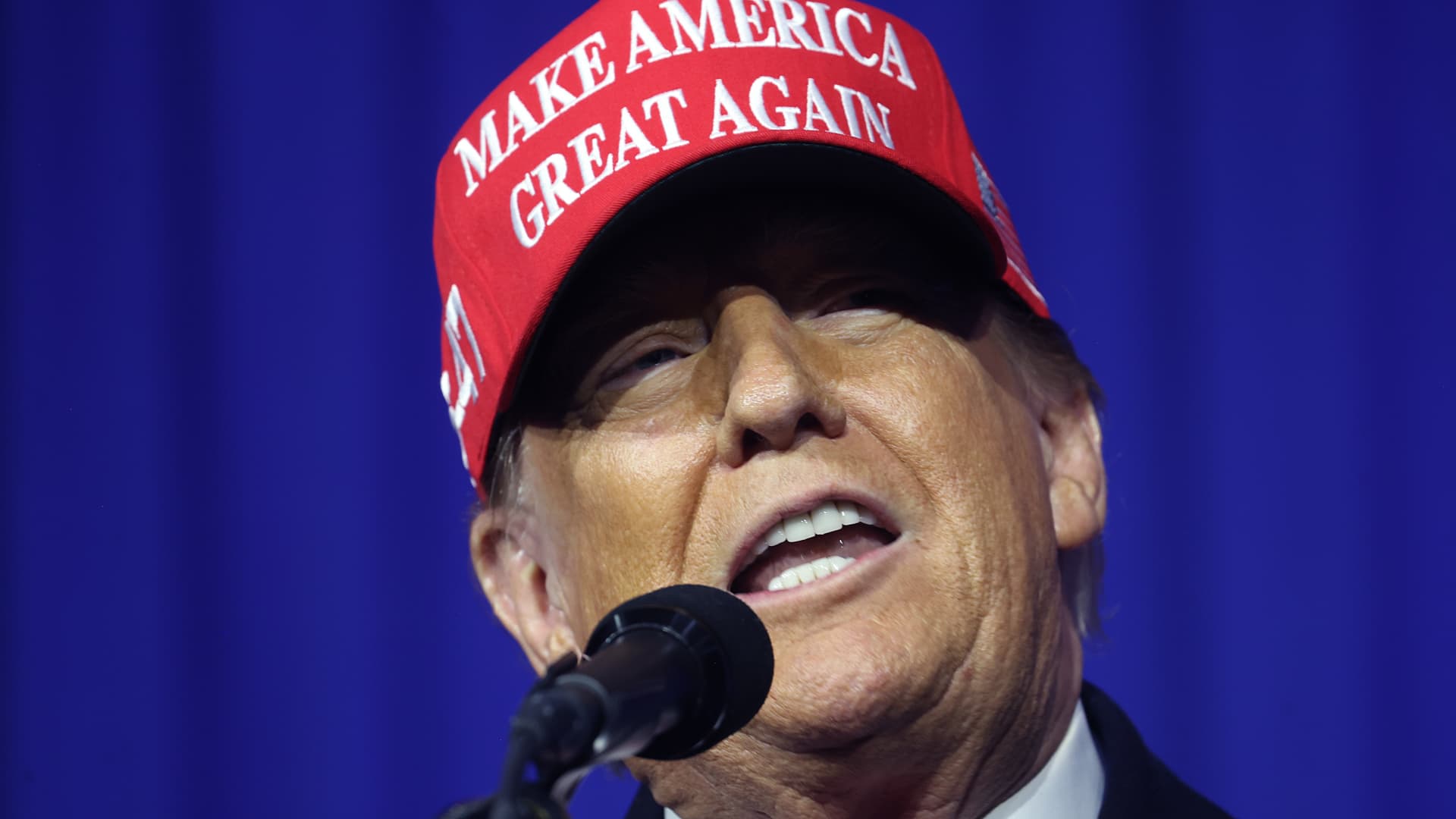

Donald Trump emerged victorious in the Michigan Republican presidential primary, decisively defeating his last remaining rival, former United Nations ambassador Nikki Haley. Trump expressed his gratitude to supporters in Grand Rapids, acknowledging that the outcome exceeded expectations and promising an extensive campaign in the coming months.
On the other hand, Haley remains determined to continue her campaign efforts leading up to Super Tuesday, where multiple states will hold their nominating contests. Despite not securing any wins in previous primaries or caucuses, Haley’s team has established a presence in key Super Tuesday states, highlighting a commitment to carry on.
The results in Michigan were portrayed by Haley’s campaign as indicative of Trump’s inability to garner broad support within his own party for a general election. Haley’s national spokesperson, Olivia Perez-Cubas, emphasized the need for a shift away from Trump to prevent losses to the “socialist left,” advocating for a change that prioritizes the future well-being of the younger generation.
Trump’s lead in the Michigan primary followed a significant victory in South Carolina, where he secured a substantial margin over Haley just a few days earlier. Despite Trump’s assertion of unity within the Republican Party, there were signs of dissent, with a notable percentage of voters expressing hesitancy to support him in a general election.
In addition to the electoral challenges, Trump faces legal hurdles that could impact his pursuit of the nomination and a potential return to the White House. Scheduled trials in New York and Florida related to alleged criminal activities, along with legal battles regarding the 2020 election results, present obstacles that may influence the political landscape moving forward.