

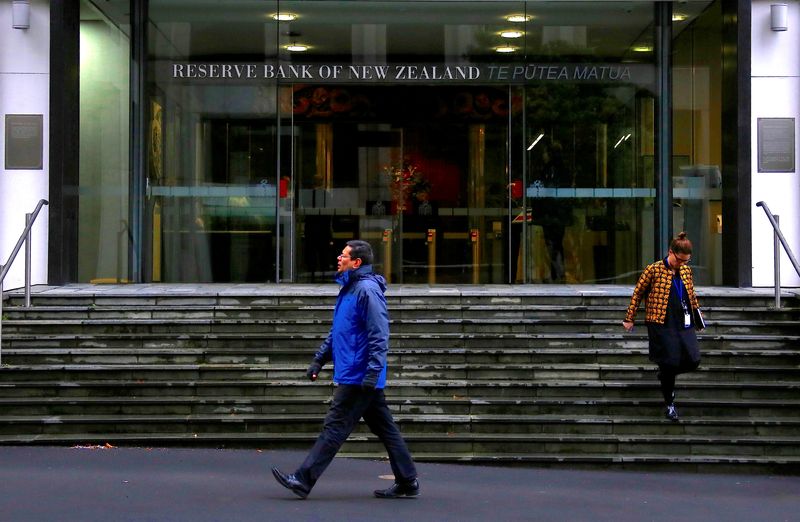

 © Reuters. Exterior of the Reserve Bank of New Zealand in central Wellington, New Zealand. REUTERS/David Gray/file photo
By Lucy Craymer
WELLINGTON (Reuters) – The Reserve Bank of New Zealand made the decision to keep the cash rate at 5.5% unchanged and revised down their forecast for peak rates in a move that surprised the markets. Policymakers emphasized that the risks to the inflation outlook are now more balanced.
While the decision aligns with expectations, it differs from some market predictions of a rate hike, aligning the central bank with other global counterparts that have already ended their aggressive tightening cycles.
The statement and rate forecast from the RBNZ were more dovish than anticipated by traders, leading to a drop in the New Zealand dollar and an increase in bond prices.
The bank adjusted their forecast peak cash rate to 5.6%, down from the previous estimate of 5.7%, signaling a shift to a less hawkish stance and reducing the likelihood of further tightening measures.
The RBNZ statement noted, “Core inflation and various measures of inflation expectations have decreased, leading to a more balanced inflation outlook.”
Prior to the announcement, the market had priced in a 23% chance of a rate hike, which decreased to just 6% by May. This adjustment in expectations was reflected in significant movements in two-year swap rates and the NZ dollar exchange rate.
ASB chief economist Nick Tuffley observed that the statement lacked the hawkish tone seen in previous communications, indicating a shift to a more neutral stance compared to earlier reports.
RBNZ Governor Adrian Orr explained during a press conference that while the option of a rate hike was discussed, the consensus was that the current cash rate is appropriate at this time.
In a poll of 28 economists conducted by Reuters, all but one predicted that the RBNZ would keep the cash rate at a 15-year high for the fourth consecutive meeting.
Global Economic Landscape
As a front-runner in rolling back pandemic-related stimulus measures, the RBNZ has been focused on taming inflation by implementing significant rate hikes, totaling 525 basis points since October 2021. This aggressive tightening has led to a notable slowdown in economic activity, as recent data indicates.
Despite market expectations for early rate cuts, global central banks, led by the Federal Reserve, have shown resilience against easing monetary policy due to ongoing inflationary pressures.
The RBNZ’s stance in its recent statement is aligned with international concerns regarding rising prices and the need for continued vigilance on the policy front.