

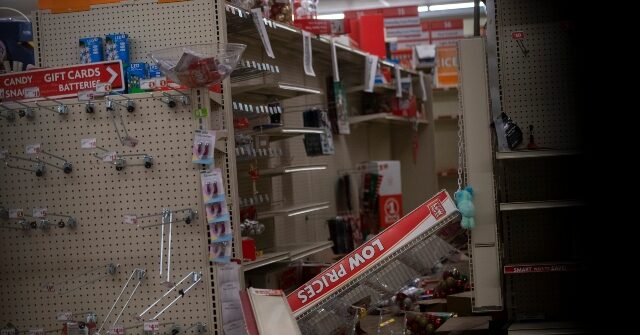
The Controversy Surrounding Empty Shelves and Crime in Washington DC
A recent article in The Washington Post has stirred up controversy by attributing the issue of empty store shelves to “capitalism” and labeling the increase in crime as a conservative-driven “moral panic.”
The narrative presented by culture reporter Maura Judkis revolves around a CVS store in Washington, DC, that faced repeated looting until it eventually had to close its doors. Items like blank CDs and greeting cards were left untouched, while popular items such as Dawn dish soap and L’Oreal shampoo were placed under plexiglass due to rampant theft.
Employees of the store attested to the increase in crime, noting that groups of young individuals were regularly stealing goods, sometimes even being orchestrated to target shipments. There were allegations of street vendors incentivizing theft to resell stolen items.
Rather than focusing on the perpetrators of these crimes, Judkis lamented the exploitation of the situation by conservatives to criticize liberal-led cities. The report framed the incidents at the CVS as indicative of broader issues in American cities, questioning the portrayal of these areas as dystopian crime-ridden landscapes.
Despite the grim scenes captured before the store’s closure, it is essential to acknowledge that the situation, while concerning, may not reflect the entire reality of the neighborhood. The article emphasized that crimes have varied across different cities, with some experiencing improvements while others are still grappling with challenges.
In summary, the nexus between empty shelves and a surge in crime highlights complex societal issues that extend beyond simplistic narratives of blame and political rhetoric. It serves as a reminder to delve deeper into the root causes of such problems and work towards holistic solutions for safer and more prosperous communities.