

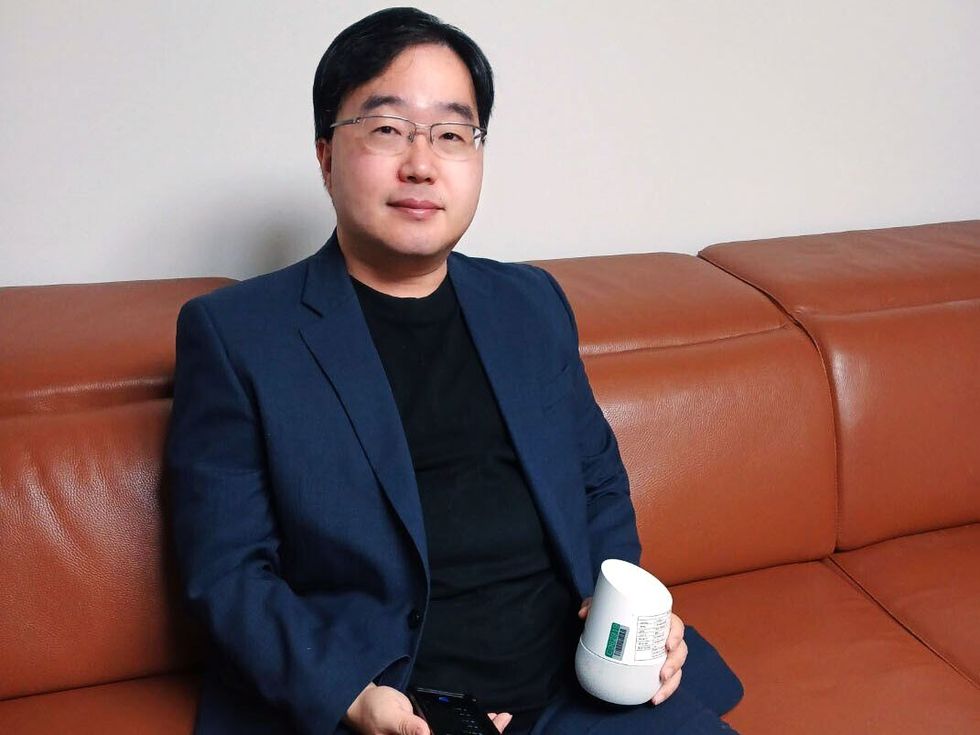

The Impact of Chanwoo Kim’s Work on Voice Technology
Chanwoo Kim has been instrumental in developing technologies that are now widely used in everyday devices such as Samsung Galaxy mobile phones and Google Home smart speakers. As a former executive at Samsung Research’s Global AI Centers, Kim specialized in speech recognition, text-to-speech tools, and language modeling.
Kim’s passion for creating technologies that benefit his friends and family led him to Korea University in Seoul, where he now leads the school’s speech and language processing laboratory as a professor of artificial intelligence. His dedication to teaching the next generation of tech leaders highlights his commitment to advancing the field of AI.
A Key Role in Bringing Google Home to Market
In response to Amazon’s development of smart speakers like Echo, Google sought to create its own AI-assisted device. Kim’s expertise in speech recognition, backed by a Ph.D. in language and information technology from Carnegie Mellon, made him a valuable addition to Google’s team in Mountain View, California. His previous experience at Microsoft as a software development engineer and speech scientist further equipped him for this role.
Joining Google in 2013, Kim focused on enhancing the company’s AI technology to ensure optimal performance, even in noisy environments. His work on improving Google Home’s speech-recognition algorithms, particularly in understanding far-field speech, was critical in the device’s success.
Enhancing Speech Recognition with Data Augmentation
Kim’s proposal to utilize large-scale data augmentation for simulating far-field speech data significantly improved Google Home’s speech-recognition capabilities. By analyzing training data and generating additional data artificially, Kim and his team boosted the accuracy of the device’s recognition technology.
Kim’s efforts ultimately contributed to the successful launch of Google Home in 2016, a major achievement in his career. His innovative approach to voice technology continues to impact the development of AI-assisted devices, shaping the future of human interaction with technology.