

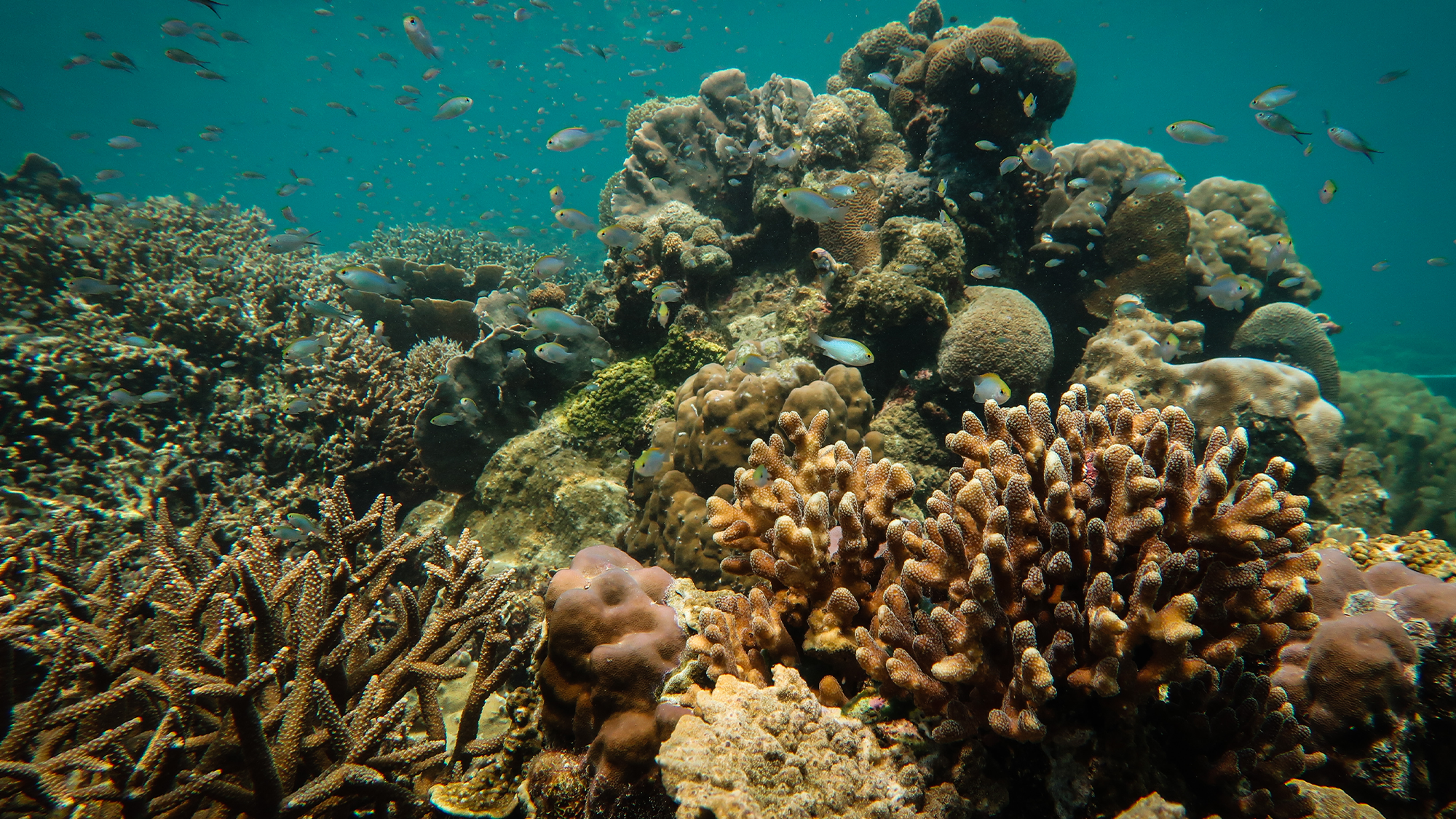

The Diverse Efforts to Restore Coral Reefs Around the World
As global ocean temperatures rise, coral reefs are facing threats from climate change, diseases, and human activities. To address this crisis, scientists are exploring various methods to assist coral reefs, such as intentional bleaching to preserve fragments, coloring larvae for reproduction studies, and transplanting coral fragments to regenerate damaged reefs.
A recent study published in the journal Current Biology on March 8 revealed that planting new coral in deteriorated reefs can lead to rapid growth, comparable to that of healthy reefs, within just four years. This study was conducted at the Mars Coral Reef Restoration Programme in South Sulawesi, Indonesia, which stands as one of the most extensive reef restoration initiatives globally.
Ines D. Lange, a marine biologist at the University of Exeter and a co-author of the study, highlighted that substantial reef areas in South Sulawesi suffered irreversible damage from dynamite fishing conducted 30 to 40 years ago. The explosions resulted in loose coral fragments that crush any new coral larvae attempting to settle, hindering reef recovery.
Dynamite fishing, an illegal practice that entails explosives being thrown into the water to stun or kill fish, poses a severe threat to coral reef ecosystems. The blasts can dislodge coral fragments, while the indiscriminate killing of marine life disrupts the delicate food chain.
The Mars program aims to restore degraded reefs by placing coral fragments on Reef Stars, interconnected structures coated with sand that help secure the fragments in place. A collaborative effort involving the University of Exeter, the Research Center for Oceanography, the National Research and Innovation Agency in Indonesia, Mars Sustainable Solutions, and Lancaster University was undertaken to monitor reef carbonate budgets as the Reef Stars were deployed. Reef carbonate budgets gauge the net production or erosion of reef structure over time, serving as a crucial indicator of a reef’s capacity to grow, adapt to rising sea levels, provide storm protection, and sustain diverse marine habitats.
Following the installation of Reef Stars, the research team assessed the carbonate budgets at the restored reef sites at several intervals, ranging from a few months to four years. These assessments provided insights into the restoration progress and the rate at which the reef’s functions were recovering. Additionally, comparisons were made with carbonate budgets from degraded reefs and healthy control sites to evaluate the efficacy of the restoration efforts.