

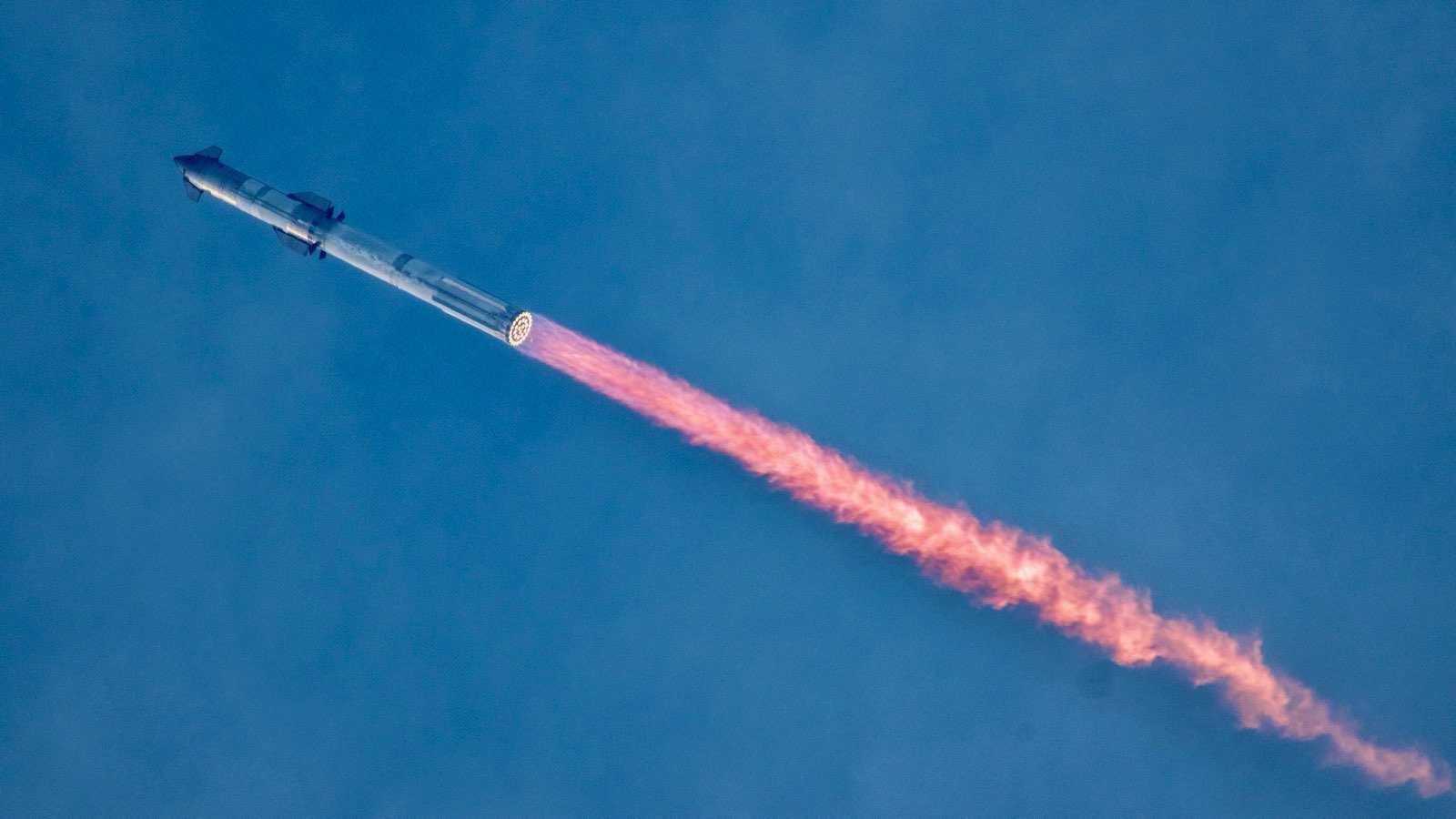

Exciting Milestone: SpaceX Starship Achieves Orbital Speed
In a groundbreaking third test flight from South Texas, SpaceX’s Starship megarocket successfully reached orbital speed for the first time, marking a significant milestone in the realm of space exploration. Spectators, including rocket enthusiasts and SpaceX supporters, flocked to South Padre Island to witness this historic event.
The majestic Starship vehicle took off from SpaceX’s facilities near Boca Chica Beach, soaring into the sky amidst a flurry of excitement. Despite not making it all the way to its intended splashdown point, the test flight managed to accomplish several vital objectives, cementing its place in the annals of spaceflight history.
Impressive Performance and Progress
As Starship’s 33 first-stage Raptor engines ignited, the atmosphere crackled with anticipation. The rocket swiftly ascended, with SpaceX founder Elon Musk celebrating the team’s success on social media. Although the planned splashdown did not occur as expected, the test flight was a resounding triumph in many aspects.
Advancements and Learnings
The Integrated Flight Test-3 (IFT-3) was a pivotal moment for the fully stacked Starship, building upon lessons learned from previous explosive test flights. Key improvements, such as the successful implementation of hot staging, contributed to the mission’s success. The separation of the two stages marked a significant progress point, setting the stage for future developments in space travel technology.
Looking Ahead
While the landing burn did not unfold as planned, the overall performance of Starship during the test flight signifies a promising future for SpaceX’s ambitious endeavors. The journey to orbital speed represents a crucial step towards realizing the full potential of the world’s most powerful rocket, paving the way for future missions and innovations in space exploration.