

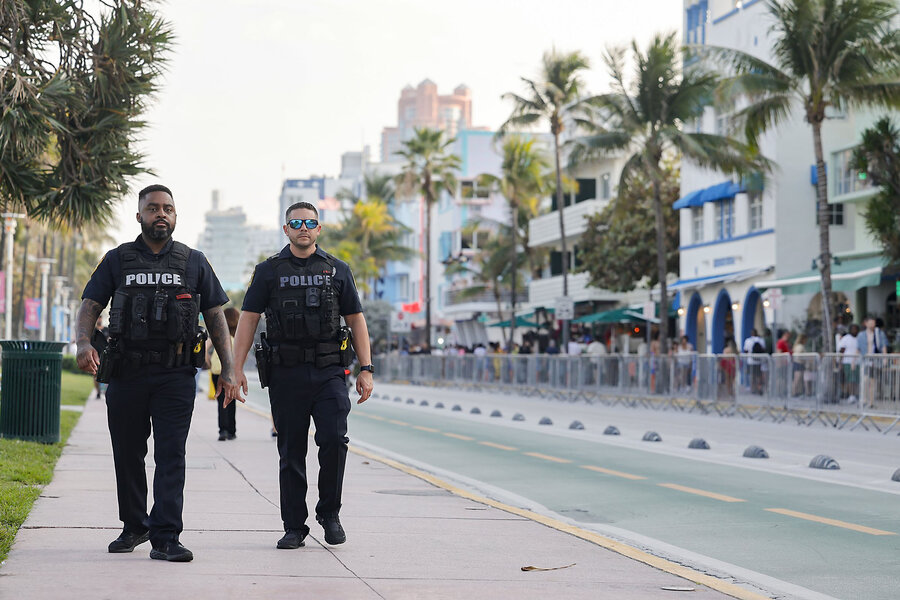

The aftermath of the chaotic 2023 spring break in Miami has prompted a shift towards a more strict law enforcement approach during the annual college student gathering. Starting with Miami’s aggressive campaign to discourage spring break activities, which includes high parking fees, curfews, bag checks, DUI checkpoints, and increased police presence, similar measures are being implemented in other popular spring break destinations such as the Florida Keys and Tybee Island, Georgia.
The 2023 spring break in Miami was marred by two fatal shootings and resulted in 488 arrests, with half of them being felony offenses, as reported by Miami Beach Police. The authorities seized over 100 firearms amidst scenes of chaos on Ocean Drive that garnered national attention, leading the city to declare a state of emergency.
While on the surface, these crackdowns may seem like a response to unruly behavior by outsiders during tourist peak seasons, deeper undercurrents such as racial tensions and the desire for peace by year-round residents come into play. Critics have pointed out that the heavy-handed measures taken by local authorities and media responses may be influenced by the demographics of the spring break attendees, particularly noting that a significant portion of Miami’s spring breakers were Black.
Andrew Kahrl, a professor of African American studies at the University of Virginia, suggests that when certain groups are perceived as threats and unwelcome, it can create a sense of resentment and confrontation. The enforcement actions, while aimed at restoring order and safety, could potentially exacerbate existing tensions and cause unintended consequences.
The crackdowns on spring break festivities reflect a larger trend of beachside towns grappling with the negative impacts of hosting large gatherings of partygoers. These measures not only address the immediate challenges posed by rowdy visitors but also shed light on the underlying dynamics and vulnerabilities of the host communities.