


Published: May 27, 2020 8:50am EDT
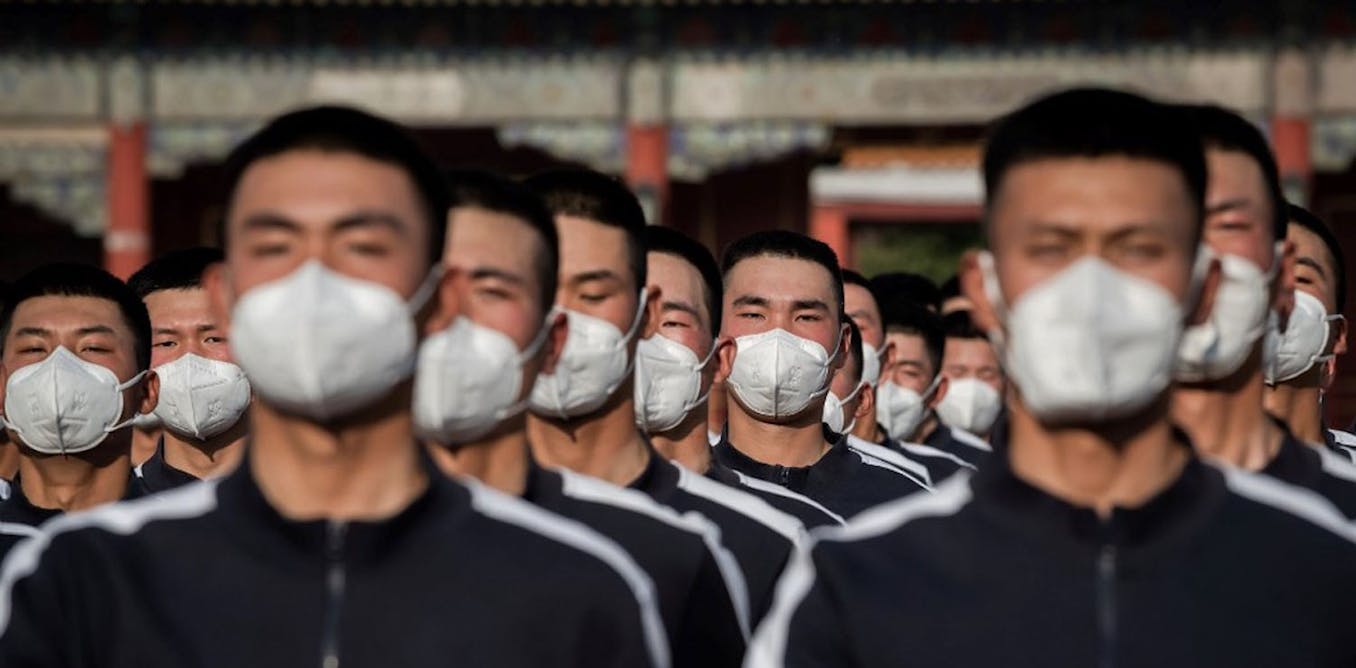
The Chinese army marches past the entrance to the Forbidden City on the occasion of the 2020 session of the National People’s Congress on May 22 in Beijing.
Nicolas Asfouri/AFP
As lockdown measures start to be eased in most countries around the world, the experts of The Conversation’s global network have focused this week on the major trends that are reshaping trade and the global economy.
Just before the pandemic struck, the economy was already losing momentum. However, the crisis is unlikely to put a stop to globalisation: rather, coronavirus is the starting point for a reconfiguration of the global system. Value chains are shortening in some sectors, China is seeking to extend government control over its economy, and global consumption has been undermined by the recession in the US.
Academics in our network analyse the impact of the pandemic on globalisation.

This is our weekly roundup of expert info about the coronavirus.
The Conversation, a not-for-profit group, works with a wide range of academics across its global network. Together we produce evidence-based analysis and insights. The articles are free to read – there is no paywall – and to republish. Keep up to date with the latest research by reading our free newsletter.
Reshuffling the deck
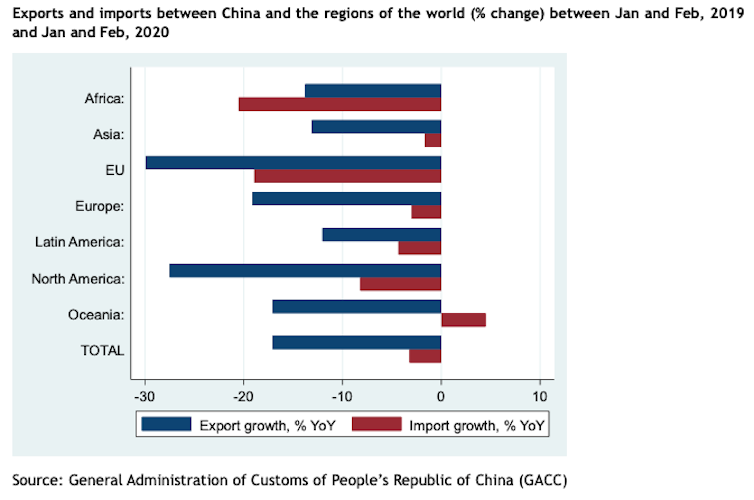
- China’s international trade mapped: In order to understand the magnitude of the economic shock of the Covid-19 pandemic, Jun Du, Agelos Delis, Mustapha Douch and Oleksandr Shepotylo of Aston University mapped China’s recent trade. They showed that worst-affected Chinese imports are machinery and luxury goods. As for exports, goods whose production is labour-intensive, such as furniture, have fallen drastically, as well as capital goods such as nuclear reactors. According to these economists, these trends could be long-lasting, as most countries become aware of the fragility of global value chains – without, however, completely undermining globalisation.
Author provided
-
Tensions between Australia and China: Richard Holden of the Unversity of New South Wales wonders about the new tensions over barley and the impact that the crisis could have on relations between the two countries.
-
Return of the local economy: Some countries, faced with the uncertainties of the future, prefer to turn to more local forms of economy. This is the case in Canada, particularly in the area of fisheries. Kristen Lowitt of Brandon University and Charles Z. Levkoe of Lakehead University have looked at policies in north-western Ontario trying to help local people to benefit more from the fish caught in the Thunder Bay area, which are generally destined for export.
-
Golden days are over: Before the pandemic, the global economy was already showing signs of fragility against the backdrop of trade tensions between China and the US. Countries had been building up their gold reserves, but then just before the COVID-19 pandemic,