

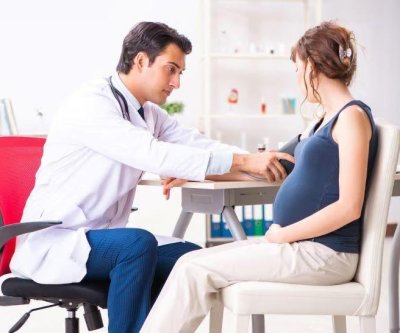

Canadian researchers at Université Laval in Québec City say they’ve developed an algorithm to spot those women at highest risk for preeclampsia. Photo by Adobe Stock/HealthDay News
A potentially dangerous spike in blood pressure known as preeclampsia can occur in 1 in every 25 pregnancies, but an accurate test to spot those women at highest risk has remained elusive.
Now, Canadian researchers at Université Laval in Québec City say they’ve developed an algorithm that seems to do just that.
In their study of more than 7,000 pregnant women, the test outperformed standard measures to pinpoint high-risk pregnancies.
That could be a great tool for doctors, who can advise such women to take daily low-dose aspirin to lower their odds for preeclampsia.
“Using this new screening model, treatment decisions were based on each individual’s personal risk,” said study senior author Dr. Emmanuel Bujold, professor of obstetrics and gynecology at the university.
“With their personal risk calculated, it’s much easier for a woman to make the right decision,” he explained. “For example, if she chooses to take daily low-dose aspirin, she is much more likely to follow through because it’s based on personalized screening test.”
The findings were published Monday in the journal Hypertension.
Preeclampsia is defined as a dangerous rise in blood pressure during pregnancy — anything over 140/90 mm Hg. Unchecked preclampsia is one of the leading causes of maternal death worldwide.
For the mother, preeclampsia can cause headaches, vision changes and swelling of the hands, feet, face or eyes. It can also show up as a decline in fetal wellbeing, the American Heart Association (AHA) said in a news release.
“Preeclampsia is one of the most severe illnesses of pregnancy and may lead to preterm birth and/or maternal death,” Bujold said in the news release.
While preeclampsia can begin to develop in the first trimester, it often doesn’t appear until week 20 or beyond.
Right now, guidelines based on certain risk factors — prior history of preeclampsia, chronic high blood pressure, Type 2 diabetes, chronic kidney disease or lupus — are signs used by doctors to suggest that a woman may need to take daily aspirin to lessen the risk.
Aspirin is also recommended for women with two “moderate” risk factors for preeclampsia. Among those risk factors are Black race; having a mom or sister who’s also had preeclampsia during a pregnancy; obesity; pregnancy by in vitro fertilization (IVF); or being pregnant for the first time (preeclampsia is more common in first pregnancies).
“Following those guidelines, almost all Black women should take aspirin during pregnancy, as should about one-third of all women of other races and ethnicities,” Bujold explained.
But what if there was an even more accurate way of spotting women at risk?
To find out, Bujold’s group turned to a model developed by the Fetal Medicine Foundation.