

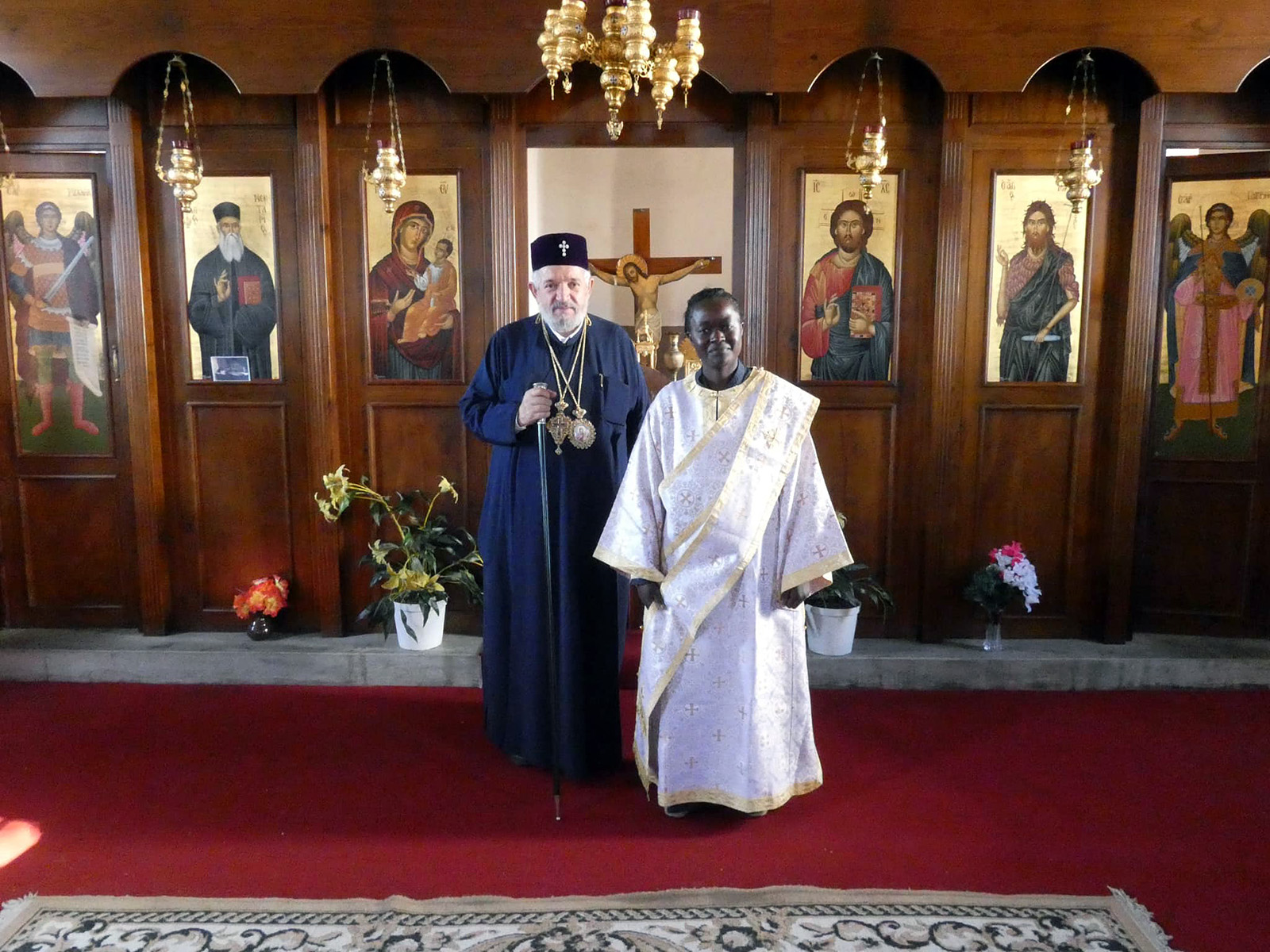

(RNS) — When the ordination of Angelic Molen of Harare, Zimbabwe, as a deaconess by Metropolitan Seraphim, the Greek Orthodox archbishop of the south African country, was announced in a press release from the St. Phoebe Center for the Deaconess, the reaction on social media was predictable: over-the-top vitriol from the usual suspects and unmitigated praise coming from the other usual suspects.
What was sadly lacking was a more nuanced conversation about the situation of the Orthodox Church in Africa, a situation that, because of the intervention of Russia, is of importance to more than Orthodox Christians.
Historically, most of Africa has been under the jurisdiction of the Patriarchate of Alexandria . Until the late 20th century, the Patriarchate primarily consisted of Egypt’s remnant Greek-speaking population and, starting in the 19th century, Greek immigrants to sub-Saharan Africa. But with the 1997 election of Pope Petros VII — Patriarchs of Alexandria were called “pope” centuries before the title became synonymous with the bishop of Rome — the Patriarchate undertook significant missionary work. Today, nearly 300,000 Africans are Orthodox Christians, the most since the days of the Roman Empire.
The hierarchy of the Patriarchate remains disproportionately ethnically Greek, but rising numbers of priests and even bishops are indigenous Africans, and missionary churches have adopted local customs and aesthetics with an ease that has eluded Orthodox Christian communities in North America and Western Europe.
This isn’t the only way Orthodox missionary growth in Africa looks different from that in the West. In recent years particularly, North American and Western European converts have been overwhelmingly politically conservative (or even far-right) young men. Some data suggests that 75% of converts to the Orthodox Church in America — the second-largest Orthodox jurisdiction in the U.S. — have been men.
In Africa, however, this disparity seems not to exist. While the exact numbers are unclear, the evidence suggests that more African women are converting than men. This trend, combined with the persistence of traditional norms governing interactions between men and women and the exclusion of widows in many traditional African societies, explained in some minds why in 2016 the Synod of the Patriarch of Alexandria voted in 2016 to “restore the ancient Order of the Deaconess.”

Metropolitan Seraphim, right, ordains Angelic Molen, kneeling, as a deaconess at the St. Nektarios Mission Parish near Harare, Zimbabwe, Thursday, May 2, 2024. (St. Phoebe Center/Annie Frost)
Shortly afterward, the Patriarch consecrated six women in the Congo as deaconesses, with the specified vocation of participating in missionary work. It’s important to note, however, that Orthodox tradition makes a distinction between “consecration” and “ordination.” In the eight years since that time, what exactly the synod’s decision to “restore” the order of deaconess means or how it would be implemented beyond the six women in the Congo had not been answered.
When the news of Molen’s ordination broke, it did little to clear up the confusion,