

Home Green Marine Optimizing port arrivals could cut emissions by up to 25%, report says
December 6, 2024,
by
Fatima Bahtić
Optimizing port arrivals to take into account port congestion or waiting times could reduce voyage emissions by up to 25% for some vessel types, a new report shows.
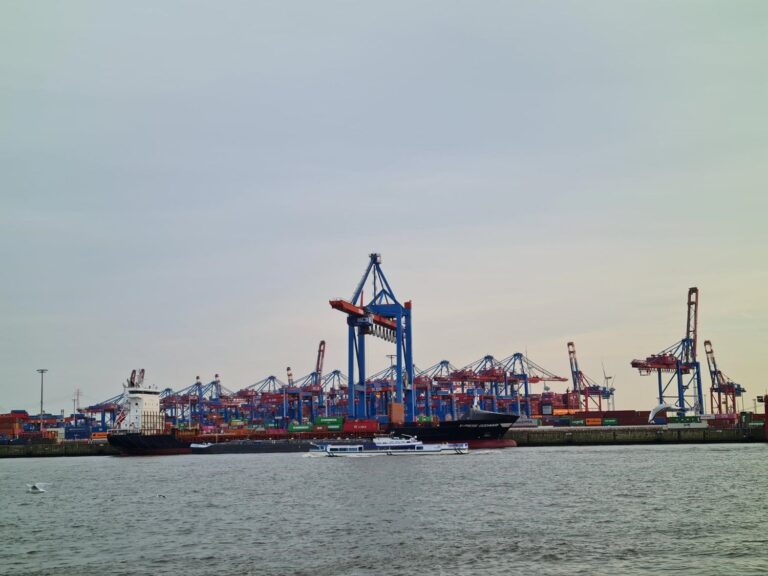 Illustration. Courtesy of Navingo
A new study, carried out by UCL and UMAS, analyzed ship movements between 2018-2022. The research found that ships spend between 4-6% of their operational time, around 15–22 days per year, waiting at anchor outside ports before being given a berth.
In line with that, the average potential emissions saving for the voyages could be approximately 10% for containerships and dry bulkers, 16% for gas carriers and oil tankers, and almost 25% for chemical tankers, if the issue of port arrivals is resolved in a more efficient manner, the report states.
“The IMO set ambitious GHG reduction targets in 2023. Meeting those targets means unlocking all efficiency opportunities – including voyage optimisation and operations around ports. This will only happen if CII remains a holistic metric covering all emissions, and incentivising shipowners, charterers and port stakeholders to break down long-running market barriers and failures,” Tristan Smith, Professor of Energy and Transport at the UCL Energy Institute, said.
Port operations during the COVID-19 pandemic
Between 2018 and 2022, chemical tankers, gas tankers, and bulk carriers saw a significant increase in their waiting times at anchor before being able to berth at ports. According to the report, these delays, which are calculated as a percentage of their annual operating time, surged to around 5.5% to 6% by 2022.
This marked increase stands in contrast to the more stable waiting times observed for oil tankers and containerships, where delays hovered around 4.5% and 5.5%, respectively, during the same period.
The rise in waiting times for certain vessel types can be traced to several factors, including port congestion that was exacerbated during the COVID-19 pandemic and the subsequent post-pandemic surge in global maritime trade.
The pandemic significantly disrupted global supply chains, including those in the maritime industry, leading to a backlog of vessels waiting to dock.
-

- long read
Posted: 11 months ago
Smaller vessels experience longer waiting times
The study also found that smaller vessels tend to experience longer waiting times, though this varies depending on the type of vessel. According to a previous report by the same authors, Transition Trends, poor operational efficiency has been identified as a key factor contributing to rising emissions in the maritime sector between 2018 and 2022.
“Our analysis highlights the current and growing issue of port waiting times and the inefficiency they represent. This is just one piece of the broader operational inefficiency puzzle that is key to generating the short-term emissions reductions that will need to be achieved before 2030.