

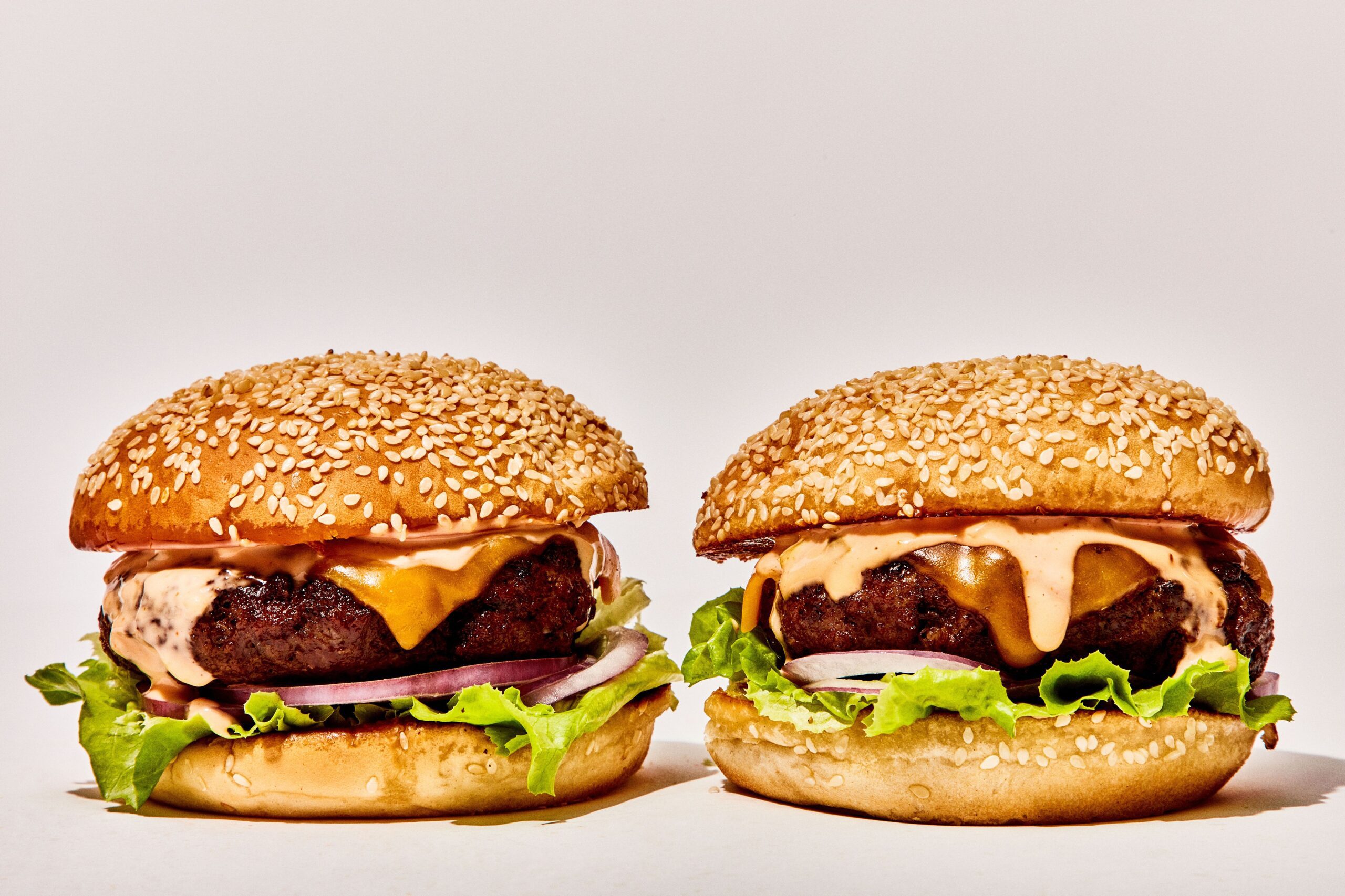

Paging all city dwellers without the luxury of outdoor space for a grill: You can cook burgers on the stove that are equally delicious as grilled burgers. Even more, this guide will carry you through all 365 days of the year, so you can pretend you’re flipping burgers for guests in your expansive and lush backyard in summer sun when you’re actually firing up a gas stove in your fourth-floor walk-up in the middle of January.
This stovetop burger recipe from former Bon Appétit editor Claire Saffitz is an evergreen favorite, full of smart techniques for molding a stellar homemade burger—juicy, flavorful beef that’s never dry or mealy. The cooking process is simple, and the results are magnificent. It comes down to that age-old harmony of timing, seasoning, and picking the right ingredients.
Handling ground meat
Before getting into the nitty-gritty, it’s worth reminding that working with ground meat requires a smidge more vigilance than other cuts of meat. Between 40℉ and 140℉, the “Danger Zone,” according to the USDA, bacteria on meat can double in a mere 20 minutes. With this in mind, don’t leave meat out of refrigeration for more than two hours, and don’t leave it at temperatures at or exceeding 90 degrees for over an hour. Store it in the refrigerator, in the dedicated meat drawer or on the lowest shelf, to minimize contamination from drips. If frozen, thaw it in the fridge for roughly one day per pound of ground meat.
The patty
Look for ground beef marked “80/20” (that’s 80% lean, 20% fat). For the best burger—one with real beefy flavor—fat is essential. The size of the patty is important too. This 5-oz. burger isn’t quite as thin as a smash burger or as hefty as a half-pounder. It’s somewhere in between. Substantial, but not so much so that the bun will disintegrate from rivers of juice. In other words, the perfect burger.
5 things to keep in mind when prepping stovetop burgers:
- Make the circumference larger than the burger bun you’re using, since the burgers will shrink as they cook.
- Create a depression (with your finger or spoon) at the center of each patty. The meat contracts as it heats up, causing it to balloon in the middle. When you see juices pooling in the depression, that’ll be your cue to flip.
- Rub a little neutral oil (like vegetable oil) on the hamburger patties to jump-start the frying process. The patty will eventually start to release fat and create its own frying medium.
- Season both sides of the patty generously with kosher salt and freshly ground black pepper just before it hits the skillet. Salting your patties too far ahead will draw moisture to the surface—the enemy of a proper crispy sear. Whatever you do, don’t mix salt into the meat, which can cause the burgers to become bouncy and tough.
- Don’t fuss with the burger once it’s in the pan or cast-iron skillet.