


The story of tonic water starts in the 17th century, when Jesuit missionaries in the Andes discovered what local native healers already knew: the bark of the cinchona tree had healing properties. One important active ingredient was quinine, a compound that can prevent some malaria-causing parasites from reproducing, though the amount of quinine in tonic is low enough so as to render it an ineffective treatment.
The missionaries began shipping cinchona back to Europe, where its curative properties spiked demand. Cinchona bark’s antimalarial properties were instrumental for the era’s colonizing superpowers. With the threat of malaria all but neutralized, they colonized areas which had previously been inaccessible due to disease, like India and a number of African countries.
By the middle of the 19th century, quinine-infused tonic hit the commercial market. Although malaria remains a serious threat for some populations, new, more effective treatments have since entered the market—these days, quinine is mostly relegated to tonic water.
Tonic has gained a reputation as gin’s best friend, but, as any frequent tonic drinker will tell you, they vary widely from brand to brand. Each has its own formulation, balancing botanical, bitter, and sweet flavors. Where some are limp and flaccid, others are robust and unique. The best should be somewhere in the middle: strong enough to make an impression, but subtle enough to share the spotlight with the spirit it accompanies.
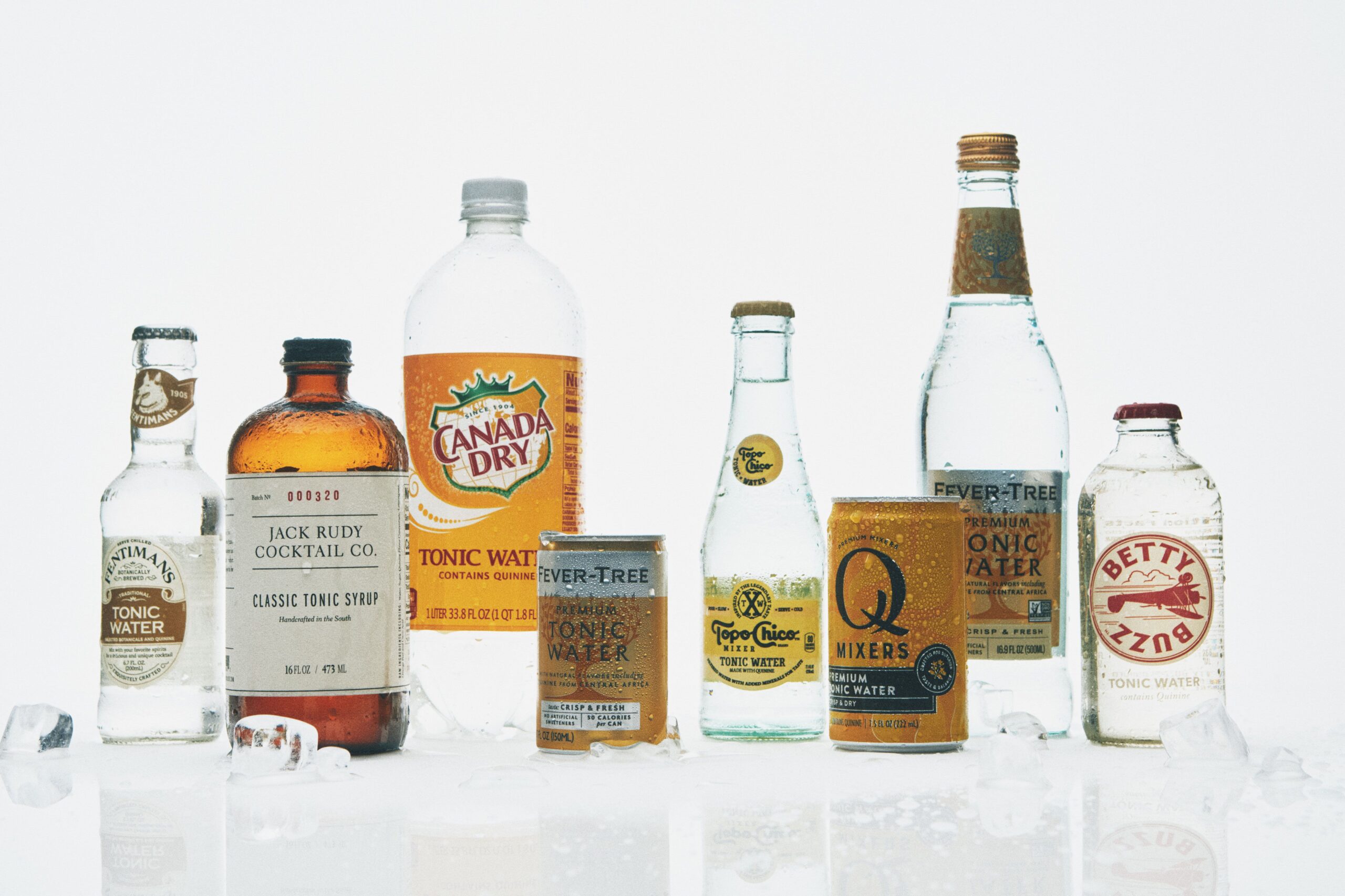
Which tonic is best? We put seven widely used brands through a blind taste test to find the one that had the best bubble, the best balance, and the best bitterness.
How we set up our blind taste test
Room temperature tonic water is no one’s idea of a good time. That’s why we stuck our bottles in the refrigerator to ensure they were all well-chilled before testing. That way, we wouldn’t need ice in our glasses, which could dilute flavors. In order to maintain anonymity in our blind tasting we wrapped each bottle in brown craft paper so that labels wouldn’t be visible to tasters.
We kept bottles in a refrigerator, and poured one taste at a time, before each taster discussed their evaluations with the group.
How we picked the products
We brainstormed a list of tonic brands we’ve used or seen used at bars. That gave us quite a few brands to pick from, which we expanded upon by researching other similar taste tests. We decided to exclude diet or light versions, flavored tonics, and grocery store brands, since their availability could be limited by region.
In addition to well-known bottled and canned tonics, we also included one tonic syrup. These syrups get added to sparkling water (we used Saratoga, a winner in our sparkling water taste test) to create a tonic water—the advantage is that you have more control over how robustly your tonic is flavored. We used the tonic syrup according to the label instructions to ensure it was competing on an even playing field with the other products.