

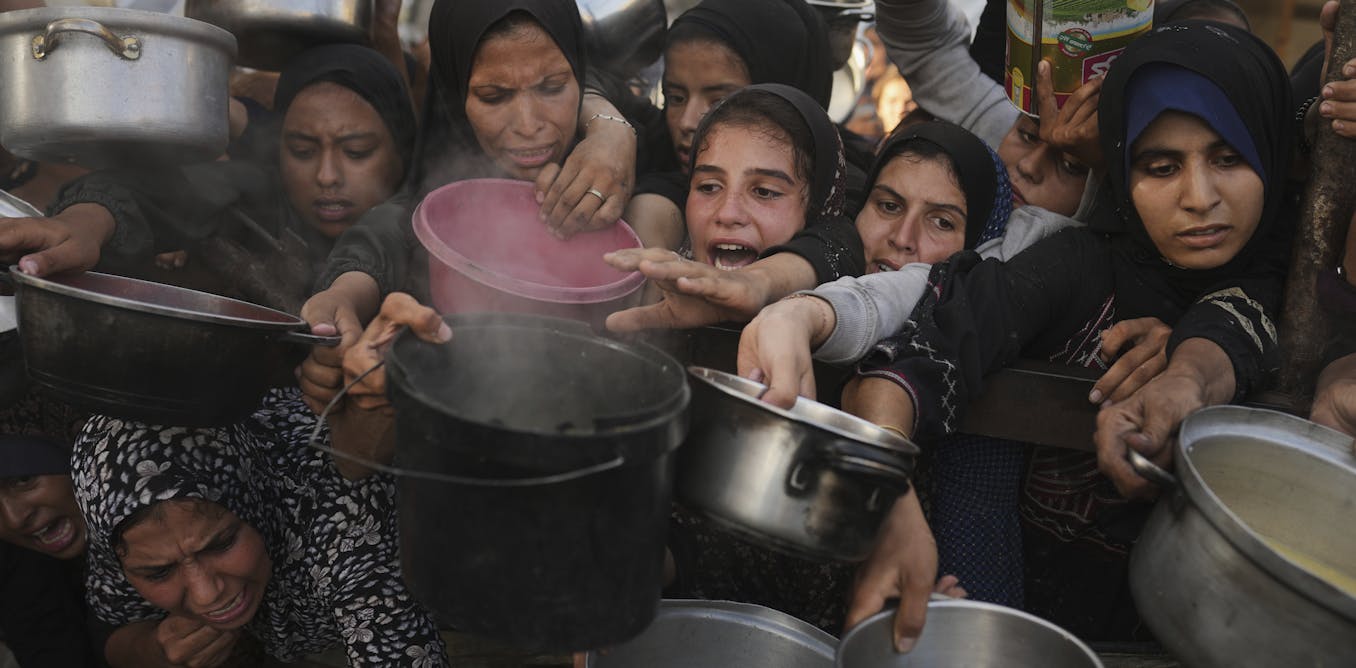

Australia has joined 28 international partners in calling for an immediate end to the war in Gaza and a lifting of all restrictions on food and medical supplies.
Foreign Minister Penny Wong, along with counterparts from countries including the United Kingdom, France and Canada, has signed a joint statement demanding Israel complies with its obligations under international humanitarian law.
The statement condemns Israel for what it calls “the drip feeding of aid and the inhumane killing of civilians” seeking “their most basic need” of water and food, saying:
The suffering of civilians in Gaza has reached new depths. The Israeli government’s aid delivery model is dangerous, fuels instability and deprives Gazans of human dignity […] It is horrifying that over 800 Palestinians have been killed while seeking aid.
Weapon of war
Gazans, including malnourished mothers denied baby formula, face impossible choices as Israel intensifies its use of starvation as a weapon of war.
In Gaza, survival requires negotiating what the United Nations calls aid “death traps”.
According to the UN, 875 Gazans have been killed – many of them shot – while seeking food since the US-backed Gaza Humanitarian Foundation began operating in late May. Another 4,000 have been injured.
More than 170 humanitarian groups have called for the food hubs to be shut down.
Gaza has been described as the “hungriest place on Earth”, with aid trucks being held at the border and the United States destroying around 500 tonnes of emergency food because it was just out of date.
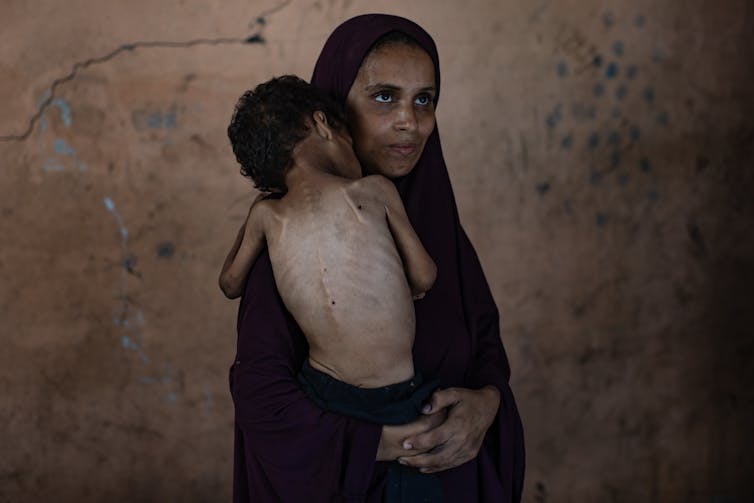
Acute food shortages are causing severe malnutrition in Gaza.
Haitham Imad/AAP
More than two million people are at critical risk of famine. The World Food Programme estimates 90,000 women and children require urgent treatment for malnutrition.
Nineteen Palestinians have starved to death in recent days, according to local health authorities.
We can’t say we didn’t know
After the breakdown of the January ceasefire, Israel implemented a humanitarian blockade on the Gaza Strip. Following mounting international pressure, limited aid was permitted and the controversial Gaza Humanitarian Foundation began operations.
As anticipated, only a fraction of the aid has been distributed.
About 1,600 trucks entered Gaza between May 19 and July 14, well below the 630 trucks needed every day to feed the population.
Israeli ministers have publicly called for food and fuel reserves to be bombed to starve the Palestinian people – a clear war crime – to pressure Hamas to release Israeli hostages.
Famine expert Alex De Waal says Israel’s starvation strategy constitutes a dangerous weakening of international law. It also disrupts norms aimed at preventing hunger being used as a weapon of war:
operations like the Gaza Humanitarian Foundation are a big crack in these principles [that is] not going to save Gaza from mass starvation.
Palestinian organisations were the first to raise the alarm over Israel’s plans to impose controls over aid distribution.