



Bitcoin’s price reacted swiftly after the approval of Bitcoin ETFs, surging to new all-time highs as billions in capital flooded into regulated ETF products. These ETFs introduced unprecedented buying pressure by continuously absorbing real Bitcoin from the open market. In this article, we explore how ETF inflows translated into price action, backed by hard data from July 2024 to July 2025. Through analyzing fund flows, institutional demand, and market metrics, we uncover how ETFs have fundamentally reshaped Bitcoin’s price dynamics and its perception as an asset class.
The Launch of Bitcoin ETFs and Early Market Reaction
On January 10, 2024, the approval of spot Bitcoin ETFs in the United States marked a milestone and a step forward for the cryptocurrency markets in general. For years, investors had speculated on whether the U.S. Securities and Exchange Commission (SEC) would ever greenlight a spot-based ETF. Their reluctance finally broke when products from financial giants like BlackRock (IBIT), Fidelity (FBTC), and Ark Invest (ARKB) were allowed to launch.
Unlike Bitcoin futures ETFs, which had been trading since October 2021, spot ETFs hold actual Bitcoin as the underlying asset. This gave traditional financial institutions, retirement funds, hedge funds, and retail investors a regulated and structured path to exposure to Bitcoin. According to Kiplinger and MarketWatch, the move legitimised Bitcoin and catalysed a flood of capital for these new vehicles.
In the days and weeks following the ETF approval, BTC surged from $45,000 to over $73,000 by March 2024. The rally was driven largely by institutional capital flowing into spot ETFs. On-chain data and ETF flow trackers confirmed that ETFs became a dominant force in absorbing available BTC supply, especially during periods of strong demand.
For more: 8 Best Bitcoin ETFs to Buy Right Now
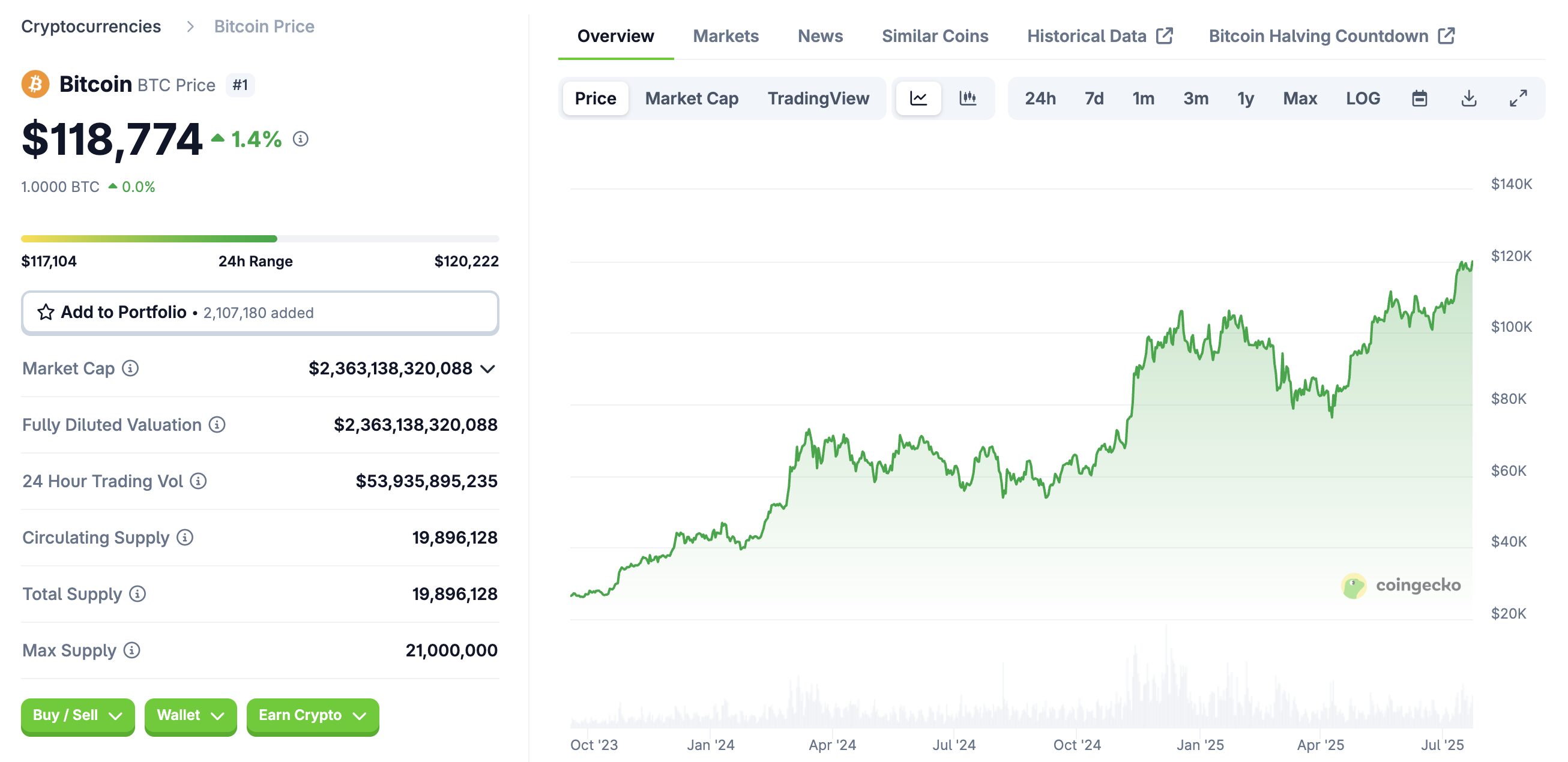
Source: Coingecko
Billions of ETF Inflows Surge and Bitcoin Price Acceleration
The real impact of Bitcoin ETFs becomes evident when we analyze the inflows and price performance across 2024 and 2025. According to Cointelegraph data, spot Bitcoin ETFs recorded total inflows of $6.62 billion during a 12-day streak in July 2025, which included two consecutive days with inflows exceeding $1 billion each. On July 10, ETFs brought in $1.18 billion, followed by $1.03 billion on July 11.
As of mid-July 2025, the total cumulative net inflow into all U.S.-listed spot Bitcoin ETFs had surpassed $54.75 billion. The total assets under management (AUM) of these ETFs reached approximately $152.4 billion, according to Cointelegraph. This number represents around 6.5% of Bitcoin’s total market capitalization at the time.
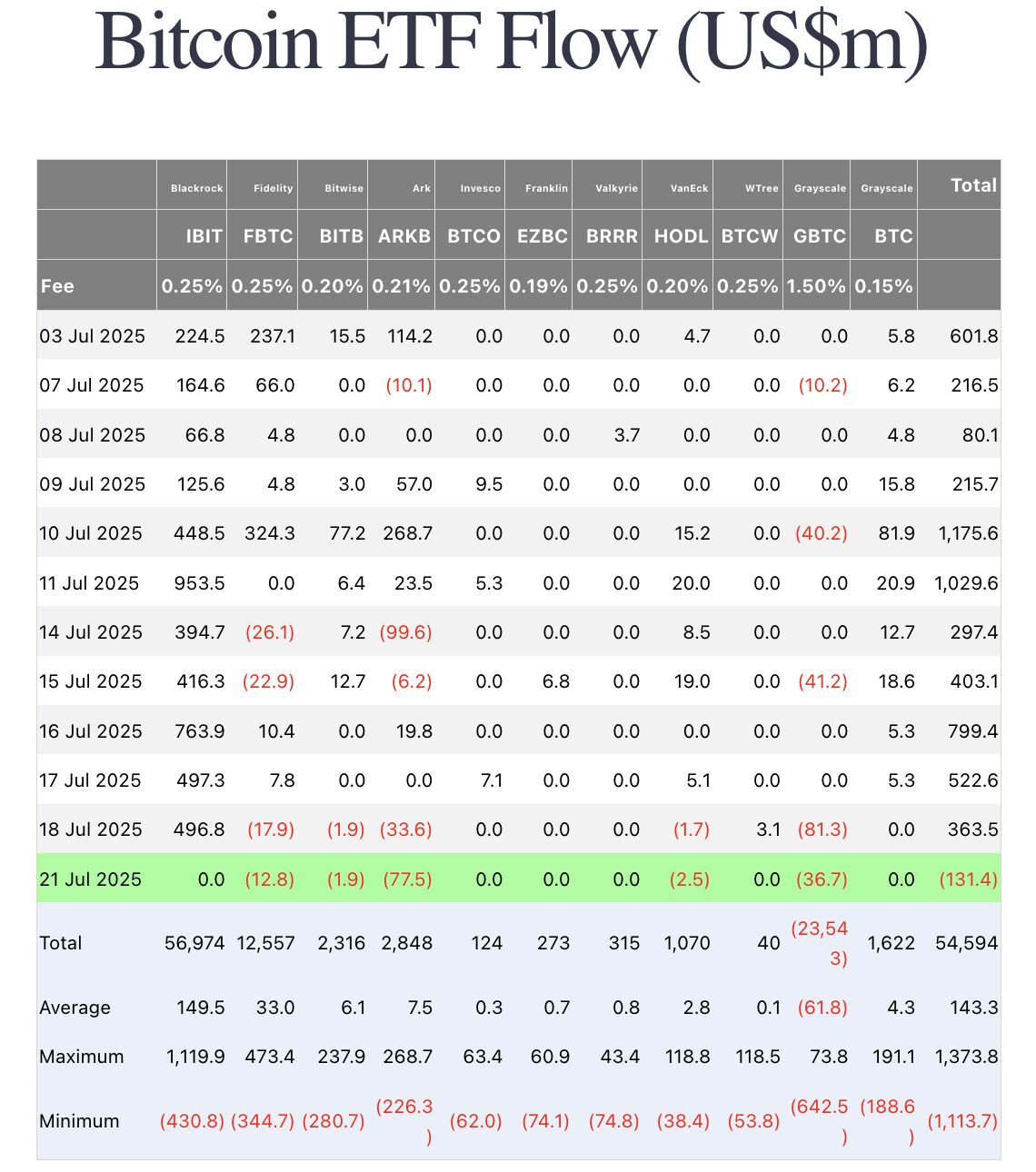
Source: Farside Investors
The largest ETF, BlackRock’s IBIT, saw its AUM grow from under $200 million at launch to over $80 billion in just over a year — the fastest growth of any ETF in financial history, as noted by AInvest and MarketWatch. Fidelity’s FBTC and Ark’s ARKB also surpassed $13.2 billion and $6.7 billion in AUM respectively.
This level of demand not only validates Bitcoin as a financial instrument but also introduces a supply-demand imbalance.