

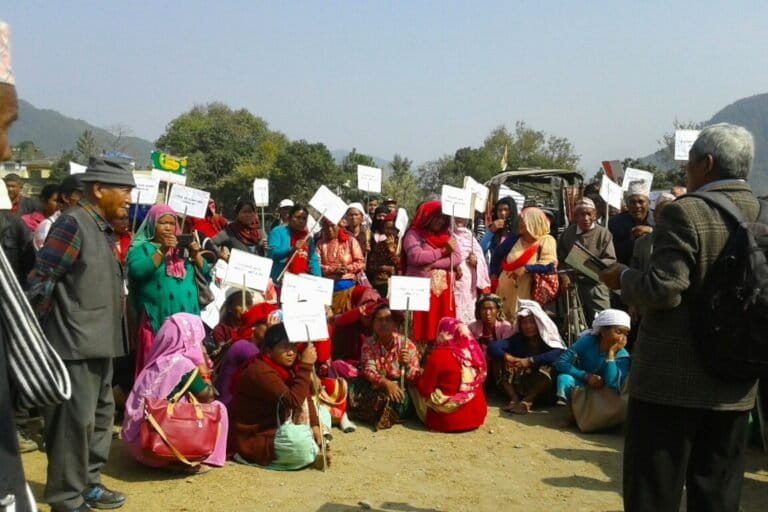

- Civil society leaders in Nepal continue to raise concerns about the in-development Tanahu hydropower project in Gandaki province, citing a lack of proper consultation, inadequate compensation for displacement, and environmental impacts.
- Project developer Tanahu Hydropower Limited (THL), a subsidiary of the national electricity utility, says it has completed the consultation process.
- Half of the complaints against hydropower projects in Nepal documented by a rights watchdog are related to the Tanahu project, which receives funding from the Asian Development Bank, European Investment Bank and World Bank.
- Most of Nepal’s electricity is generated through hydropower, and the government plans to expand the country’s generating capacity nearly eightfold to 28,500 megawatts by 2035.
Nepal has long relied on hydropower projects to meet most of its energy needs, but recent complaints from Indigenous and local communities have cast a shadow over the development of some projects — particularly the Tanahu project.
The project is being developed by Tanahu Hydropower Limited (THL), a subsidiary of the state-owned Nepal Electricity Authority (NEA). It’s expected to be completed next year in Gandaki province. But for many members of communities in the affected area, “none of our demands have been fulfilled to this day,” says Til Bahadur Thapa Magar, chair of local campaign group the Tanahu Hydropower Project’s Struggle Committee. Local communities and Indigenous peoples say the project was implemented without proper consultation and failed to respect their rights to land, territory, and free, prior and informed consent (FPIC).
In 2023, U.S.-based human rights watchdog Accountability Counsel documented a series of 16 complaints against hydropower projects in Nepal, many with funding from international institutions such as the Asian Development Bank (ADB), European Investment Bank (EIB) and World Bank. These projects, including the Tanahu project, which is funded by the ADB and EIB, have been accused of failing to meet their due diligence requirements during the approval process.
“Even though these projects have records of not fully adhering to environmental and social compliance and respecting Indigenous and community people’s rights and decisions, they [international development banks] keep supporting more and more projects,” said Sutharee Wannasiri, a communications associate at the Accountability Counsel.
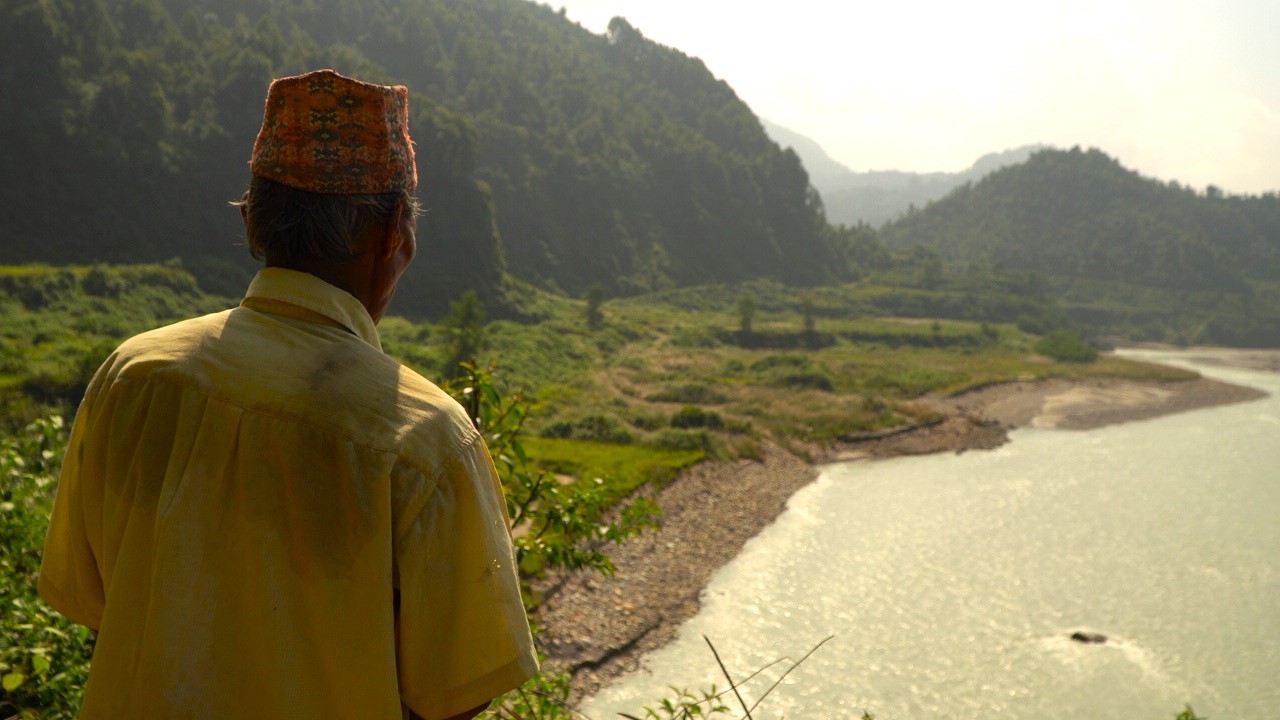 A Magar local affected by the Tanahu Hydropower project. Image by Sanjog Laapaa Magar, INWOLAG.
Of the 16 complaints recorded, half are related to Tanahu. Three of these are labeled as “closed without outputs” — meaning the submitted complaints haven’t reached a dispute resolution agreement. Five of the complaints related to the project are active, and civil society leaders say resolutions are not being complied with.
A spokesperson for the EIB said the institution is committed to integrating its human rights principles throughout the initiatives in which it invests. “The EIB fully acknowledges the important role that civil society plays in the promotion and protection of these human rights principles, and will remain in contact with the CSOs,