


History | November 16, 2023
An exhibition at LACMA examines the legacy of Dutch colonization through a fictive 17th-century collector’s room of wonders
:focal(1050x700:1051x701)/https://tf-cmsv2-smithsonianmag-media.s3.amazonaws.com/filer_public/1c/08/1c089d1b-6bb5-4e24-b80e-387437f00896/ex8998-vw043.jpg)
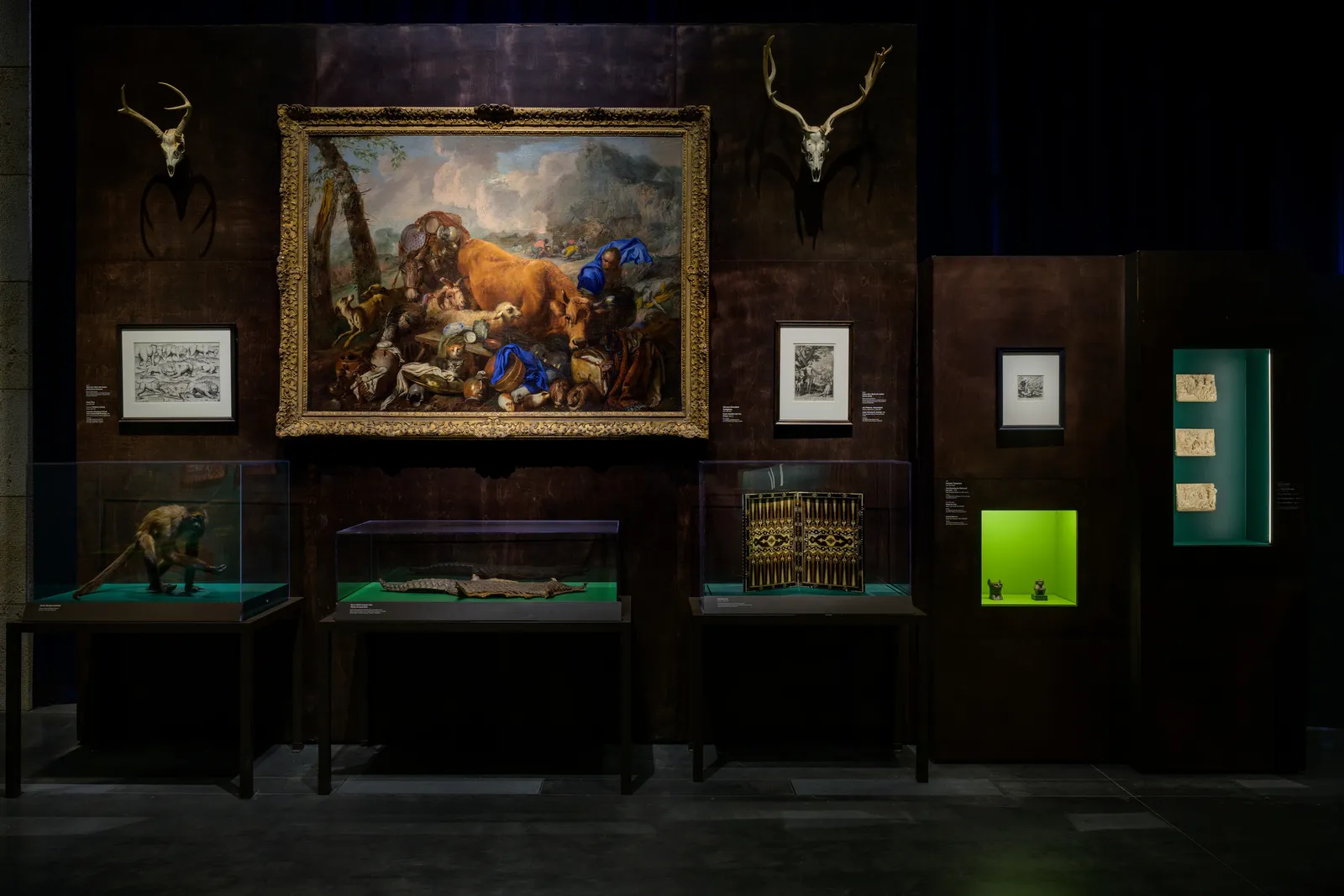
“The World Made Wondrous: The Dutch Collector’s Cabinet and the Politics of Possession” takes a 17th-century Dutch cabinet as its starting point, tracing the threads of Dutch colonization through each object on view.
© Museum Associates / LACMA
/https://tf-cmsv2-smithsonianmag-media.s3.amazonaws.com/accounts/headshot/anne2.png)
What’s in a shell? Beyond capturing the sound of the ocean, shells hold layers of meaning: They are homes for marine life, forms of currency, objects of scientific study and wonders of aesthetic beauty. In the early modern era, shells were also one of the many items extracted and shipped to Europe as part of colonial trade routes, where they entered private collections known in German as Kunstkammer or in English as cabinets of curiosities. From the mid-16th century onward, collectors combined and categorized many kinds of art and natural objects in these cabinets in ways that reflected their worldviews, knowledge and wealth, prefiguring the development of modern museums.
Today, as cultural institutions around the world unravel their legacies of colonial acquisition, looking back at the origins of collecting provides important context on how objects arrived in their current locations. In recent years, says Jeffrey Chipps Smith, an art historian at the University of Texas at Austin, experts have started asking, “What are the consequences of collecting? What is the human equation involved?”
/https://tf-cmsv2-smithsonianmag-media.s3.amazonaws.com/filer_public/e5/ab/e5abbef6-2f98-49d7-8398-cb07ddb1adb1/ex8998-vw020.jpg)
The LACMA exhibition features more than 300 objects, including shells, paintings, prints and gems.
© Museum Associates / LACMA
An ongoing exhibition at the Los Angeles County Museum of Art (LACMA), titled “The World Made Wondrous: The Dutch Collector’s Cabinet and the Politics of Possession,” asks those questions and more. Curated by Diva Zumaya, the show takes a 17th-century Dutch cabinet as its starting point, tracing the threads of Dutch colonization through each object on view. Zumaya juxtaposes the meanings these items held in cabinet collections with the meanings they held in their countries of origin.
As their name suggests, cabinets of curiosities aimed to capture and define new knowledge of the world, prizing anything rare, unusual or unique. In 1565, Belgian physician Samuel Quiccheberg’s treatise on collecting expressed the cabinet’s ambitious aims, describing it as “a theater of the broadest scope, containing authentic materials and precise reproductions of the whole of the universe.”
The treatise also emphasized the importance of display and order. Collectors imposed their own systems and hierarchies on the art, antiques, plants and animals within their cabinets in an attempt to create an encyclopedic framework of the world’s knowledge. Objects were often grouped by material or combined for particular purposes, like nautilus shells decorated with gilded metalwork to contrast human artistry with nature’s. Many valuable items came from distant places in rapidly expanding global trade networks; » …
Read More