

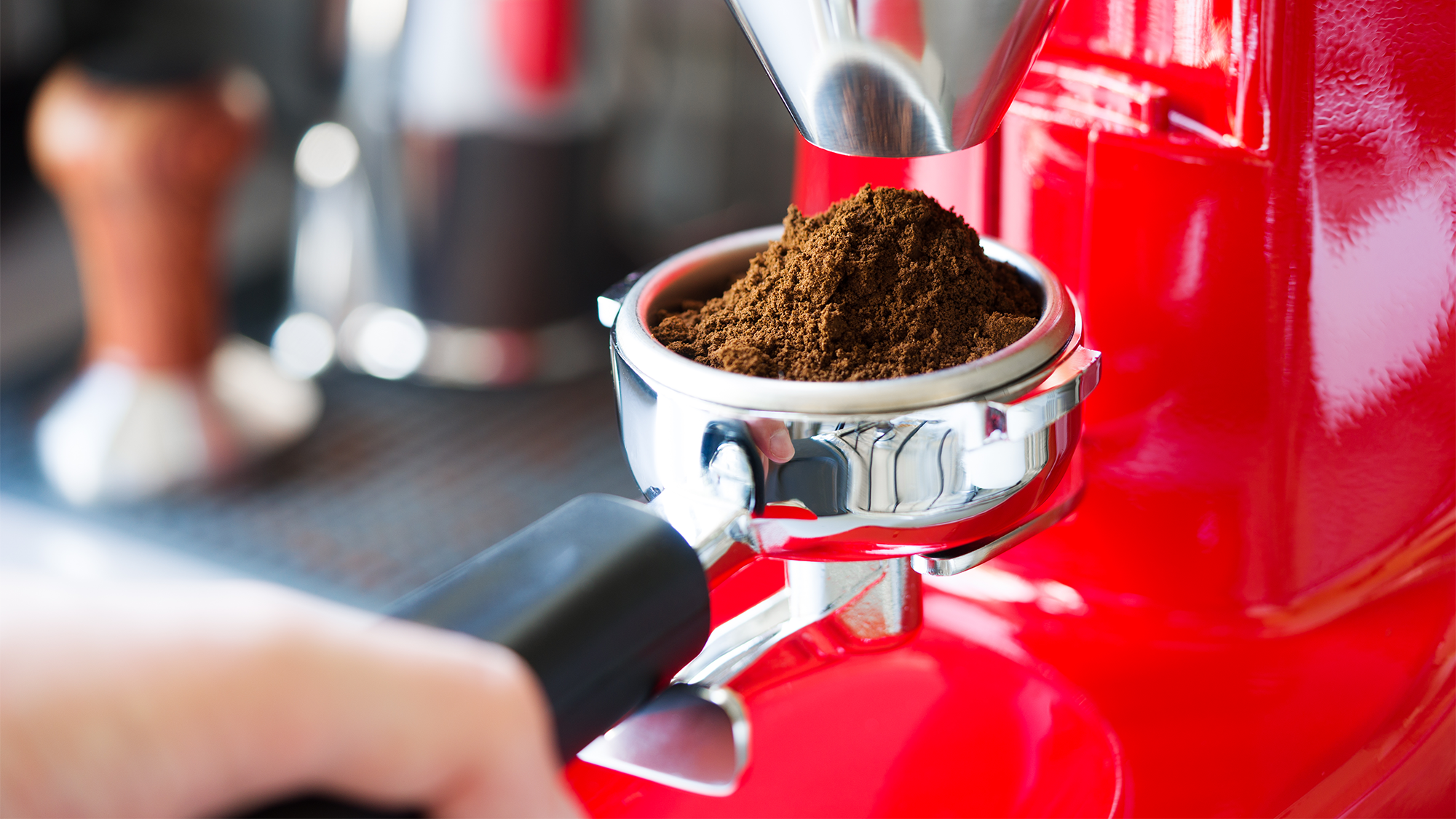

Grinding coffee beans at home can be the best way to get a fresh cup of coffee, but the process is not without its downsides. The friction created by breaking up the beans generates static electricity that makes the coffee clump together and stick to the grinder. It’s a nightmare for every coffee lover. However, have no fear–a team of chemists and volcanologists are working together to bring an end to this caffeinated crisis by investigating how moisture affects this static buildup. They discovered that adding a drop of water to the beans before grinding cuts the static and makes a better tasting espresso. You can find their detailed findings are highlighted in this study published December 6 in the journal Matter.
rnrn
[Related: Scientists brew stronger concrete with coffee grounds.]
rnrn
The new study is a game-changer for coffee lovers who have long struggled with static during grinding. The team found that when coffee beans have higher internal moisture, they produce less static electricity. Not only does this reduce waste, but it also gives consumers more consistent and intense-tasting espresso, offering more bang for their buck.
rnrn
“Moisture, whether it’s residual moisture inside the roasted coffee or external moisture added during grinding, is what dictates the amount of charge that is formed during grinding,” said study co-author Christopher Hendon. “Water not only reduces static electricity and therefore reduces mess as you’re grinding, but it can also make a major impact on the intensity of the beverage and, potentially, the ability to access higher concentrations of favorable flavors.”
rnrn
To study what factors are behind the electricity generation, Hendon worked with a team of volcanologists. It’s an intriguing mix of disciplines that aims to end the static struggles faced by baristas and avid coffee drinkers.
rnrn
“In a simplistic way, it’s similar to grinding coffee, where you’re taking these beans and reducing them to fine powder,” explained study co-author Joshua Méndez Harper. It’s fascinating to see how similar processes play out in different settings.
rnrn
They ground both commercially and in-house roasted espresso beans, noting that the beans varied by factors including country of origin, roast color, processing method (natural, washed, or decaffeinated), and moisture content. Upon careful measurement, they found there was no association between static electricity and where the country was grown or its processing method.