


Third in a three-story series published in partnership by Inside Climate News and Northern Journal.
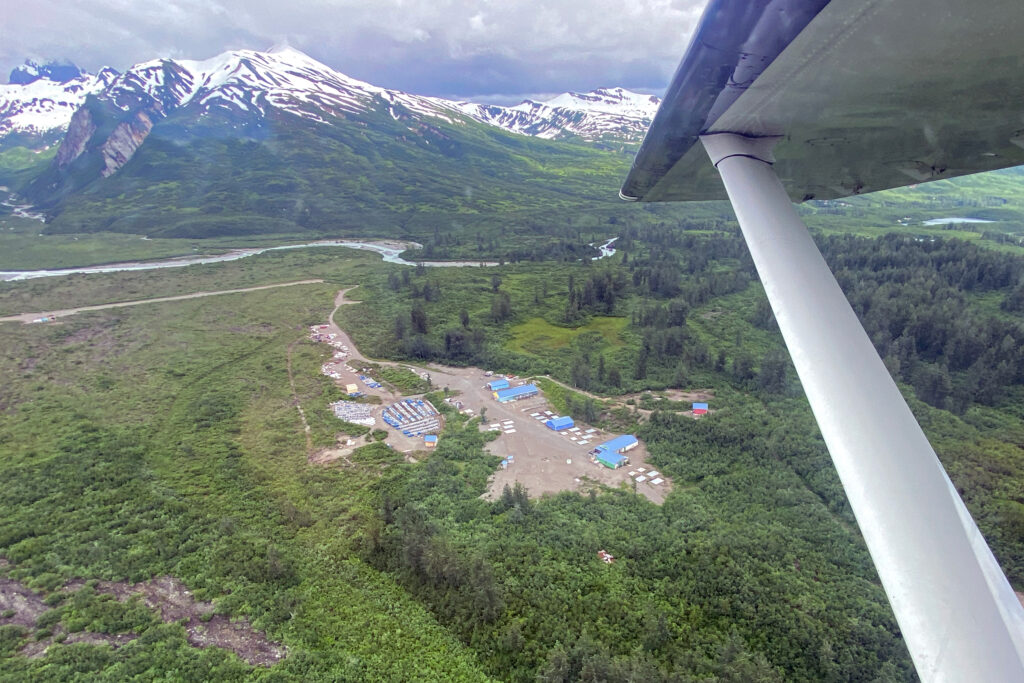
COOK INLET, Alaska—High in a mountain valley on the far west side of this tidal inlet sits an unusual plot of land.
It’s a private parcel, with a gravel airstrip and four or five buildings that make up a small worker camp. But there are no towns in sight. Known as the Johnson Tract, the property is fully surrounded by the vast Lake Clark National Park—millions of wild acres marked by the broad white peaks of a volcano, sprawling glaciers and a muddy ocean coastline patrolled by brown bears.
Beneath the Johnson Tract lies a potential fortune. For decades, geologists have eyed gold, copper and zinc deposits thought to be worth billions of dollars. But they’ve never been tapped.
Now, amid surging gold prices and rising demand for metals like copper, the prospect is generating new excitement—and concern.
A prominent Alaska mining company is leasing the Johnson Tract from its Indigenous owners, and the property, some 125 miles southwest of Anchorage, has emerged as one of the most promising mining prospects in Southcentral Alaska.
But conservationists, commercial salmon fishermen and local lodge owners fear a mine, encircled by the federal protected area, could disrupt harvests and harm wildlife, including an endangered population of beluga whales.
Getting the Johnson Tract’s minerals to buyers will require trucking ore through a now-roadless corner of the national park to a future port.
Critics point out that the bay where the mining company, Contango Ore, Inc., wants to build a shipping terminal is an important winter habitat for the endangered belugas. Concern for the whales, among other objections, led mine opponents to sue federal regulators earlier this year over a permit that Contango received to build a short access road and expand an airstrip at the site.
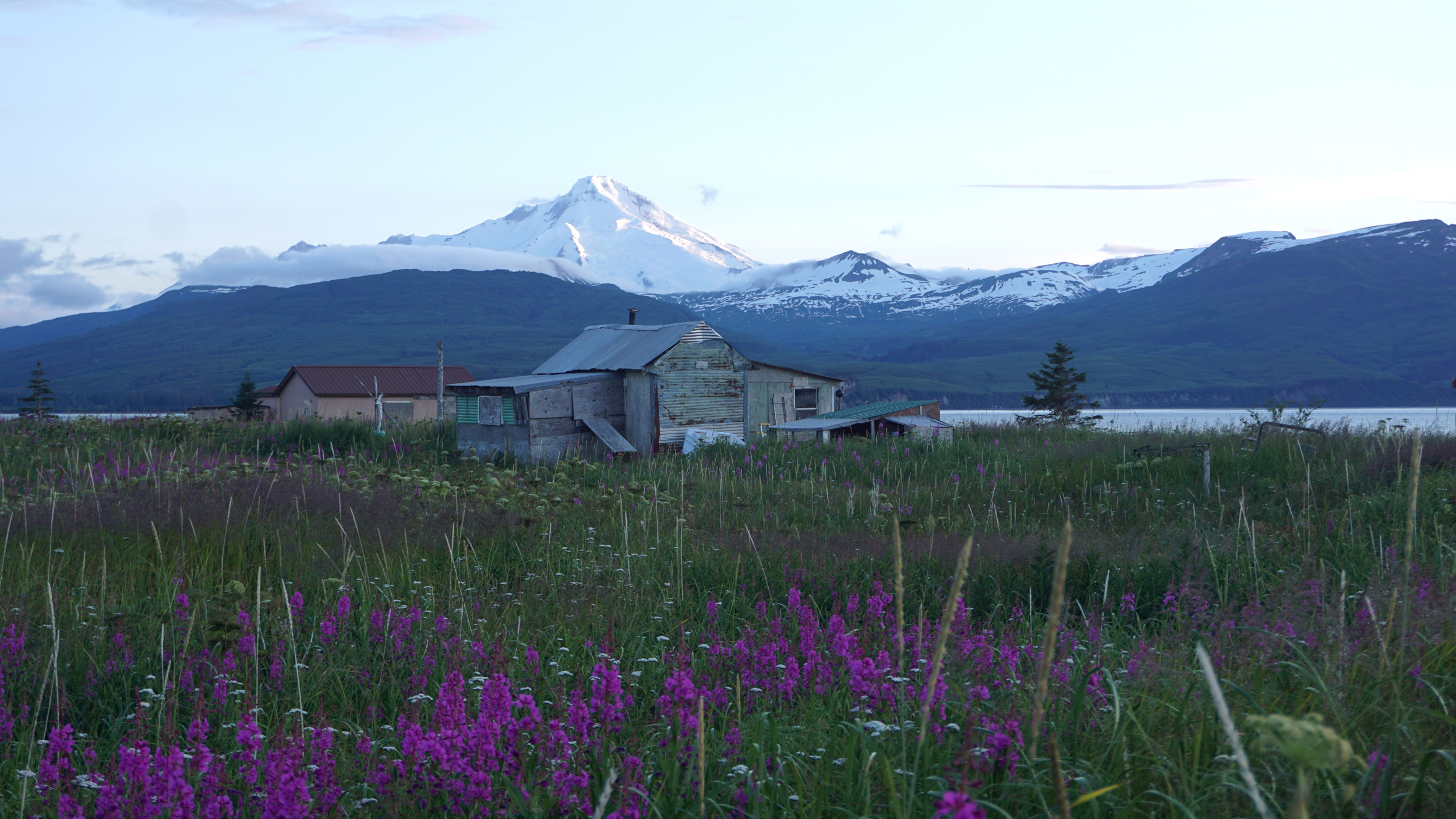 Mount Iliamna, a volcano in Lake Clark National Park, rises above Tuxedni Bay and a commercial fish camp on Chisik Island. Credit: Max Graham/Northern Journal
Still, the project is advancing.
The land is owned by Anchorage-based Cook Inlet Region, Inc., or CIRI, one of 12 Indigenous-owned regional corporations created by Congress as part of a wider land claims settlement with Alaska’s Native people in 1971.
Contango, based in Fairbanks, started leasing the land from CIRI last year. With gold prices surpassing a record high of $4,000 per troy ounce this year, the mining company is already planning new roads and a tunnel to allow underground drilling on the Johnson Tract.
If a mine gets built, both Contango and CIRI’s nearly 10,000 Indigenous shareholders are poised to profit.
“The stars might be aligned right now,” said Margie Brown, a former CIRI president who also worked for the corporation’s lands department in the 1970s, when the company acquired the prospect.