


Jurisprudence
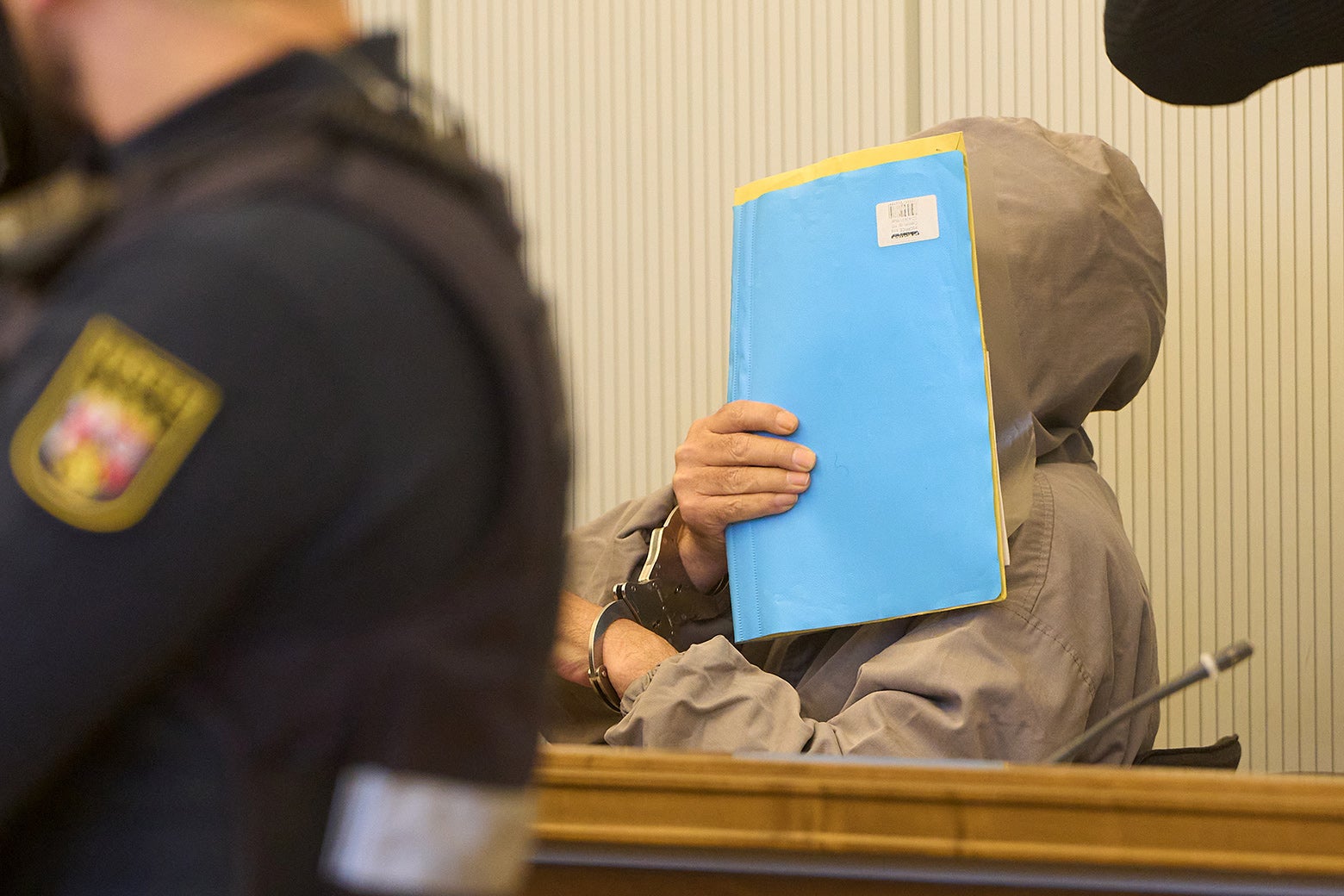
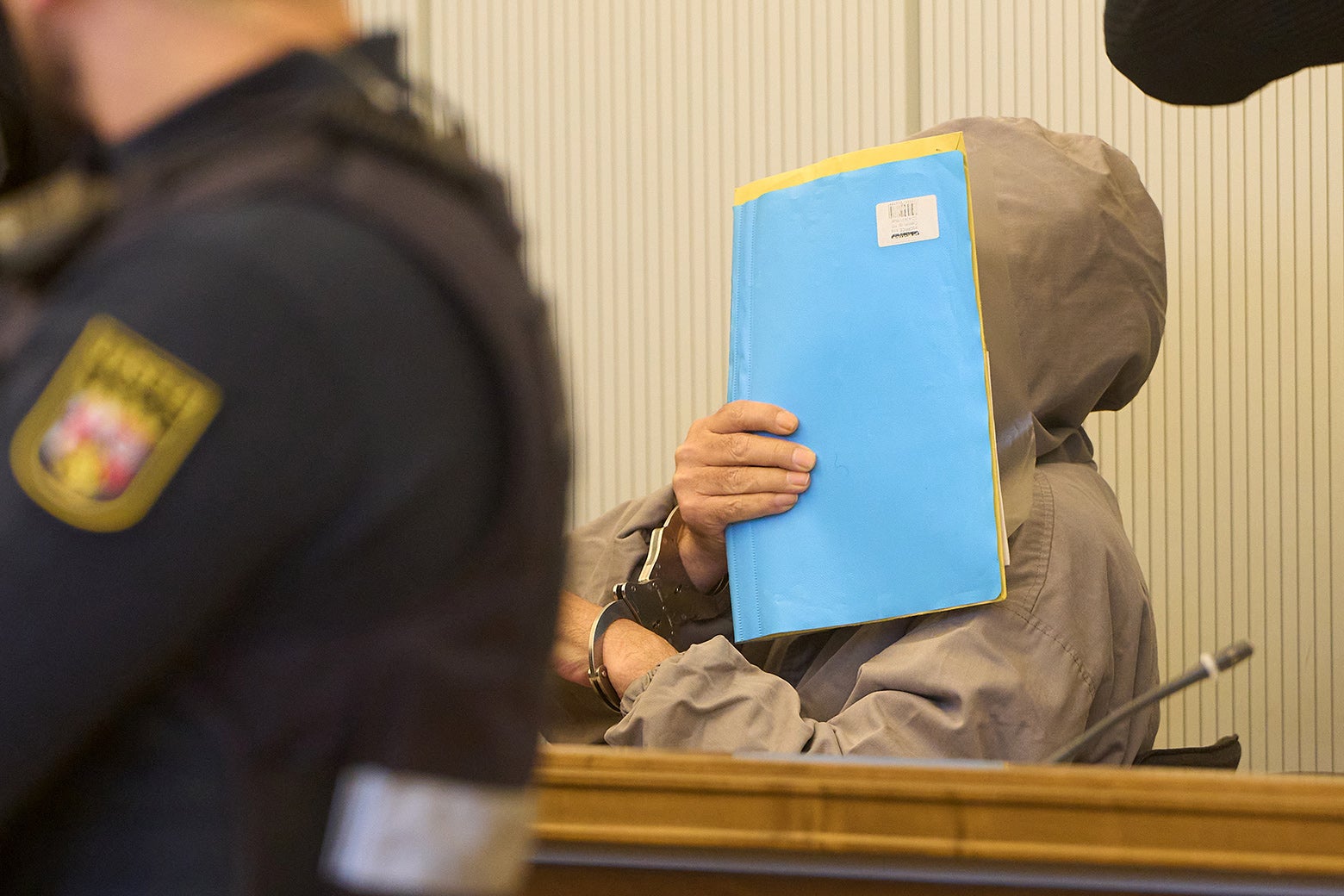
One of the five defendants accused of being actively involved in the Syrian civil war sits at the Higher Regional Court in Germany.
Thomas Frey/Picture Alliance via Getty Images
Sign up for the Slatest to get the most insightful analysis, criticism, and advice out there, delivered to your inbox daily.
On a quiet Wednesday morning in Koblenz, Germany, a courtroom opened its doors to a proceeding unlike any that has come before it: the world’s first war crimes trial centered on the deliberate starvation of civilians.
For decades, the principle has existed only on paper. Since 1977, the Geneva Conventions have classified the deprivation of food as a prosecutable war crime—yet no court has ever tested that rule. Now, for the first time, judges, prosecutors, and witnesses will attempt to define what it means to starve a population on purpose.
The witnesses, as well as the victims, are Palestinians.
This trial, however, is not happening in the Hague. It is happening in the Higher Regional Court of Koblenz, Germany—one that has become a global hub for accountability in the Syrian conflict.
The International Criminal Court revived worldwide attention on the issue in 2024, when prosecutors issued arrest warrants for Israel’s prime minister and former defense minister, citing “reasonable grounds to believe” they bore responsibility for using starvation as a method of warfare in Gaza. That case has not yet reached trial.
In Koblenz, prosecutors have charged five men linked to the Assad regime—four members of a pro-government militia and one Syrian intelligence officer. Four face counts of torture and murder. One faces an additional charge, the unprecedented allegation of having ordered starvation as a weapon.
A conviction would do more than punish individuals. It would define the crime itself. To understand the stakes, the court will revisit one of the most harrowing chapters of the Syrian civil war: the siege of Yarmouk.
Once a thriving Palestinian district just five miles from central Damascus, Yarmouk became, by 2013, the most heavily besieged area in the country. What began as a cordon tightened into a noose. Medicine was blocked. Food convoys were turned back. Electricity, water, and basic medical supplies vanished. Civilians survived on grass, leaves, and animal feed.
Aid workers still recount those days with visceral clarity.
“I will tell you the story of one cow,” says Kenon al-Qudsi, recalling a 10-day effort to smuggle just 55 kilograms of meat into the district through makeshift tunnels—tunnels soon sealed off by the regime. Doctors, including pediatrician and public-health advocate Annie Sparrow, remember hospitals without blood bags, antibiotics, or power. “Without blood bags, you can’t donate or receive blood,” she explains. “Treatable injuries became death sentences.”
Aerial bombardments continued even as civilians starved.
The world briefly saw what Yarmouk had become in 2014, when a single humanitarian convoy was permitted into the ruins.