

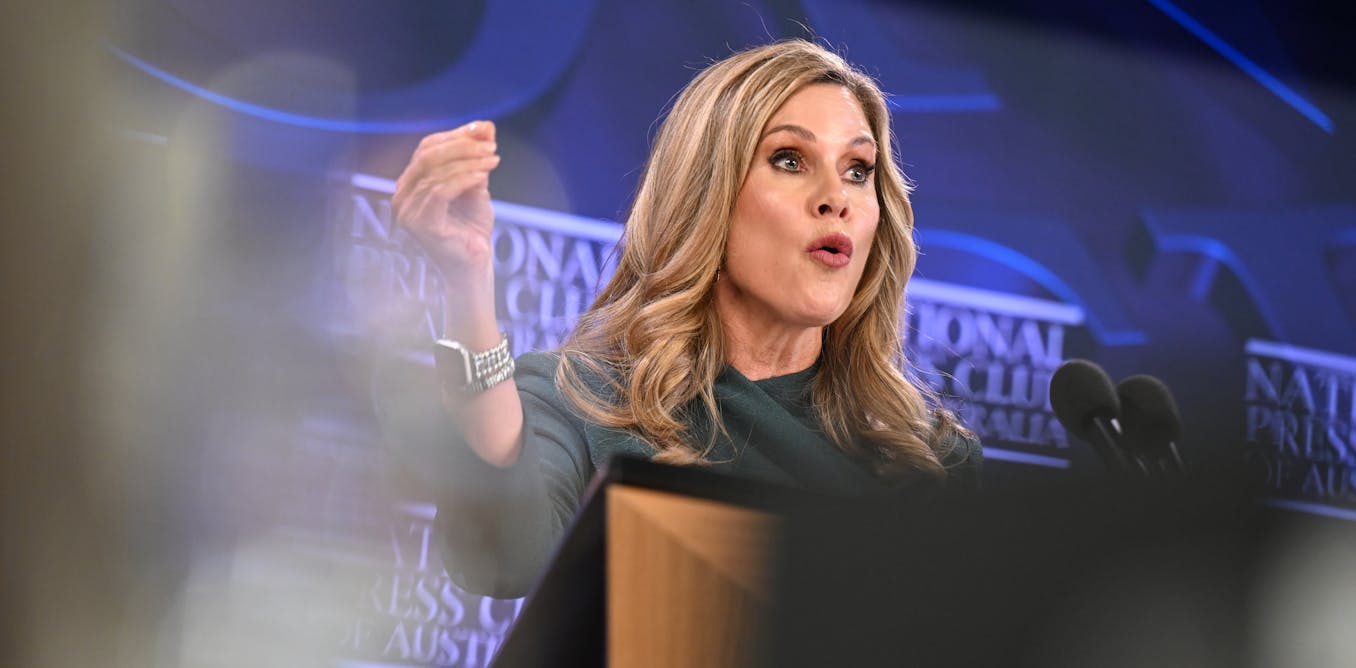

In the lead-up to the much-discussed social media ban taking effect, Australian eSafety Commissioner Julie Inman Grant is often in the headlines.
For all the attention she’s been getting, Inman Grant probably didn’t expect any of it to come from a foreign government committee, calling her to answer for a so-called “censorship regime”.
But the US House Committee on the Judiciary has asked her to appear before it to testify about laws governing the internet.
Chair of the committee, Republican Jim Jordan, was blunt in his request. In a letter to the commissioner, he wrote:
as a primary enforcer of Australia’s OSA [Online Safety Act] and noted zealot for global take-downs, you are uniquely positioned to provide information about the law’s free speech implications […]
While it seems an unusual move, censorship has grown into a hot-button issue in the United States. Inman Grant finds herself at the centre of a perfect storm of rhetoric, politicking and fierce American individualism.
Does she have to testify?
The committee has no jurisdiction over the activities of the Australian government. Indeed, it does not even have jurisdiction over US-Australian diplomatic relations, which are the provenance of the House Foreign Affairs Committee.
The Judiciary Committee can call anyone it wants to come and testify at a hearing, but potential witnesses outside the US cannot be compelled to do so. This means Inman Grant can decide whether she wants to appear.
Jordan, the committee’s chair, is a member of the House Freedom Caucus: a formal group of around 45 mostly libertarian conservatives in the Republican Party in the House.
The caucus does not necessarily represent the views of most Republicans. It has often been in conflict with House Republican leadership.
Mounting cynicism
The issue of internet censorship is fraught in US politics. At the height of the COVID pandemic, this issue became even more heated and controversial.
Many Americans were very upset to learn the Biden administration worked with Facebook to censor posts about the pandemic. Facebook Chief Executive Mark Zuckerberg, who testified before the Judiciary Committee about this issue last year, has vowed his company would never do so again.
On his first full day in office this year, President Donald Trump signed an executive order banning government from censoring social media.
The backlash from Americans against any kind of censorship has at least two sources. The first the generalised resistance to taking any kind of direction from the government.
Americans don’t want to be told “no” by their government. Whether it’s guns, drugs, gambling, abortion, gay marriage or even seatbelts, Americans don’t want to be told what to do (although after a few years of clever advocacy, Americans accepted the need to wear seatbelts).
The idea that their own government would censor their social media posts – no matter how wrong that post might be on the facts or how counterproductive to the public interest – is anathema to many Americans.