


Published December 7, 2023
20 min read
MIAMI On a recent summer evening, I stood in a parcel of one of the world’s rarest ecosystems, home to dozens of endemic, threatened, and even endangered species—and I stepped on one. Oops.
A teeny green perennial herb called Polygala smallii, or tiny polygala, poked out from beneath my hiking boot. It’s difficult to walk through the pine rocklands—a rare habitat of pine forests growing on limestone unique to Florida and the Bahamas—without stepping on at least one vulnerable organism. Researchers believe this may be one of the highest concentrations of endangered species in any ecosystem in the United States, says George Gann, executive director of the Institute for Regional Conservation. (Gann’s work is funded in part by a grant from the National Geographic Society.)
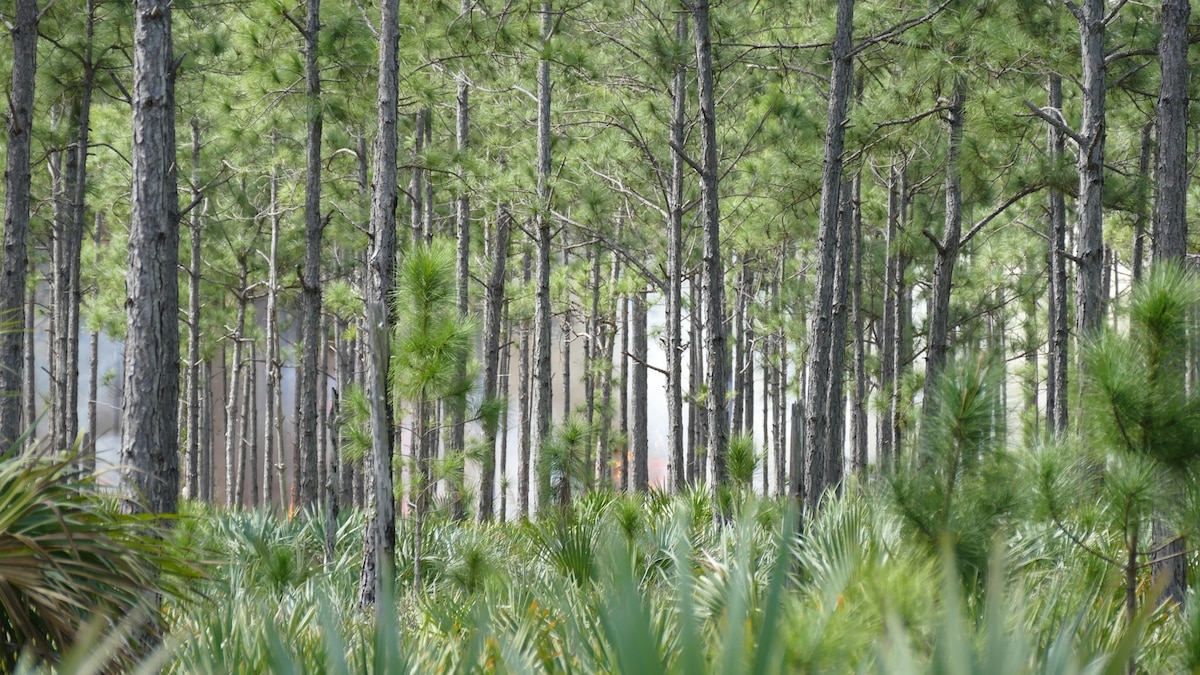
In healthy pine rockland, hundreds of species of wildflowers and palms as well as lush hardwood shrubs grow on rocky, sometimes-sandy soil. These forests once covered more than 186,000 acres of South Florida, including most of urban Miami-Dade County. Because of rapid urban development, less than two percent of that ecosystem outside the Everglades remains today, according to the Tropical Audubon Society. What’s left provides habitats for more than three dozen imperiled species, including the Florida leafwing butterfly, the Miami tiger beetle, and the Florida bonneted bat.
This patch of pine rockland is adjacent to the site of a proposed water park and shopping complex called Miami Wilds. The controversial project has been under discussion since 1997, but little progress has been made. The plans for this plot originally included a 200-room hotel and spa, but over time, public outcry and legal challenges over environmental risks have winnowed the plans down to a water park, a smaller hotel, and a handful of shops. These plans include six million dollars to be set aside for pine rockland restoration efforts, says Miami Wilds developer Paul Lambert, founder of the group Lambert Advisory. “This part of the county has always been the most moderate-income area of the county with the lowest number of jobs,” he says. “By our numbers, it’s going to create over 400 jobs.”
The remaining 4,000 acres or so of pine rocklands in Florida are in jeopardy. Development has taken over much of what used to be pine rockland, and the remaining plots are fragmented, according to Miami-Dade County. In this parcel outside Miami, the land has been largely ravaged by the overgrowth of native palms and shrubs as well as invasive plant species such as the Brazilian peppertree, a shrub-like tree with red berries, and the Burma reed, a tall grass species.
Though it is threatened, this parcel is “the most important fragment of pine rockland left outside of Everglades National Park,” says Lauren Jonaitis, senior conservation director for the Tropical Audubon Society.