

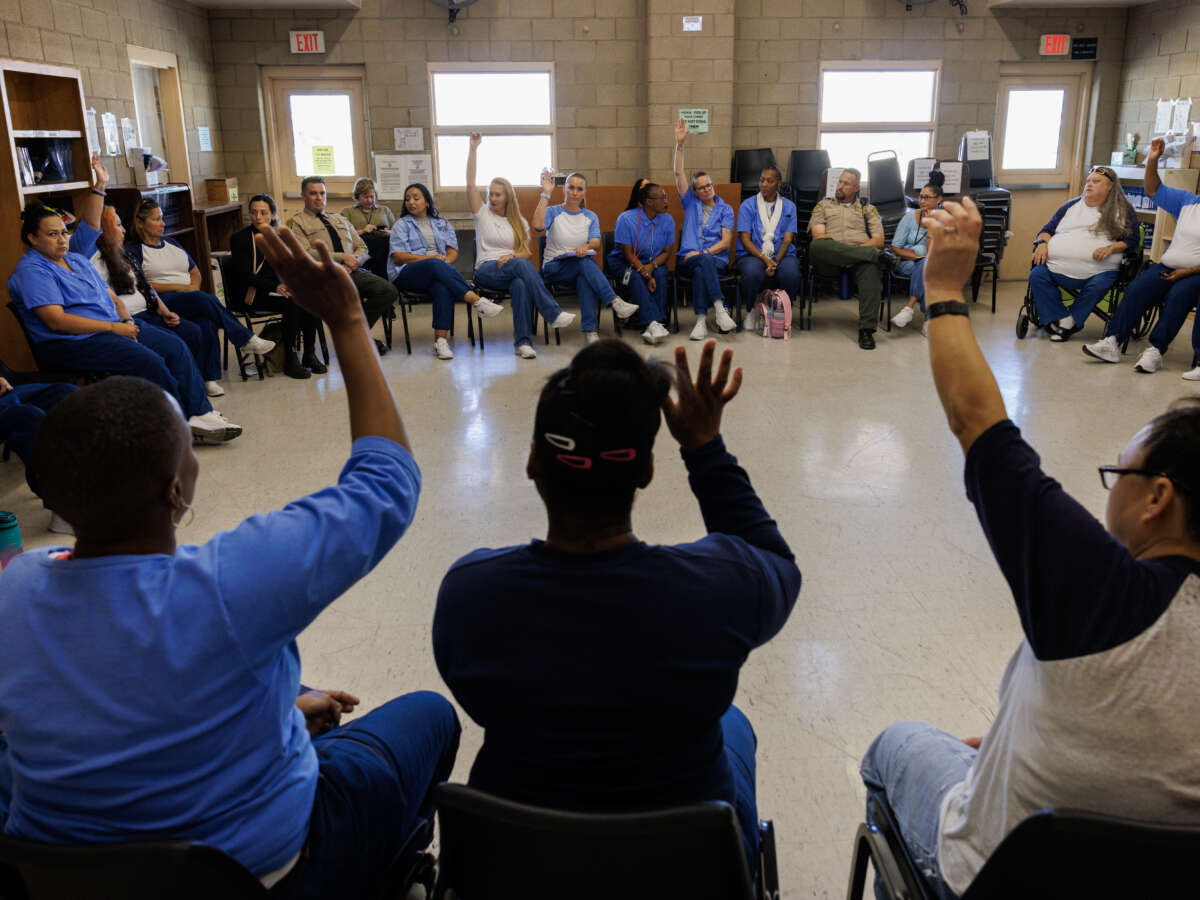

Women are the fastest growing incarcerated population in the United States. The female incarceration rate has ballooned by more than 700% since 1980 — 172,700 women and girls were in jail or prison in 2023. A quarter of these (46,300) are confined because they were either refused bail or cannot afford it, rather than because they were found guilty of a crime. Over 14,000 are awaiting trial for drug-related offenses.
Even brief contact with the prison system can have life-long impacts. It can increase the amount of time spent unemployed or out of the labour force by as much as four years, and reduce lifetime earnings by up to 50%. It can also exclude someone from many forms of employment, for example by running afoul of one the staggering 27,000 national, state and local rules that exist to bar formerly justice-involved people from holding professional licenses.
It can also increase personal debt, compounding economic woes. Leaving prison is expensive — many of those who leave prison violate their probation simply because they don’t have enough money.
These impacts further combine with other socioeconomic characteristics to increase the difficulties for women leaving prison. For example, women in jails (especially women of colour) are already on average poorer than their male counterparts. More than 60% of women in state prisons have a child under the age of 18.
Partially as a result of all this, almost two-thirds of all prison leavers are re-arrested and more than half returned to prison within 36 months of their release. For those who do find employment within the first year of their release, a critical window for successful re-entry into society, median earnings barely exceed $10,000.
Money in hand is the key to breaking cycles of incarceration, reducing prison populations, and bringing formerly incarcerated women back into society. Yet contact with the prison system itself makes that money so much harder to get. The answer, we at the Community Love Fund believe, is universal basic income.
The Community Love Fund
The Community Love Fund is an initiative of The National Council for Incarcerated and Formerly Incarcerated Women and Girls, a prison abolitionist project founded in 2010 by a group of women while they were incarcerated in the federal prison in Danbury, Connecticut.
The council is made up of a coalition of system-impacted women pioneering initiatives to end the incarceration of women and girls. We advocate for the unique needs of women entangled in the prison system, who face harsher penalties for intimate partner violence, must overcome unique barriers as primary caretakers, and who make up the fastest growing segment of the incarcerated population. Our community-led systems of accountability don’t involve prisons or police, because we want to transform how we respond to harm at both the community and national level in the process.
The fund is the first-ever guaranteed income programme to deliver recurring cash relief to women currently incarcerated in state and federal prisons.