



Felicity Bradstock
Felicity Bradstock is a freelance writer specialising in Energy and Finance. She has a Master’s in International Development from the University of Birmingham, UK.
More Info
Set us as your preferred Google source
Premium Content
By Felicity Bradstock – Dec 13, 2025, 10:00 AM CST
- The U.K. is advancing large-scale projects at Hinkley Point C and Sizewell C while selecting Rolls-Royce to deliver the first domestic SMRs.
- A sweeping regulatory overhaul and new planning rules aim to cut costs, accelerate siting, and improve investor confidence as the government targets 25 percent nuclear power by 2050.
- New partnerships with the United States and a forthcoming strategic plan position Britain to reenter the top tier of global nuclear developers.
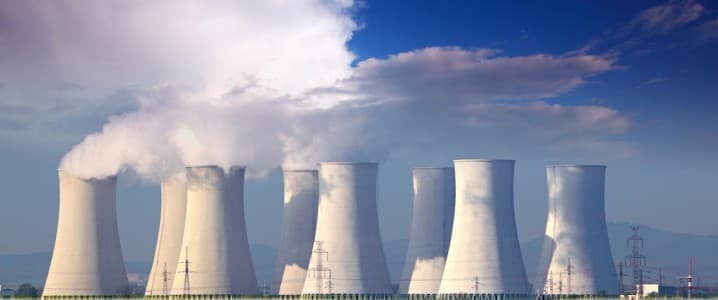
The United Kingdom has big plans for its nuclear sector, with the construction of two conventional nuclear plants underway and plans to develop small modular reactor (SMR) technology. France’s EDF Energy is managing the development of the Hinkley Point C power plant in Somerset and Sizewell C in Suffolk, while Rolls-Royce was recently selected as the preferred bidder to construct the U.K.’s first SMRs. However, the plans do not stop there.
In December, the country’s Energy Secretary Ed Miliband stated the government has “only just begun when it comes to our ambitions for new nuclear in the U.K,” at the Nuclear Industry Association’s Nuclear 2025 conference in London.“The work we are doing to drive forward Hinkley Point C, Sizewell C and our SMR programme will together bring more nuclear capacity onto the grid than in the last half century combined,” said Miliband. “When you think about the demands of electricity, there is so much more this industry can do.”
Miliband said the government will deliver on promises to develop SMRs and advanced modular reactors (AMRs) and will soon publish a framework on privately funded advanced nuclear projects. Great British Energy – Nuclear (GBE-N) will be in charge of assessing proposals. The government is also reforming planning rules to expand the areas in which new nuclear projects can be developed beyond the eight existing sites, which will expand the reach of SMRs and AMRs. GBE-N will conduct research between now and autumn 2026 to identify a suitable site for another large-scale nuclear plant to be developed, according to Miliband.
At the conference, GBE-N’s Chair, Simon Bowen, stated that developing more large-scale nuclear capacity is “a critical part of the mix. And the identification of which sites could be used is a really important piece of work.” Bowen added, “Of course, we’ve got an established technology at Hinkley and Sizewell, and that must be a very credible frontrunner or a credible technology for us to continue to develop, but we have to market-test that to see whether or not there are better value-for-money options for the taxpayer, and that is a natural thing for us to do.”
Miliband emphasised that the GBE-N assessment will align with the Strategic Spatial Energy Plan,