


Kelly is a former librarian and a long-time blogger at STACKED. She’s the editor/author of (DON’T) CALL ME CRAZY: 33 VOICES START THE CONVERSATION ABOUT MENTAL HEALTH and the editor/author of HERE WE ARE: FEMINISM FOR THE REAL WORLD. Her next book, BODY TALK, will publish in Fall 2020. Follow her on Instagram @heykellyjensen.
View All posts by Kelly Jensen
The target? Comics.
Last week kicked off the first in a trilogy of posts focused on comic book censorship in America. History professor and comic censorship scholar Brian Puaca talked about what made burning comics a seductive activity in post-World War II America. This week, he is back to offer a more optimistic read on comics censorship through that same period and on into our present day.
Brian Puaca, Professor of History at Christopher Newport University in Newport News, Virginia, reached out to me earlier this year and shared with me a project he’d been working on called the Comic Book Burnings Project. As the title suggests, it’s a look at how Americans found community through comics burnings in post-war America. It’s an incredible work of scholarship, including timelines, primary sources, maps, and images from this era of nationwide censorship.
Literary Activism
News you can use plus tips and tools for the fight against censorship and other bookish activism!
***
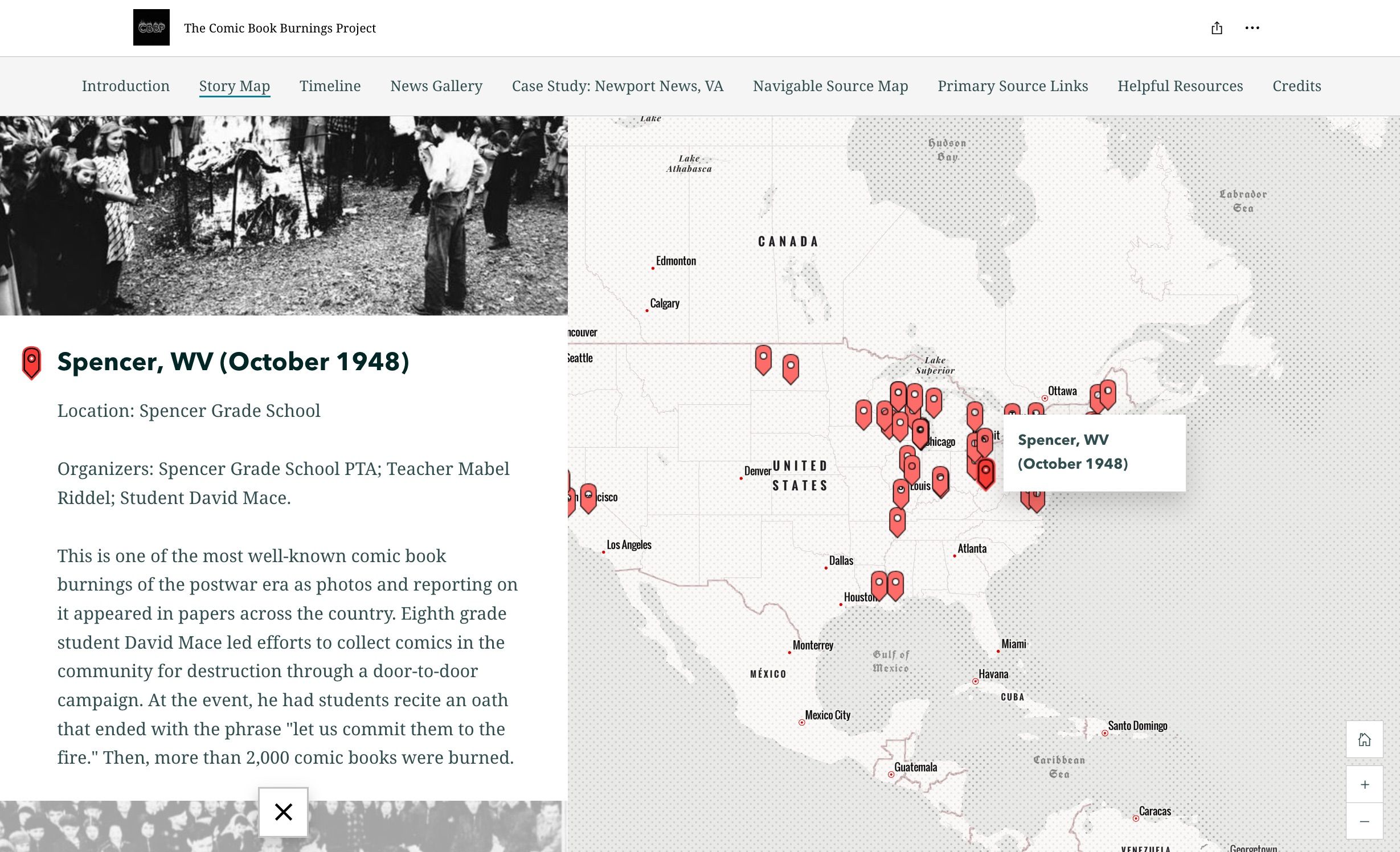 Image from The Comic Book Burnings Project, featuring the history of the famous Spencer, West Virginia, burning from October 1948.
Searching for a Silver Lining: Comic Book Burnings and Censorship in Postwar America
As the year winds down and we look forward to the holidays, many of us return to annual rituals that mark our entry into a new year. One of those yearly traditions, which I approach with a mix of trepidation and resignation, is the release of the American Library Association’s Top 10 Most Challenged Books of the Year list.
Just about every year, two or three comics titles land in the top ten. Last year it was Maia Kobabe’s Gender Queer and Mike Curato’s Flamer. The controversy surrounding these graphic novels reflects larger social debates about LGBTQ+ identities and politics. Ten years ago, it was Craig Thompson’s Blankets and Alison Bechdel’s Fun Home, and these works were criticized for violence, nudity, and “graphic images.” If history is any guide – and as a historian, I have to believe that it is – we’ll see a few comics works on the forthcoming list for 2025. Notably, we’ll have to wait a little longer than January for the list, which is released as part of National Library Week in April.
Comics have long been the target of zealous censors. Just as it has been the case in recent years, so too have comics been linked to the broader social concerns and anxieties of Americans in decades past.