

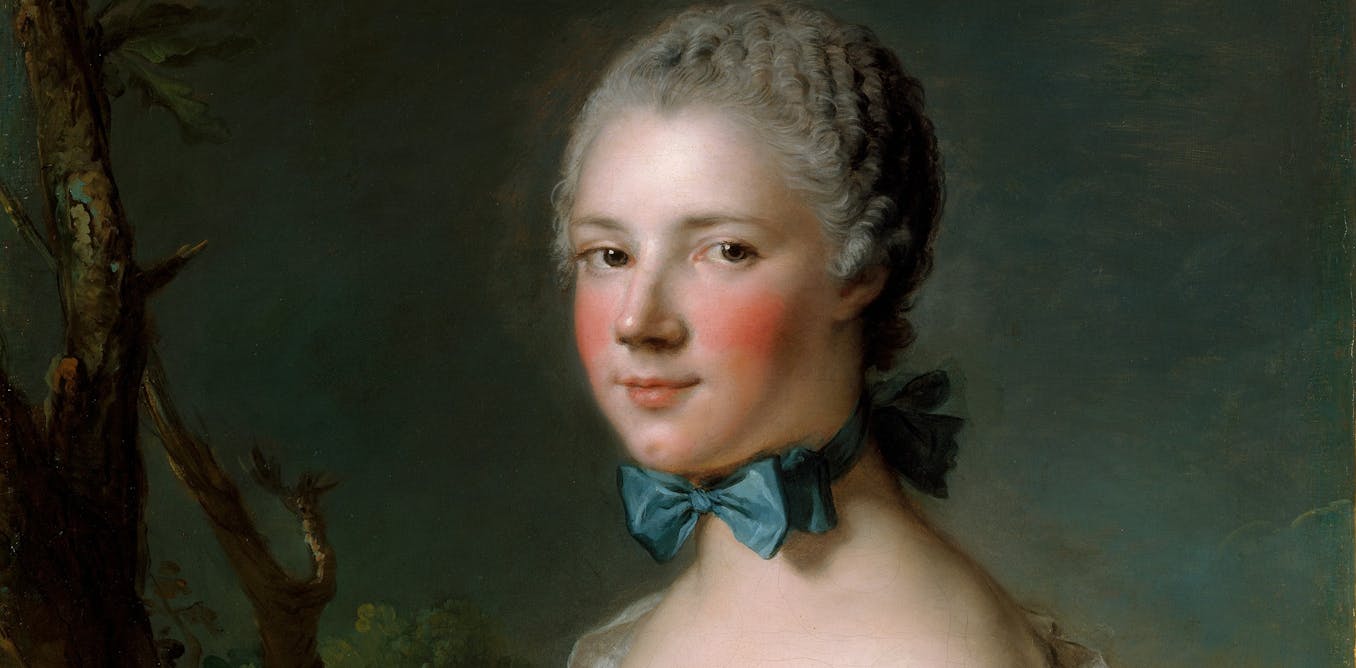

We’ve all had the feeling. You’re embarrassed and then there it is: a warm flush creeping up your neck and across your cheeks. The more you think about it, the hotter and redder you get. If someone asks “are you blushing?” it only makes you blush more.
So, why do we do it? When we’re already self-conscious, this involuntary response can feel like an added punishment. But evolutionary science suggests blushing may actually have social advantages. Let’s take a look.
What is blushing?
Blushing is our body’s visible reaction when we feel emotions such as embarrassment, shyness or self-consciousness.
It’s caused by a short burst of increased blood flow to the skin of the ears, face, neck or chest.
When an emotion triggers blushing, the sympathetic nervous system – which controls automatic body functions – becomes active and releases adrenaline (epinephrine). This makes the tiny muscles in blood vessels relax.
In the body, adrenaline tightens blood vessels, but in the face it does the opposite – they dilate. This means more blood flows through to the skin and makes the face feel hot.
We turn red because of this sudden rush of blood close to the surface of the skin.
People with lighter skin tones show this redness more clearly. In darker skin tones, the change may be less visible or not visible at all –
but the same physiological process still happens.
No matter whether others can see it, you’ll still feel warmth or tingling in your face.

People of any skin tone can blush – it might just be less visible to others.
Stephen Okonkwo/Unsplash
The social role of blushing
People blush when they are feeling highly self-conscious, which is generally brought on by unwanted social attention.
So even though the “fight-or-flight” system is involved, blushing isn’t about preparing for danger. Instead, scientists think it evolved as a social signal, a way of showing others that we recognise a mistake or feel embarrassed.
This can actually help build trust, because people often see blushing as a sign of honesty or sincerity – especially as it’s involuntary. Blushing can signal a non-verbal apology for a social misstep that can help to maintain social bonds after a transgression.
Different emotions can make us blush – but the mechanism is the same: increasing blood flow to the face and making us feel hot.
The difference is that blushing in anger, for example, comes from arousal and frustration, while blushing from embarrassment comes from self-awareness and social emotion.
People will blush for different reasons. For example, one study found children with social anxiety blushed from embarrassment when given exaggerated praise, compared to moderate praise or none.
In a follow-up study, the researchers found kids found who scored highly for narcissism – meaning they had an exaggerated sense of self-importance,