


AI agents have emerged from the lab, bringing promise and peril. A Carnegie Mellon University researcher explains what’s likely next for 2026.File Photo by Salvatore Di Nolfi/EPA
In artificial intelligence, 2025 marked a decisive shift. Systems once confined to research labs and prototypes began to appear as everyday tools. At the center of this transition was the rise of AI agents — AI systems that can use other software tools and act on their own.
While researchers have studied AI for more than 60 years, and the term “agent” has long been part of the field’s vocabulary, 2025 was the year the concept became concrete for developers and consumers alike.
AI agents moved from theory to infrastructure, reshaping how people interact with large language models, the systems that power chatbots like ChatGPT.
In 2025, the definition of AI agent shifted from the academic framing of systems that perceive, reason and act to AI company Anthropic’s description of large language models that are capable of using software tools and taking autonomous action. While large language models have long excelled at text-based responses, the recent change is their expanding capacity to act, using tools, calling APIs, coordinating with other systems and completing tasks independently.
This shift did not happen overnight. A key inflection point came in late 2024, when Anthropic released the Model Context Protocol. The protocol allowed developers to connect large language models to external tools in a standardized way, effectively giving models the ability to act beyond generating text. With that, the stage was set for 2025 to become the year of AI agents.
The milestones that defined 2025
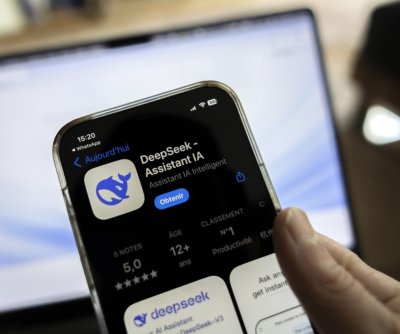
The momentum accelerated quickly. In January, the release of Chinese model DeepSeek-R1 as an open-weight model disrupted assumptions about who could build high-performing large language models, briefly rattling markets and intensifying global competition. An open-weight model is an AI model whose training, reflected in values called weights, is publicly available. Throughout 2025, major U.S. labs such as OpenAI, Anthropic, Google and xAI released larger, high-performance models, while Chinese tech companies including Alibaba, Tencent, and DeepSeek expanded the open-model ecosystem to the point where the Chinese models have been downloaded more than American models.
Another turning point came in April, when Google introduced its Agent2Agent protocol. While Anthropic’s Model Context Protocol focused on how agents use tools, Agent2Agent addressed how agents communicate with each other. Crucially, the two protocols were designed to work together. Later in the year, both Anthropic and Google donated their protocols to the open-source software nonprofit Linux Foundation, cementing them as open standards rather than proprietary experiments.
These developments quickly found their way into consumer products. By mid-2025, “agentic browsers” began to appear. Tools such as Perplexity’s Comet, Browser Company’s Dia, OpenAI’s GPT Atlas, Copilot in Microsoft’s Edge, ASI X Inc.’s Fellou, MainFunc.ai’s Genspark, Opera’s Opera Neon and others reframed the browser as an active participant rather than a passive interface.