

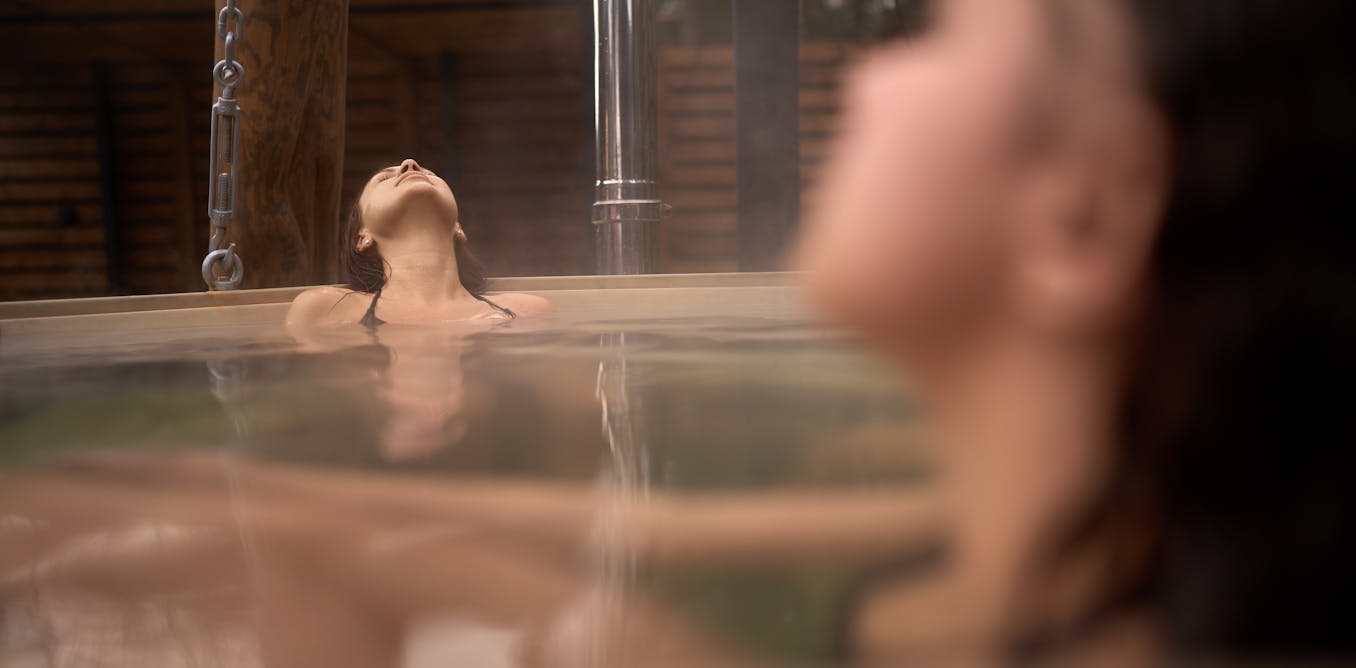

Bathhouses are making a wave in Australia and overseas. And it’s not an isolated trend; it reflects the broader advancement of the global wellness economy, which some reports suggest is outpacing even IT and sport in growth.
The Australian wellness sector, too, is booming. According to a report from the Global Wellness Institute, Australia has one of the world’s fastest-growing wellness economies, growing at an annual rate of 7.5% from 2019 to 2023 – with bathhouses, thermal springs, ice baths and saunas playing a key role.
Bathing together for leisure
Despite consumers’ recent heightened interest in saunas and bathhouses, these activities have a long history.
In Finland, sauna bathing – where water is thrown on hot stones to release steam – is a ritual believed to date back as far as 7000 BC.
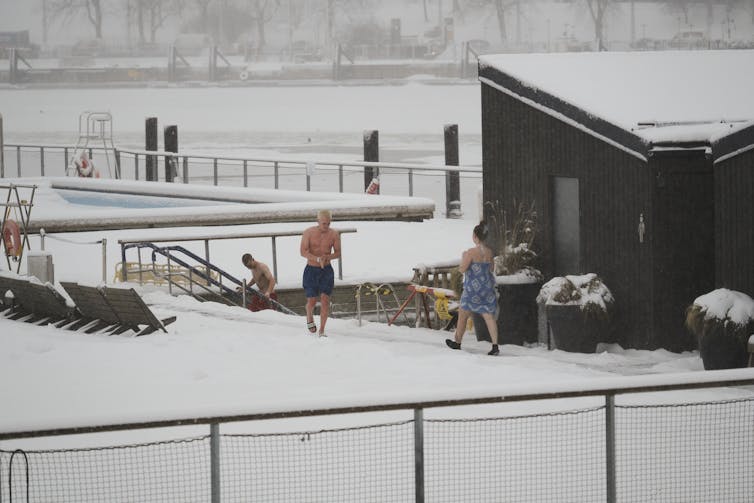
Saunas are an important part of daily life in Finland, where it will generally snow for several months of the year.
Alessandro Rampazzo/Anadolu via Getty Images
One of the first known saunas took the form of a pit dug into the ground. In this “pit sauna”, a pile of stones at the bottom was heated with a campfire.
Sweat houses from the Bronze Age have also been found in Britain and Ireland, as well as ancient Islamic civilisations, and among Indigenous groups in Mexico and North America.
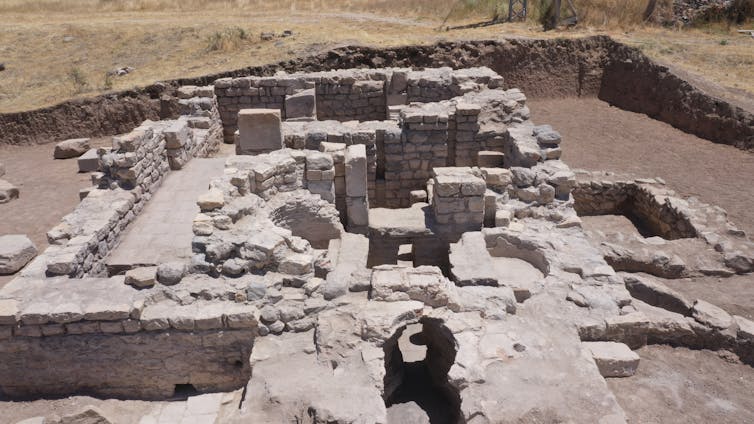
Remnants of an ancient Roman bath complex uncovered by archaeological excavations in Elazig, Turkey. The structure covers an area of 75 square meters and dates back about 1,700 years to the Late Roman Period.
Ismail Sen/Anadolu via Getty Images
The practice of onsen (hot spring) bathing in Japan also has a history dating back more than 2,000 years.
In Australia, First Nations peoples have bathed in rock pools, waterholes, and billabongs for millennia, viewing fresh and salt water alike as vital cultural, spiritual and agricultural resources.
These ancient bathing practices stand in stark contrast to the modern bathing culture taking over our cities.
The Australian context: indecency and necessity
Sea bathing had become popular in Europe by the 18th century, prior to Australia’s colonisation. In England, Queen Victoria (1819–1901) further popularised the activity by bathing regularly on the Isle of Wight, getting changed in a wooden cart called a “bathing machine” to preserve modesty.
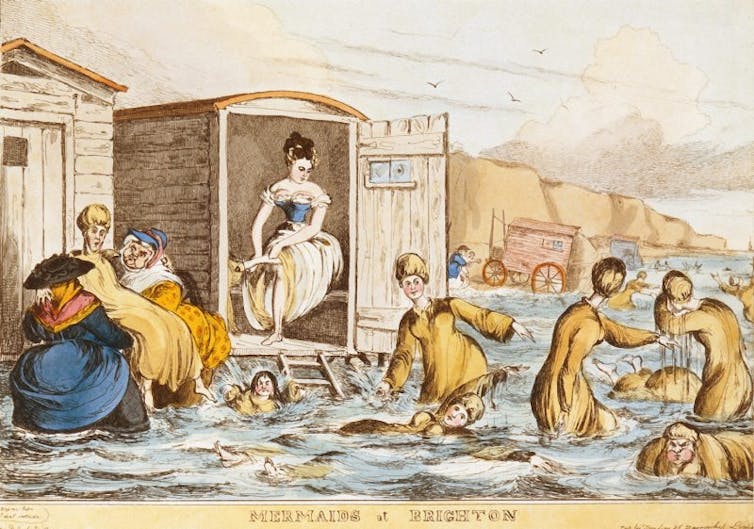
A 19th century engraving by British artist William Heath, ‘Mermaids at Brighton’ shows women swimming in the ocean behind their bathing machines.
Wikimedia
It was also in Britain during Queen Victoria’s lifetime that swimming for sport – as opposed to relaxation, military training or survival – became common practice. Bathing for leisure and hygiene has a much longer history than swimming for sport.
In 1810, New South Wales governor Lachlan Macquarie prohibited the “indecent and improper custom […] of soldiers, sailors and inhabitants of the town” bathing at the government wharf and dock yard in Sydney.