

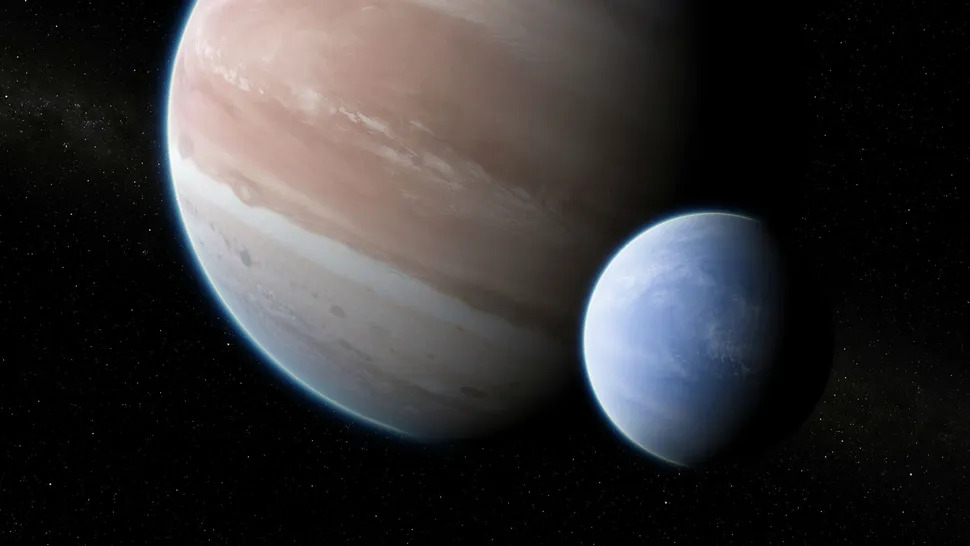

An illustration shows an exomoon orbiting an exoplanet
(Image credit: Dan Durda)
Prepare for a mind-bending quest reminiscent of a classic movie as we dive into the discovery of two moons orbiting planets beyond our solar system. New findings have raised doubts about these first ever exomoon detections, so let’s see if the force is with the scientists or not. This modern-day space saga began with the identification of worlds around other stars, and now we are on the brink of potentially discovering moons beyond our solar system.
As we venture into the vastness beyond our solar system, we encounter the mysterious exomoon around Kepler-1625 b, a Jupiter-like orb 8,000 light years from Earth. Not long after, astronomers were elated to observe a second exomoon circling the exoplanet Kepler-1708 b, a gas giant situated 5,400 light years away.
The discovery sparked great curiosity, as only two out of thousands of known exoplanets have been found with moons. However, the jury is still out on just how accurate these detections are. “There is still a possibility of finding moons orbiting worlds in other planetary systems, but the search is complicated,” according to René Heller from the Max Planck Institute for Solar System Research.
Embark on this thrilling journey of discovery and uncover the secrets of these elusive exomoons. Delve into the challenges faced by astronomers in their quest to spot these tiny celestial objects billions of miles away. Join us as we seek answers and unveil the mysteries that await us. To read more about the continuous quest for exomoons, visit the full story.