


(RNS and NPR) — In Jewish tradition, after someone dies, the anniversary of their death is marked by lighting a yahrzeit candle. Taking their name from the Yiddish word for “year-time,” yahrzeit candles come in a stubby glass holder a couple of inches high. They burn for 24 hours, to remember and honor the person lost. After the candle has burned, the little glass is left behind. And in some families that old glass is put to a new use.
Ruth Lebed’s grandmother came from Eastern Europe, a region that was sometimes Russia, sometimes Poland. She never learned English very well, but she was an amazing baker. Growing up, Lebed lived right next to her grandparents and remembers her grandmother’s baking.
“She would make rugelach, and she would make strudel,” said Lebed. “And all of these little delicacies that you really didn’t see in bakeries.”
After her grandmother died, Lebed and her mom tried to re-create her recipes — specifically the dough she used for rugelach, which also made excellent hamantaschen — and the recipe called for a glass of juice. Which left the family wondering: What’s a glass?
So, they tried a cup — didn’t work. One of their everyday juice glasses — also wrong.
“And then finally,” Lebed remembered, “my mom said, ‘You know what? Grandma used to keep all of her yahrzeit glasses.’”
And that was it.
Others share similar stories. Judy Bart Kancigor, author of “Cooking Jewish: 532 Great Recipes From the Rabinowitz Family,” came across several mentions of “a glass of flour” when gathering her family’s recipes. In response to a query about yahrzeit glass recipes on an online Yiddish forum, one respondent mentioned a family story of someone who thought the “1 gl of rice” measurement referred to a gallon, leading to a rather inedible stuffed cabbage.
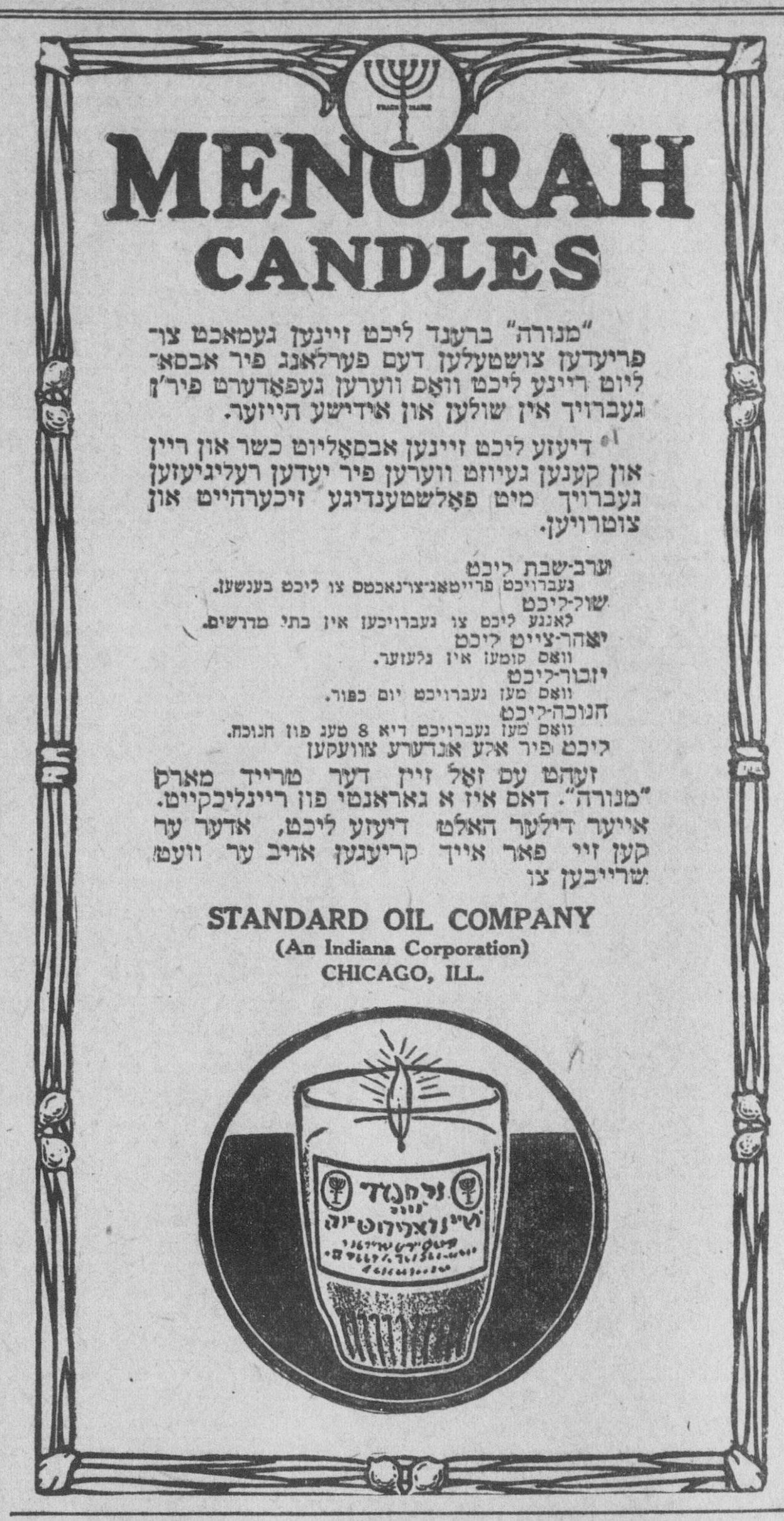
Using candles on the occasion of a death goes back as far as there are candles. And using candles to mark the yahrzeit, the anniversary of a death, is mentioned in Jewish tradition as far back as the Middle Ages. But the mass-produced glass holders came later. It’s unclear exactly when production started, but advertisements for yarhzeit candles from Standard Oil Co. started showing up in the Jewish press as early as 1914.
The glasses of a hundred years ago were a bit bigger than today’s — like a small juice glass, thick and beveled, sturdy enough to hold a candle that burns a whole day (Kancigor measured her family’s glasses as holding a cup plus 2 tablespoons). Many American Jews grew up with the memory of Eastern European grandparents cleaning old yahrzeit candle glasses and using them as measuring cups, as everyday juice glasses or (since they were thick enough) to hold a cup of hot tea, to be sipped Russian-style, through a sugar cube held between one’s teeth.
This repurposing may seem a little questionable.