

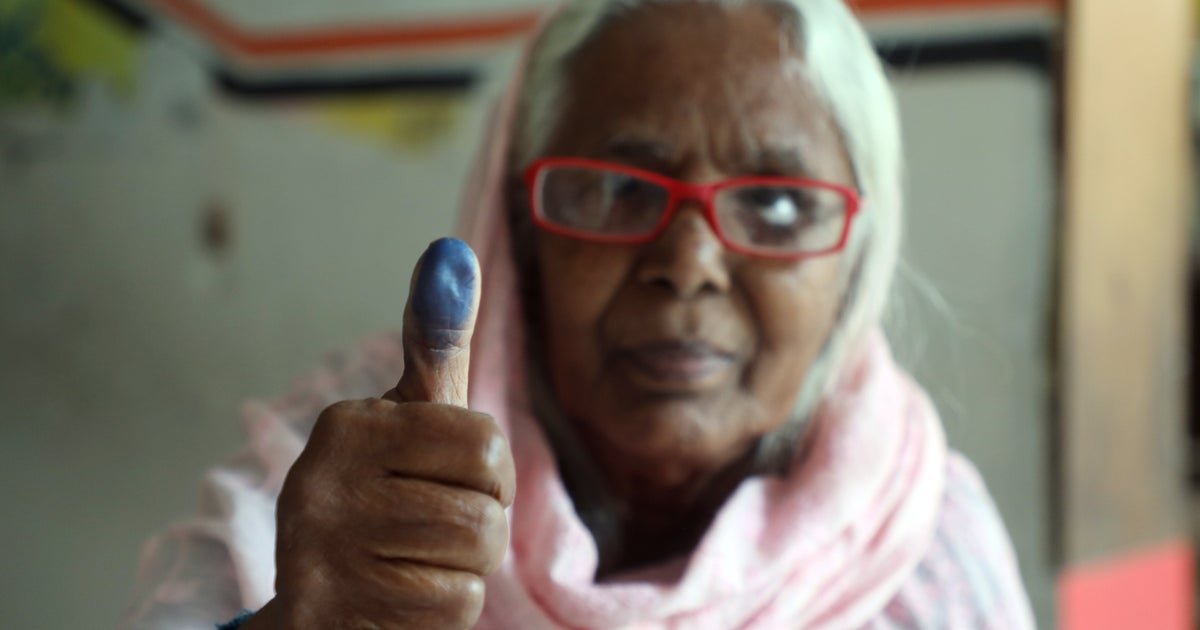

DHAKA, Bangladesh (AP) — Bangladesh on Thursday held its first election since the 2024 mass protests toppled Sheikh Hasina’s government. The balloting was mostly peaceful in a vote seen as a critical test of the country’s democracy after years of political turmoil.
After a slow start, crowds converged on polling stations in the capital, Dhaka, and elsewhere later in the day. By 2:00 p.m., over 47% voters had cast their ballots, the Election Commission said. Polls closed at 4:30 p.m. and the counting started right away, with the results expected on Friday.
At one Dhaka polling station, poll officials manually counted the black-and-white paper ballots and checked each for validity before tabulating the results. Political party representatives were present as electoral observers and security officials kept a close watch.
More than 127 million people are eligible to vote in what was the country’s first election since Hasina’s ouster after weeks of mass protests, dubbed by many as a Gen Z uprising. Hasina fled the country and is living in India in exile while her party has been banned from the polls.
 Election officials count ballots after polling concludes in Bangladesh’s 13th National Parliament Election and nationwide referendum. (Photo by Sony Ramani/NurPhoto via Getty Images)
NurPhoto via Getty Images
‘Birthday of a new Bangladesh’
Tarique Rahman of the Bangladesh Nationalist Party is a leading contender to form the next government. He is the son of former Prime Minister Khaleda Zia and returned to Bangladesh in December, after 17 years in self-exile in London. Rahman has pledged to rebuild democratic institutions, restore the rule of law and revive the struggling economy.
Challenging the BNP is an 11-party alliance led by the Jamaat-e-Islami, the country’s largest Islamist party, which was banned under Hasina but has gained prominence since her removal. The conservative religious group’s growing influence has fueled concern, particularly among women and minority communities, that social freedoms could come under pressure if they come to power. Bangladesh is more than 90% Muslim, while around 8% are Hindu.
Shafiqur Rahman, chief of Jamaat-e-Islami, expressed optimism after casting his vote in a polling station.
The election “is a turning point,” he told The Associated Press. “People demand change. They desire change. We also desire the change.”
Bangladesh’s interim leader Muhammad Yunus was upbeat about the election, saying it was a moment of national joy.
“This is a day of great joy. Today is the birthday of a new Bangladesh,” Yunus told reporters as he voted in Dhaka’s Gulshan area and visited other stations.
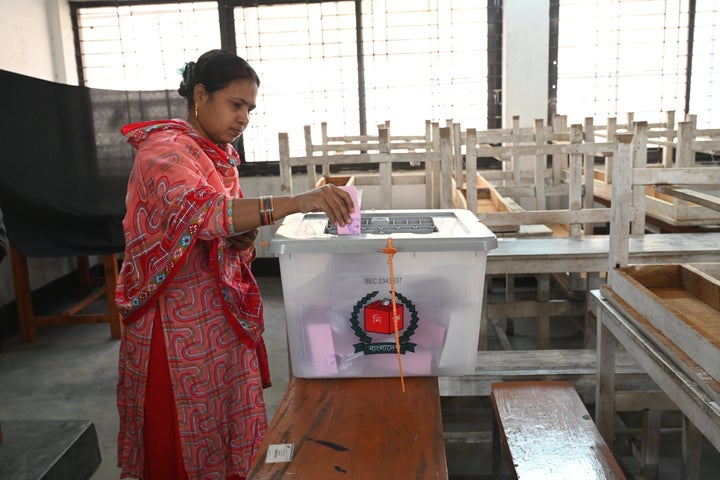 A female voter casts her ballot to vote during the 13th general election in Dhaka, Bangladesh, on February 12, 2026. (Photo by Mamunur Rashid/NurPhoto via Getty Images)
NurPhoto via Getty Images
Voters are choosing new lawmakers
The interim government led by Yunus, a Nobel Peace Prize laureate, has said it is committed to delivering a credible and transparent election.