

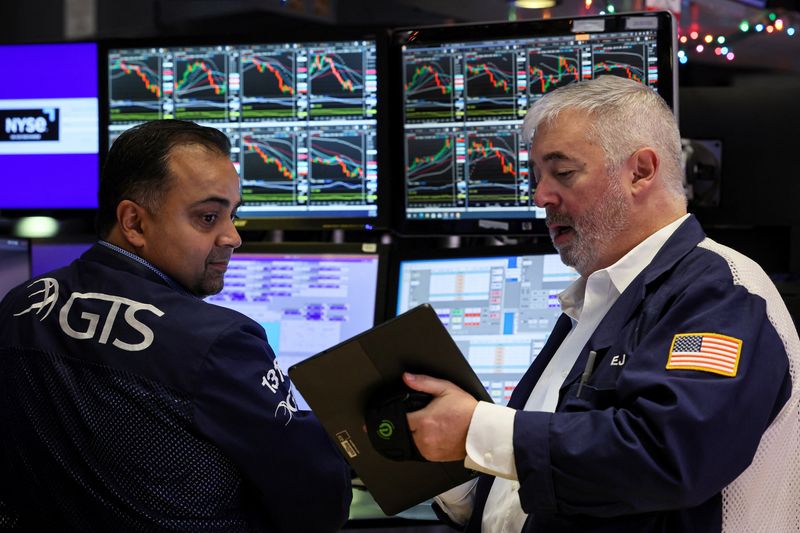

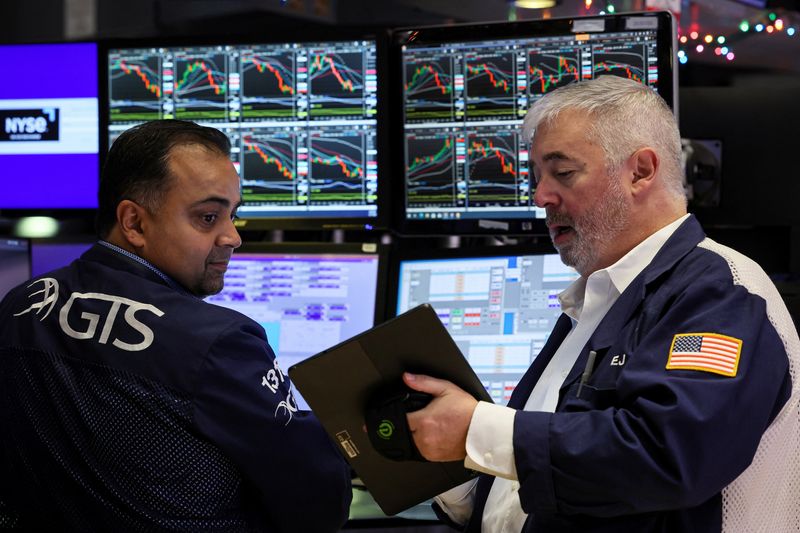
© Reuters. Traders work on the floor at the New York Stock Exchange (NYSE) in New York City, U.S., December 7, 2023. REUTERS/Brendan McDermid/File Photo
By Lewis Krauskopf
NEW YORK (Reuters) – Brace yourselves, stock market enthusiasts! The Federal Reserve’s last monetary policy meeting of 2023 and a U.S. inflation report in coming days are looming on the horizon, ready to challenge the rally that has taken U.S. equities on a wild ride for weeks.
Bets the Fed will begin cutting interest rates sooner than expected have fueled a surge in U.S. stocks. The market remains up nearly 20% in 2023 after seeing its biggest monthly gain of the year in November.
As the S&P 500 reached its highest closing level since March 2022, some investors are expressing cautious optimism, fearing that the surge in stock prices could make them more susceptible to downward reversals in case of a lack of favorable consumer prices or less dovish signals from the Fed.
“There is some optimism priced in on earnings and the economy and the Fed, so that has taken us to this level,” said Scott Wren, senior global market strategist at the Wells Fargo Investment Institute (WFII). With the S&P 500 near the top of its trading range, “we think there is a lot more potential for downside than upside.”
While the Fed is expected to keep rates steady on Wednesday for a third straight meeting, investors will watch for signs from policymakers that confirm the market’s view for rate cuts as early as March 2024. Friday’s stronger-than-expected jobs and consumer sentiment data, combined with a rise in yields, bolstered the case for those betting the Fed “could lean more hawkish” next week, said Quincy Krosby, chief global strategist for LPL Financial (NASDAQ:).
The federal funds futures market on Friday was pricing in a 46% chance of a cut at the Fed’s March meeting, and a nearly 80% chance of a cut in May, according to the CME FedWatch tool.
Many investors believe stocks can continue rising in the weeks and months ahead, with the S&P 500 just 4% from making a fresh all-time high.
Past rate cycles have shown that stocks tend to climb during the period when monetary policy is “on hold.”
The S&P 500’s rally has brought it back to around where it stood when the central bank last raised rates in July,