



By ZeroHedge – Mar 20, 2026, 2:00 PM CDT
- UBS Chief Economist Arend Kapteyn asserts that the current energy shock is unlike the 2011-2014 period due to the critical absence of a strong supply response from the US shale oil patch.
- The oil sector is now less responsive to price increases, meaning the offset from booming domestic oil investment that helped the US economy a decade ago will be missing this time.
- This lack of shale elasticity suggests the pain from higher energy prices is more likely to hit consumers directly through weaker spending power, potentially accelerating broader economic deterioration.

Arend Kapteyn, the global head of economics and strategy research and chief economist at UBS, told clients that one key reason the current Middle East conflict-driven energy shock “is not like 2011-2014” will be the absence of a comparable response from the shale patch, suggesting consumers are more likely to bear the brunt of the pain.
Kapteyn noted that, on an inflation-adjusted basis, oil prices in 2011-2014 were actually higher than they are today, yet the U.S. economy absorbed that shock because the shale boom provided a lift to the industrial base. Soaring WTI crude prices at the time spurred oil/gas companies to increase drilling activity, production growth, and energy-sector investment. This helped create a tailwind for the US’ manufacturing base and offset some of the drag from higher fuel costs.
However, this is where the bullish U.S. economic case starts to look a little shaky. As Kapteyn noted, “The oil sector is much less responsive to prices than a decade ago.”

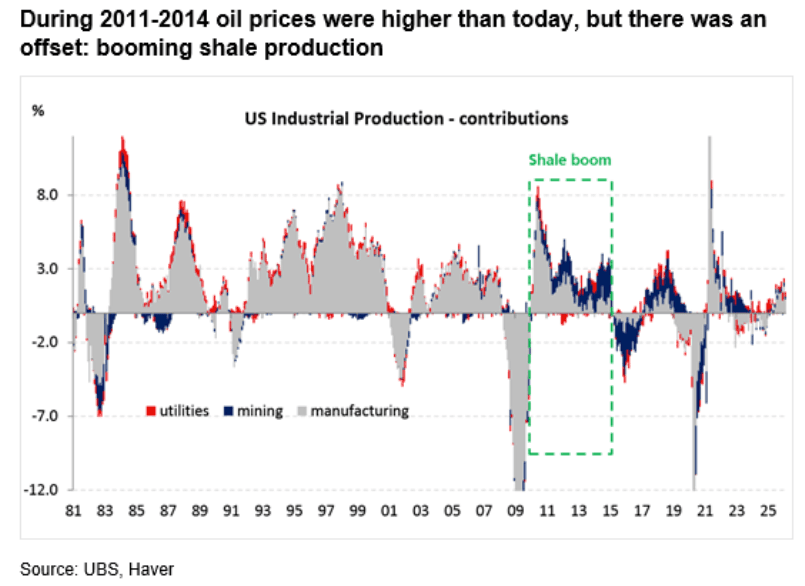
The Trump administration has indicated that the oil price shock is temporary, suggesting shale drilling is unlikely to increase meaningfully or provide much of a tailwind for the manufacturing base.
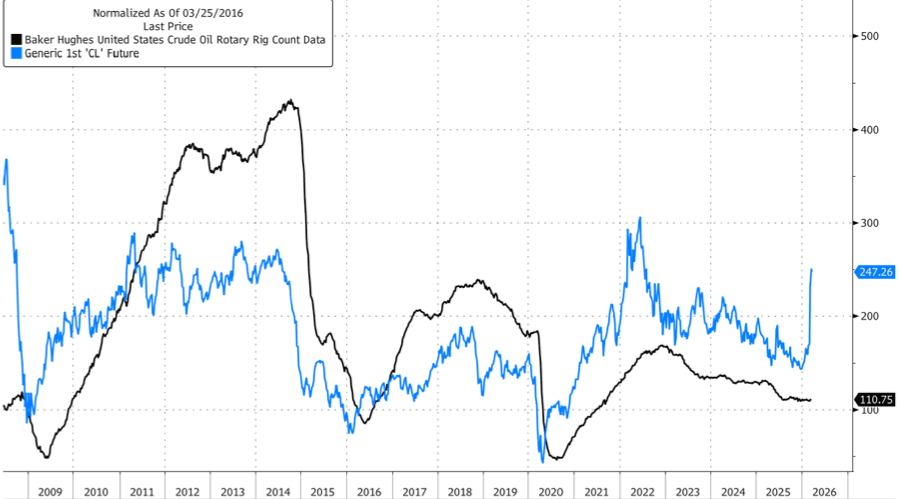
That means this time, the pain from higher energy prices is more likely to hit consumers directly through weaker spending power, with less offset from booming domestic oil investment.
The shock at the gas pump begins:
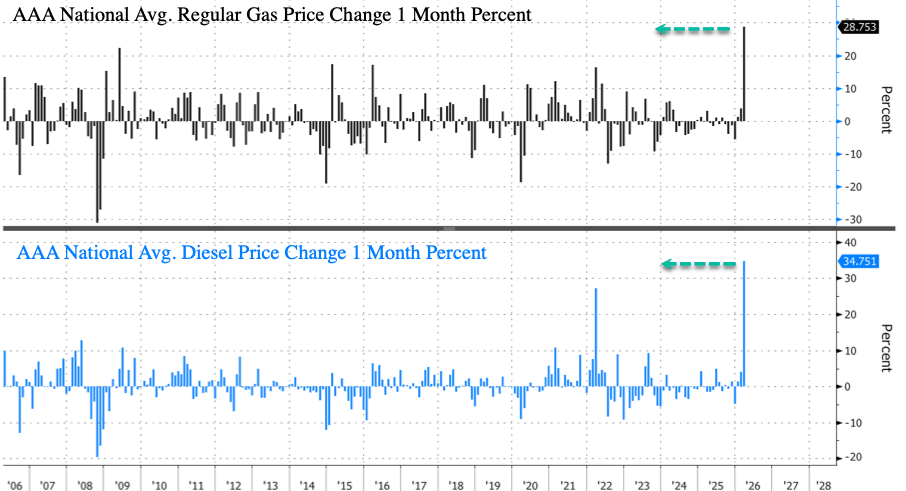
We warned:
- $5 Diesel Means A 35% Jump In Prices For US Consumers
Kapteyn continued:
A common question is why current oil prices should be a concern for the U.S. economy when prices were substantially higher in 2011-2014 and growth held up well. Over that earlier period, Brent averaged around $110/bbl—close to $145/bbl in today’s dollars, roughly 23% above today’s spot prices—yet U.S. GDP growth still averaged just over 2%.
There are, of course, many differences relative to then: today’s labor market is weaker, households are more liquidity constrained, and the inflationary impulse is sharper, reflecting a much faster run-up in prices (oil prices never rose more than about 55% year-on-year in 2011-2014, versus close to 100% if today’s prices are sustained).