


One of the most striking aspects of the war with Iran is the extent to which it has highlighted the irrelevance of international organisations and multilateral approaches to resolving global conflicts.
If we take war as an indicator of the viability of the rules-based international order established after World War II, then we may well conclude that the “patient” is showing a very weak pulse.
The United Nations and the European Union are two organisations that epitomise the post-1945 global normative order – an order which is founded on principles such as the rule of law, non-aggression, and respect for sovereign states’ territorial integrity and political independence.
These principles, and the international organisations that embody then, are among the first casualties of the US-Israeli military campaign. How did this happen and what could be done in order to revitalise the patient?
The United Nations – a tale of a great power struggle and double standards
Beginning with the UN, the war with Iran has made it abundantly clear that the system of collective security system established after 1945 is largely disabled when a major power decides to go it alone. The UN Security Council was designated as the guardian of international peace and security, yet has been paralysed by the veto powers of its permanent members, which have time and again used their influence to shield their own actions and those of their allies from international scrutiny.
When the US and Israel launched strikes against Iran in late February 2026, the Security Council initially failed to come up with any kind of meaningful response, let alone authorise any measures to de-escalate the crisis. Instead, the conflict unfolded outside the framework of international law, with unilateral military actions becoming the norm rather than remaining the exception.
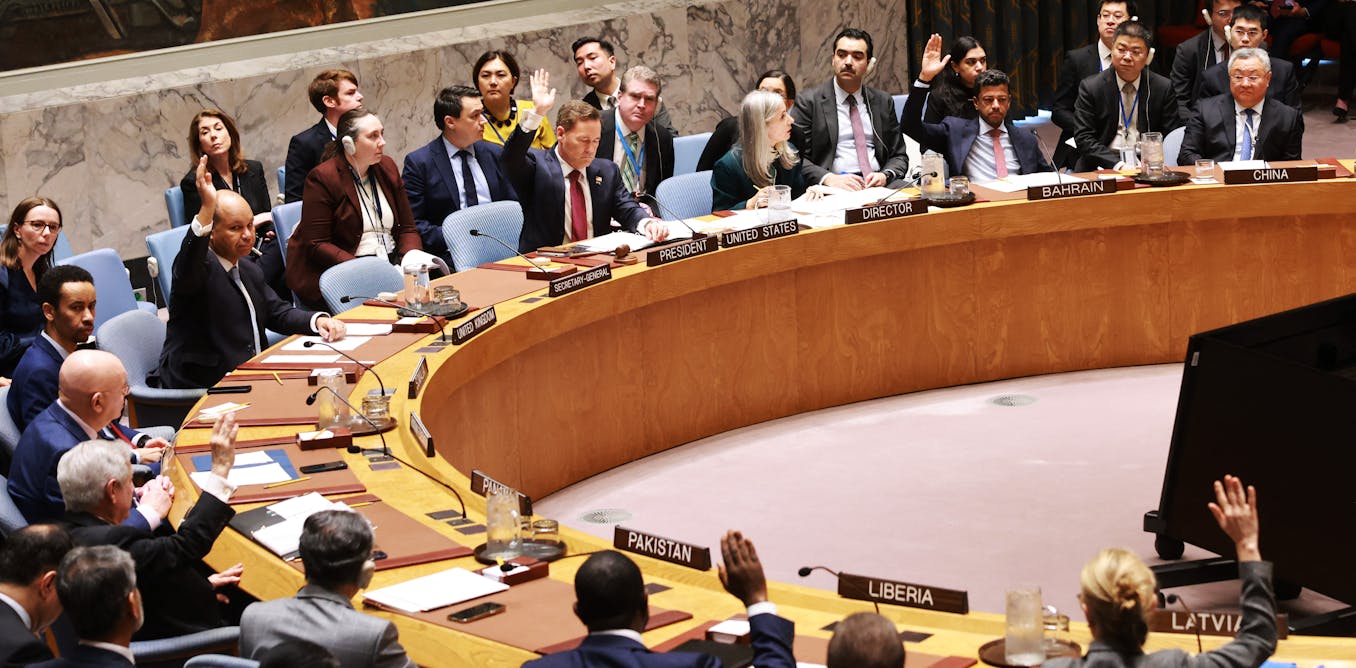
The Security Council eventually adopted a resolution on March 11, which focused narrowly on condemning Iran’s attacks on Gulf states. The resolution, passed with 13 votes in favour and abstentions from Russia and China, labelled Iran’s actions as “egregious attacks” and demanded an immediate halt to its regional aggression.
While the resolution is an important signal that the patient is still alive and that the UN has some residual willingness to protect the fundamental norms on which it was built, the resolution’s one-sided approach underscores the Security Council’s persistent double standards: the resolution makes no mention of the initial US-Israeli strikes on Iran that triggered the escalation, nor does it address the broader context of the conflict, such as the legality of those strikes or the killing of Iran’s supreme leader.
The deafening silence of the UN Security Council in the face of US and Israeli breaches of peremptory international law suggests, once more, the use of double standards and further undermines the credibility of the UN Security Council as the guardian of international peace and security.
However, while the Council is currently more or less paralysed, there is a procedure that could revitalise the UN in this geopolitical crisis,