


When you think of it, immune cells are constantly on the move in our bodies, fighting off infections and looking for cancerous cells. However, the presence of these cells in the wrong areas can have detrimental effects, such as damaging tumors. This has prompted researchers to find ways to stop immune cells from migrating into harmful locations.
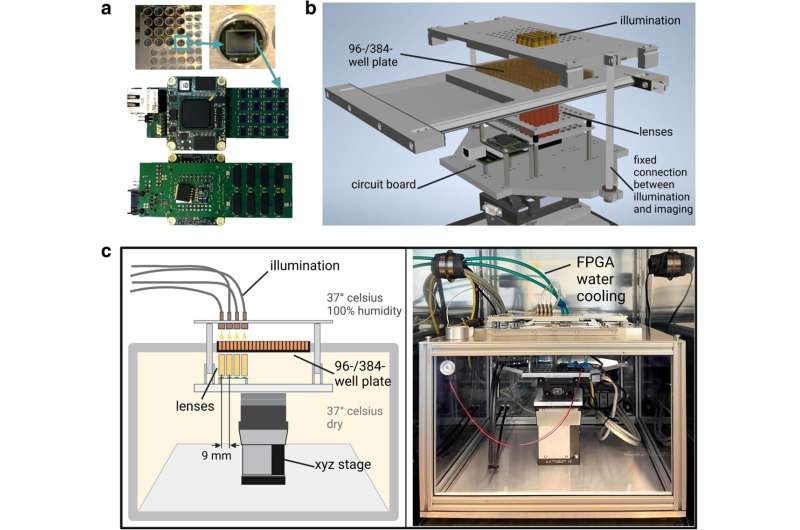
The traditional method of investigating this migration is through standard video microscopy. Now, scientists have developed a high-throughput microscope for the analysis of compounds – the ComplexEye – that is set to revolutionize the process.
With conventional video microscopy, a single camera objective observes the movement of cells one sample at a time. The ComplexEye, however, developed by researchers from the University of Duisburg-Essen (UDE) and Leibniz-Institut für Analytische Wissenschaften (ISAS), can analyze multiple samples at once. Their findings were published in Nature Communications.
Prof Dr. Matthias Gunzer from the University of Duisburg-Essen (UDE) and Leibniz-Institut für Analytische Wissenschaften (ISAS) stated “If we knew how to control the migration of neutrophils, many diseases would be easier to treat. So far, methods have been limited, especially for small, fast-moving immune cells. Now, with the ComplexEye, researchers have made significant strides in increasing the speed of migration analyses.”
The new microscope can analyze samples at a speed approximately 60 times faster than conventional video microscopy. In their experiments, the researchers at UDE tested around 1,000 substances to study the influence on the migration of neutrophils, allowing for the identification of 17 substances that can influence the mobility of human neutrophils in just four days.
While the findings are currently of scientific value, the researchers hope that they will lead to new therapeutic options. Immunologist Gunzer stated, “With a few minor adjustments, ComplexEye can also be used for other cells, such as monitoring the progression of diseases and detecting early warning signs of infections like imminent blood poisoning.” Sounds like a game-changer!