


Researchers in Australia have just made a groundbreaking finding. When it comes to the performance of rooftop PV systems, they’ve discovered that rooftop reflectivity is crucial. By combining Monte Carlo Ray Trace (MCRT) techniques and electrical modeling, they found that bifacial arrays, which capture sunlight on both sides, can provide energy gains that are up to 22.6% higher than monofacial arrays. But that’s not all – they’ve also shown that system and module designs can have a big impact on performance, too. This is fantastic news for the solar energy industry and a major step forward in renewable energy technology.
Published December 12, 2023 by Emiliano Bellini
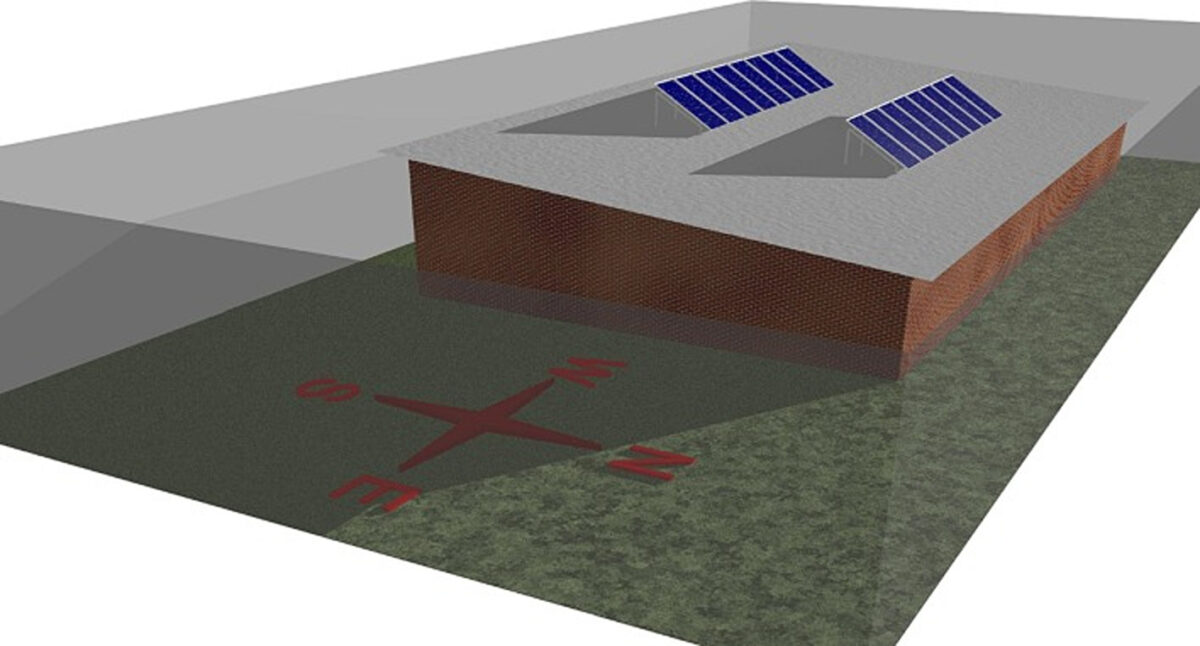
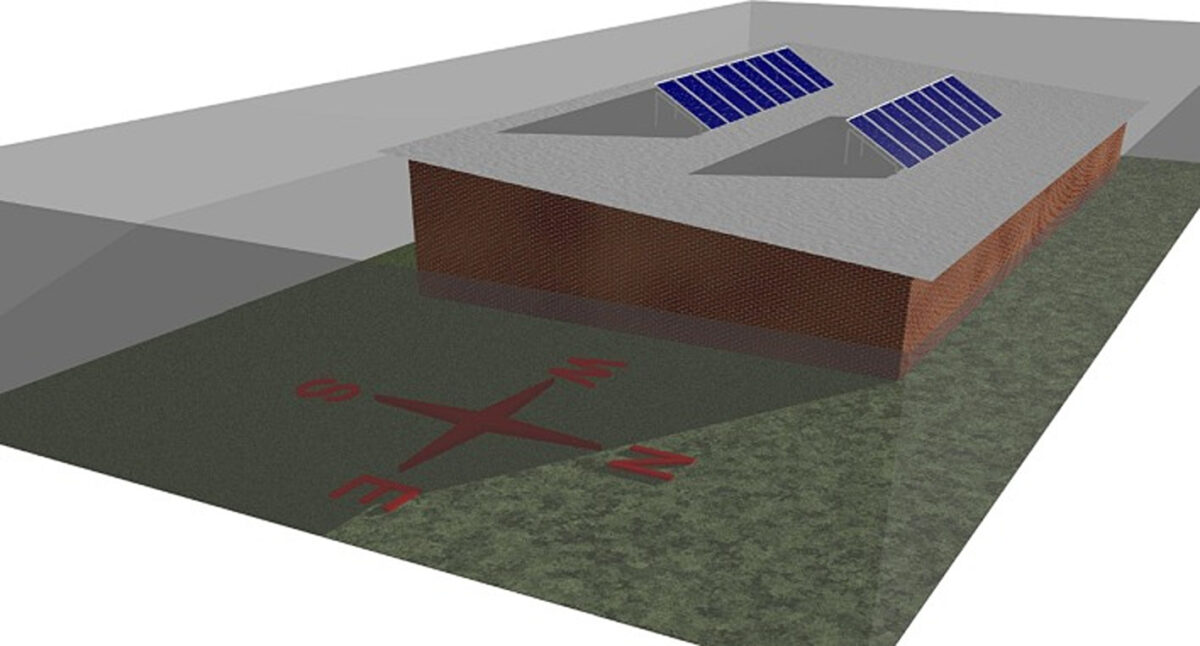
Illustration of a photovoltaic system on a pitched shed roof
Image: Australian National University, Energy Conversion and Management, Creative Commons License CC BY 4.0
Scientists from the Australian National University (ANU) and Sidney-based PV manufacturer Sundrive have introduced a whole new way of looking at solar panels. They’ve pioneered a modeling framework that combines MCRT with a detailed electrical model of high-efficiency bifacial PV modules. In doing so, they’ve achieved a level of precision and accuracy that was previously thought to be impossible.
Their work could be a game-changer. By integrating optical, thermal, and electrical modeling, they’ve taken the first big step in understanding just how much energy bifacial rooftop PV systems could capture. This is just the beginning of an exciting new era for rooftop solar energy – watch this space!
Their findings come from the study ““Accurate modeling of the bifacial gain potential of rooftop solar photovoltaic systems,” which was recently published in Energy Conversion and Management.