

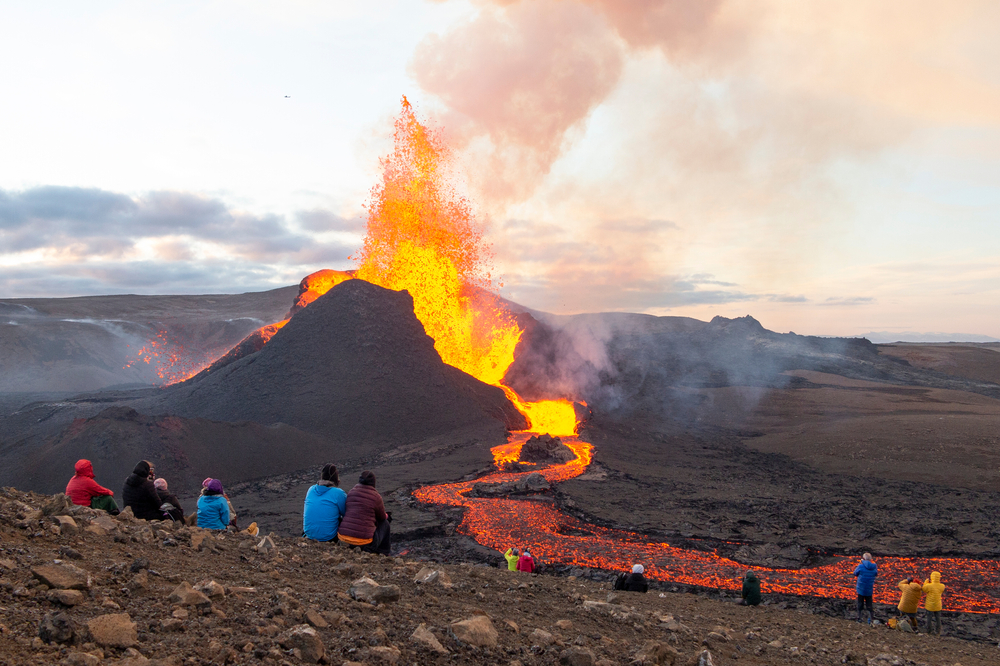

Get ready to be blown away by the explosive world of volcanic eruptions! From eruptions in Iceland to Krakatau in Indonesia, 2023 has been a year full of volcanic activity that has been grabbing headlines. But let’s not forget about the incredible eruptions that captivated us in 2022. The Lascar volcano in Chile, Mount Semeru in Indonesia, and Hunga Tonga in the South Pacific all put on quite the show. And even the quieter eruptions of Mauna Loa showed that 2022 was a year to remember in the world of volcanoes.
Now, you might be wondering, how do scientists predict volcanic eruptions before they happen?
While volcanic eruptions like Mauna Loa tend to be relatively calm and cause minimal damage, eruptions like Mount Semeru and Hunga Tonga have the power to force people to evacuate their homes, inflict extensive damage to property and the ecosystem, and even result in loss of life. Though the exact impact of a volcanic eruption cannot be foreseen, there are mechanisms in place to predict when eruptions may occur.
What Makes a Volcano Erupt?
The phenomenon of a volcano erupting occurs when magma rises to the surface as a result of lower density and pressure, facilitated by the formation of gas bubbles. The type and intensity of an eruption hinge on a variety of geological factors, including the composition of the magma and the tectonic activity of the Earth. Here’s an in-depth look at what causes a volcano to erupt:
Magma Formation
Magma forms when the Earth’s mantle (the layer beneath the crust) undergoes a process of melting. This melting can be brought on by various factors, such as the movement of tectonic plates, the existence of hot spots, or the addition of water and other volatile substances that decrease the melting point of rocks.
Pressure Buildup
As magma takes shape, it begins its ascent toward the Earth’s surface due to its lower density compared to the surrounding solid rock. As it moves upward, the pressure decreases, allowing gases dissolved in the magma (like water vapor, carbon dioxide, and sulfur dioxide) to form bubbles. This process is akin to the bubbles that appear when you crack open a carbonated beverage.
Eruption Trigger
The mounting pressure from these gas bubbles propels the magma through the cracks and fissures in the Earth’s crust. When the pressure becomes too much for the crust to contain, it results in an eruption.
Types of Eruptions
The nature of the eruption can vary significantly depending on factors such as the viscosity of the magma (how thick or fluid it is), the quantity and type of gases it contains, and the structure of the volcano itself. Magma with higher viscosity (like that found in stratovolcanoes) has a tendency to lead to more explosive eruptions, while more fluid magma (like that found in shield volcanoes) tends to produce gentler, flowing lava eruptions.
Tectonic Activity
In regions where tectonic plates diverge or converge, magma has an easier time rising to the surface, resulting in frequent volcanic activity. For instance, the Ring of Fire around the Pacific Ocean is a consequence of plate tectonics and is home to many of the world’s volcanoes.
Read More: The Origins of Plate Tectonics May Stretch Further Back in Earth’s History